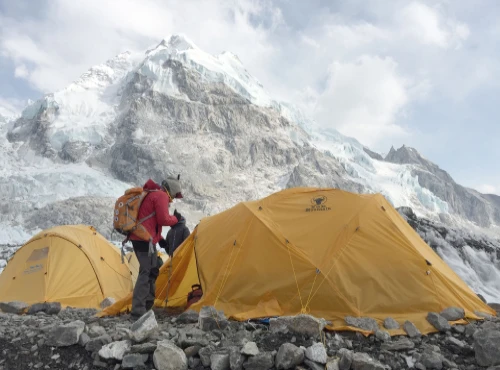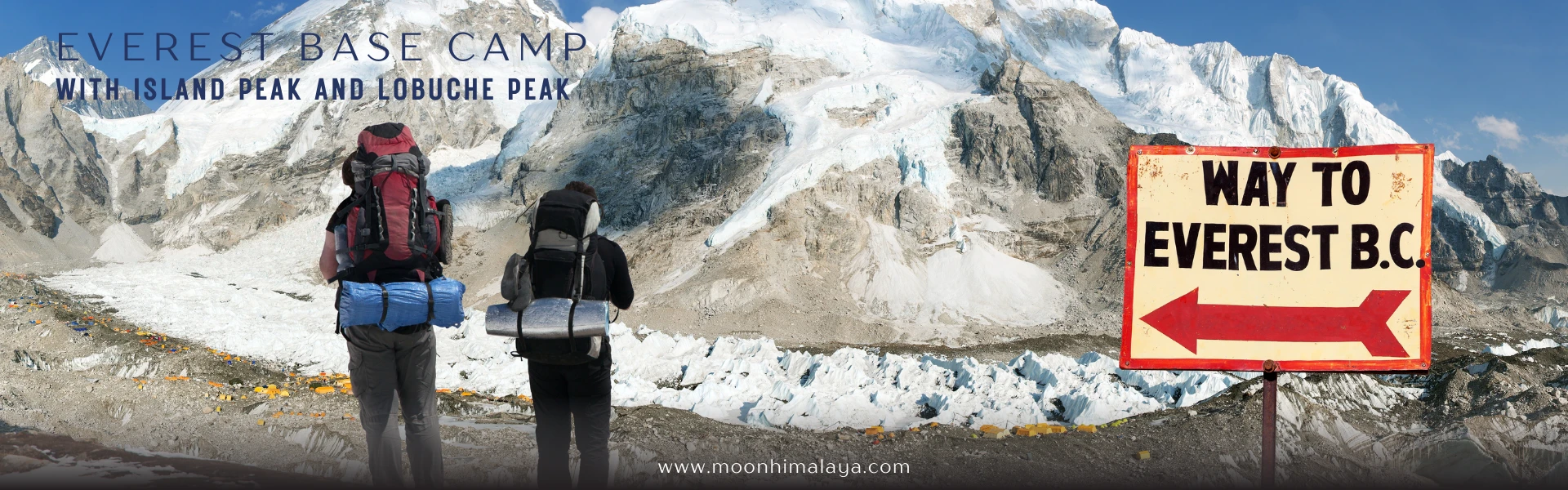
Combining the classic Everest Base Camp trek with the technical summits of Island Peak (6,189m) and Lobuche East (6,090m) is the most strategic way to achieve three serious objectives in one trip. This 20-day itinerary is built on a refined "Climb High, Sleep Low" protocol, using the EBC trek as a functional acclimatization phase to build the physiological foundation required to thrive above 6,000 meters. Discover how this combination works, review the detailed day-by-day plan, and find out the professional gear mandatory for this demanding "Triple Crown" of the Khumbu.
Everest Base Camp with Island Peak and Lobuche Peak: One Itinerary, Three Serious Objectives
Table of Contents
Combining Everest Base Camp with Island Peak and Lobuche East isn’t about ticking boxes. It’s about using time, altitude, and acclimatization properly.
If you try to do these as separate trips, you’re looking at multiple flights to Lukla, repeated acclimatization schedules, and well over a month on the trail. Doing them together, in the right order, makes more sense physically and logistically.
This itinerary is built the way many local guides would plan it for themselves: walk in slowly, let the body adapt, climb one peak, recover, then go for the harder one. By reaching Everest Base Camp first, you use the trek as a functional acclimatization phase. By the time you stand at the foot of your first peak, your body is already adapted to 5,000+ meters, allowing you to move faster and recover more effectively between summits.
Why This Combination Works
The Everest Base Camp trek already takes you above 5,500 meters at Kala Patthar. By the time you reach that height, your body has started adapting to thinner air.
That acclimatization is exactly what you need before attempting Island Peak (6,189m) and Lobuche East (6,090m). Instead of starting each climb from zero, you’re building on the altitude you’ve already earned. It also cuts down on:
- Extra Lukla flights
- Repeated permit costs
- Lost days just “waiting to adjust.”
Most importantly, it reduces unnecessary altitude stress.
How the 20 Days Are Structured
Short Itinerary
- Day 1: Arrival in Kathmandu (1310m), Nepal
- Day 2: Early morning drive to Ramechhap, then take a flight to Lukla. Trek to Monjo (5 hrs drive, 30-minute flight, & 4/5-hour trek)
- Day 3: Trek to Namche Bazaar (3440m) – 5/6 hour walk
- Day 4: Acclimatize day & Hike to Everest Viewpoint (3880m)
- Day 5: Trek from Namche Bazaar (3440m) to Deboche (3710m)
- Day 6: Trek from Deboche (3710m) to Dingboche (4410m)
- Day 7: Acclimatization Day at Dingboche (4410m)
- Day 8: Trek from Dingboche (4410m) to Lobuche (4910m)
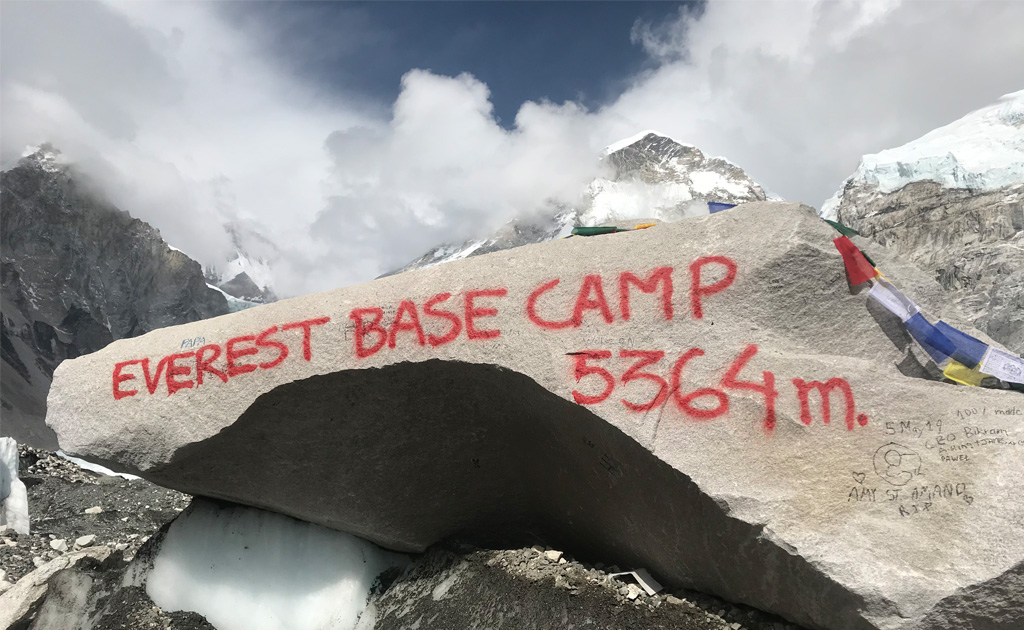
- Day 9: Trek from Lobuche (4910m) to Gorakshep (5140m) to Everest Base Camp (5364m) and back to Gorakshep.
- Day 10: Trek from Gorak Shep to Kala Patthar (5550m) & Trek to Lobuche High Camp
- Day 11: Summit Lobuche peak (6090m) and back to Lobuche (4910m)
- Day 12: Trek from Lobuche (4910m) to Chhukung (4730m)
- Day 13: Trek from Chhukung (4730m) to Island Peak Base Camp (4970m)
- Day 14: Summit to Island Peak (6189m) & back to Chhukung (4730m)
- Day 15: Extra day if the weather is not good.
- Day 16: Trek from Chhukung (4730m) to Tengboche (3860m)
- Day 17: Trek from Tengboche (3860m) to Monjo (2835m)
- Day 18: Trek from Monjo (2835m) to Lukla (2840m)
- Day 19: Flight from Lukla (2840m) to Ramechhap and drive to Kathmandu.
- Day 20: Final Departure
Days 1–9: Everest Base Camp and Acclimatization
The first half follows the classic Everest Base Camp route, but the pace matters. You’re not rushing.
After arriving in Kathmandu and sorting permits, you fly to Lukla (2,840m) and walk down to Phakding. That first descent helps your body ease into altitude instead of forcing it.
Namche Bazaar (3,440m) is where acclimatization really starts. A rest day here isn’t optional. Most people hike up toward the Everest View Hotel or Khumjung and return to sleep lower.
From there, the trail moves through Tengboche, Dingboche, and Lobuche. You will add another acclimatization day in Dingboche, usually hiking above 5,000 meters and coming back down to sleep. Everest Base Camp itself sits at 5,364 meters. Kala Patthar, climbed early in the morning, takes you to about 5,550 meters. By this point, you’ve already spent several days well above 4,000 meters, exactly what you need before peak climbing.
Days 10–12: Lobuche East (6,090m)
Lobuche East is shorter than Island Peak, but it’s more technical.
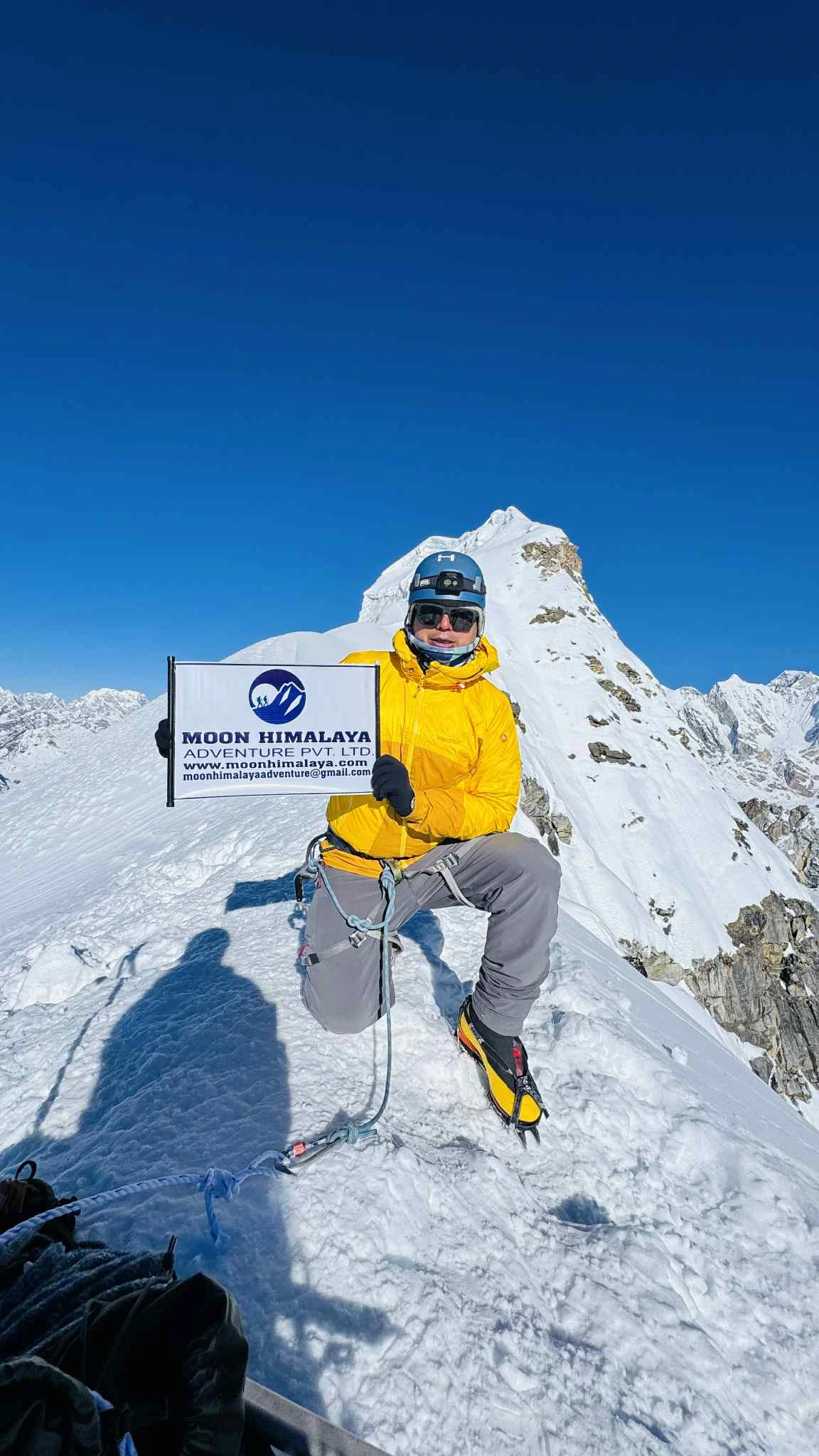
The route involves exposed ridge sections where balance, rope work, and mental focus matter more than strength. The high camp sits around 5,400 meters, usually in a cold, windy position with no comfort beyond what you carry in. Summit day starts around midnight. Expect a long, demanding push with sustained exposure near the top. This is where previous altitude adaptation makes a real difference.
After summiting, you descend carefully back to a lower altitude. Knees usually complain more than the lungs at this stage.
Days 13–15: Island Peak (6,189m)
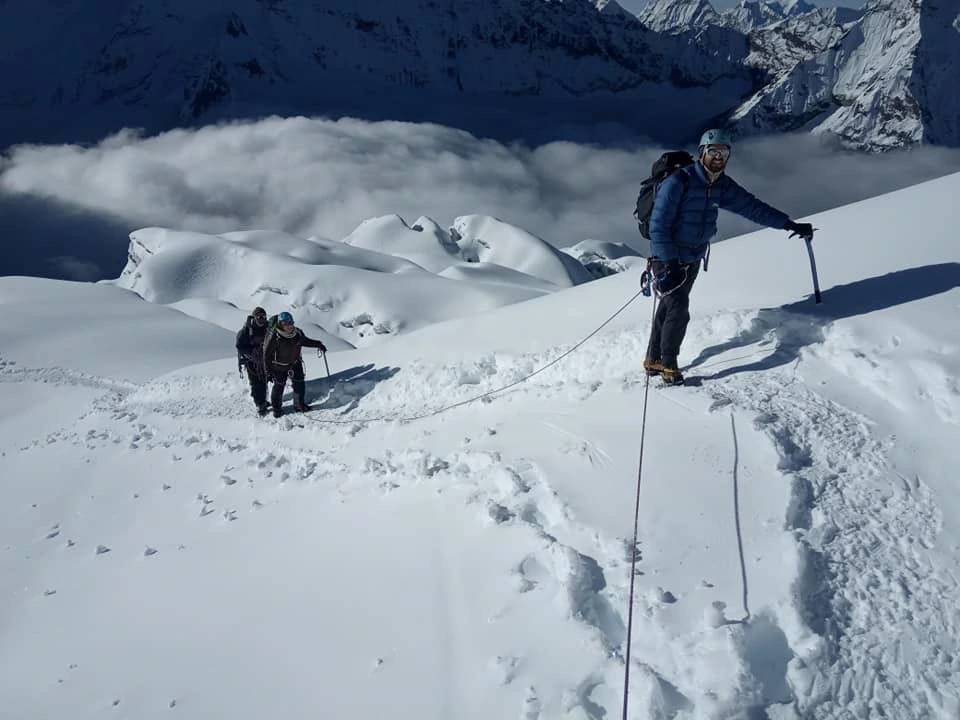
After base camp, the route shifts toward the Imja Valley and Chhukung. This change of scenery also gives your body a slight break from continuous ascent.
Island Peak is often called a “trekking peak,” but that name is misleading. The final section involves glacier travel, fixed ropes, and a steep snow and ice headwall.
You’ll spend time at Island Peak Base Camp learning how to:
- Walk properly in crampons
- Use an ice axe
- Clip into fixed ropes
Summit day starts early. Most climbers reach the top after 7–9 hours of climbing and descending. From the summit, you’re surrounded by Lhotse, Makalu, and the upper Imja Glacier.
After the climb, you drop back down to recover. That descent is important. It’s what allows your body to rest before the next objective.
Days 16–19: Return to Lukla
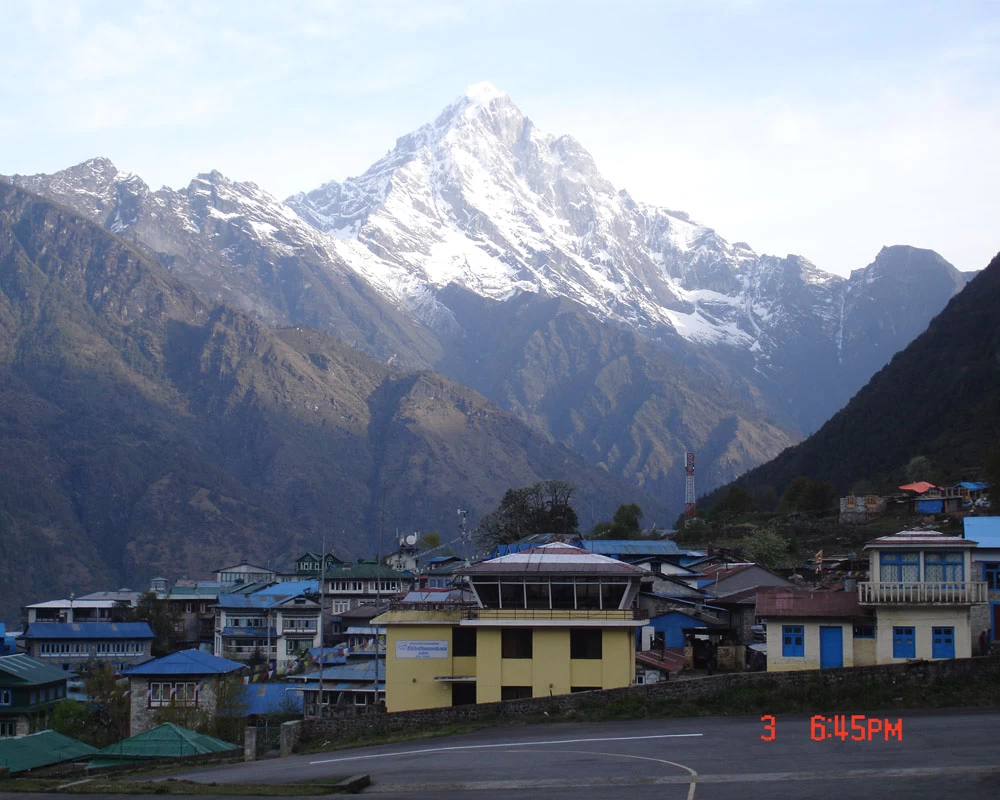
The walk back follows familiar trails. Most people are tired, but acclimatized enough to enjoy the descent. Flights from Lukla back to Kathmandu usually happen early in the morning, weather permitting.
Strategic Acclimatization: How We Fit 3 Objectives into 20 Days
To safely complete this "Triple Crown" of the Khumbu in 20 days, we follow a refined "Climb High, Sleep Low" protocol.
Phase 1: The Engine Room (Days 1–9)
The first nine days are about building your "altitude engine."
- Ramechhap Logistics: From September to November & March to May, the flight to Lukla takes place from Manthali airport, Ramechhap, which takes 4 to 5 hrs of driving from Kathmandu. This requires an early 1:00 AM departure from Kathmandu, but results in a more reliable 18-minute flight to Lukla.
- Active Acclimatization: We don't just "rest" in Namche and Dingboche. We use these days for tactical hikes to 3,880m and 5,000m, respectively, ensuring your red blood cell count is optimal before reaching Base Camp.
- The First Milestone: Reaching Everest Base Camp (5,364m) and Kala Patthar (5,550m) provides the physiological foundation required to survive and thrive above 6,000 meters.
Phase 2: Technical Mastery on Lobuche East (Days 10–12)
Summit: Lobuche East (6,090m). By hitting this immediately after Kala Patthar, you are at your peak acclimatization.
- The Challenge: Expect rocky scrambles and a sustained, exposed ridge.
- Technical Gear: You will use fixed ropes and crampons to navigate the final snow/ice wall.
- The Strategy: We move from Gorak Shep directly to Lobuche High Camp (5,290m) to minimize the time spent in the "Death Zone" while maximizing summit success.
Phase 3: The Island Peak Finale (Days 13–15)
Summit: Island Peak (6,189m). After Lobuche, we descend into the Imja Valley. The slightly lower trek to Chhukung (4,730m) acts as a "recovery valley" before the final summit.
- The Headwall: Island Peak is famous for its 100m ice headwall (45°–60°).
- The Reward: From the summit, you are closer to Lhotse and the Nuptse than anywhere else in the world.
- Buffer Day: Day 15 is your safety net. In the Himalayas, the weather is the ultimate boss; we build on this day to ensure your 20-day window isn't ruined by a single storm.
Difficulty and Success Rates
This is not an entry-level trip. You should be comfortable with:
- Long trekking days (7–9 hours)
- Consecutive days above 4,000 meters
- Cold mornings and basic accommodation
- Technical snow and ice sections
| Peak | Height | Main Challange | Typical Success Rate |
| Island Peak | 6,189m | Steep headwall, fixed ropes | ~85% |
| Lobuche East | 6,090m | Exposed ridge, technical terrain | ~78% |
The difference isn’t altitude. It’s exposure and terrain.
Best Time to Do This Trip
Spring (March–May)
Stable weather, longer daylight, and good snow conditions for climbing. This is the busiest season.
Autumn (September–November)
Clear skies, excellent visibility, slightly colder mornings. Fewer crowds than in spring.
Winter is extremely cold at the summit height. Summer brings monsoon rain and unstable conditions. For most climbers, neither is a good idea. You can also check here for comprehensive information on the best time for trekking in Nepal.
Training and Preparation
You don’t need to be a professional climber, but you do need preparation.
Plan at least 3–6 months of training:
- Cardiovascular endurance
- Strength for long ascents
- Practice hikes with a loaded pack
Basic climbing skills help, but most technical training is done on the mountain. What matters most is fitness, patience, and following the acclimatization plan.
Permits & Regulation
Climbing permits for Island Peak (6,189m) and Lobuche East (6,090m) are issued through the Nepal Mountaineering Association, the official body responsible for regulating trekking peaks in Nepal. All expeditions must comply with their seasonal permit structure and safety guidelines.
Gear Considerations
This trip requires a mix of trekking and mountaineering equipment. Proper boots, crampons, a harness, and a warm sleeping bag are not optional. Temperatures near the summits can drop below –20°C.
To successfully climb 6,000m peaks like Island Peak and Lobuche East, your gear must handle temperatures as low as -20°C (-4°F). Here is the professional equipment required:
- Climbing Footwear: Double mountaineering boots (e.g., La Sportiva G2SM or Scarpa Phantom 6000) are mandatory for summit days.
- Technical Climbing Gear: * Crampons (semi-automatic or automatic)
- Ice axe (standard mountaineering tool)
- Climbing harness and a "cow tail" with carabiners
- Ascender (Jumar) and a Descender (Figure 8 or ATC Guide)
- Upper Body Layers: * Heavyweight down jacket (-20°C rated) with a hood
- Waterproof/Windproof hardshell jacket (Gore-Tex)
- Mid-weight fleece or "puffy" jacket
- Moisture-wicking base layers (merino wool recommended)
- Lower Body Layers: * Gore-Tex climbing pants
- Thermal leggings (base layer)
- Trekking trousers for lower altitudes
- Head & Hands: * High-altitude mittens (outer) and thermal glove liners (inner)
- Climbing helmet (UIAA certified)
- UV-protection glacier glasses (Category 4)
- Sleeping Gear: * 4-season sleeping bag rated to -20°C / -5°F
For a comprehensive checklist for all the required gears, you can check here!
Is This Trip Right for You?
| This itinerary makes sense if: | It’s not a good fit if: |
| You have around three weeks available | You’ve never trekked at altitude |
| You’re willing to train properly | You need comfort and reliable internet |
| You want more than just a trekking experience | You’re unwilling to turn back if weather or health requires it |
| You’re comfortable with basic conditions |
Thinking About Doing This Trip?
If you’re considering Everest Base Camp with Island Peak and Lobuche East, the most important decision isn’t the route; it’s the people you go with.
These peaks aren’t technical for the sake of being difficult, but they demand good judgment. Weather changes quickly, altitude affects everyone differently, and small decisions on summit day matter more than people expect. This is where local experience counts.
At Moon Himalaya Adventure, our guides live and work in the Everest region. They’ve guided these routes repeatedly, know when to push and when to turn back, and understand how to manage acclimatization properly, not just on paper, but in real conditions.
If you’re serious about this itinerary and want:
- A realistic plan, not an over-promised one
- Proper acclimatization and safety-focused guiding
- Clear answers about preparation, gear, and timing
- A team that puts your health ahead of summit pressure
You’re welcome to reach out to us through email: [email protected], or WhatsApp us: +977 9860455963.
We’re happy to talk through your experience level, answer questions honestly, and help you decide whether this trip is the right fit for you. As a registered company under the Nepal Tourism Board, we operate fully licensed expeditions in the Everest region in compliance with national trekking and mountaineering regulations.
When you’re ready, we’re here!
Manisha Tamang
Call us on WhatsApp+977 9860455963OrChat with us