Kanchenjunga Base Camp Trek - 22 Days

based on 1 review
Kanchenjunga Base Camp Trek
Trip Facts
  • Trip Duration22 Days
  • Difficulty Level Strenuous
  • Maximum Altitude 5140m
  • Activity Trekking
  • Starts/Ends Kathmandu / Kathmandu
  • Best Season September to Mid December & February to May
Highlights
  • Journey to both Kanchenjunga North Base Camp (5,143 m) and Kanchenjunga South Base Camp (4,730 m) in a single itinerary.
  • Experience one of the most remote and least crowded trekking regions in Nepal
  • Cross high mountain passes like Selele La and Sinelapche La during the trek
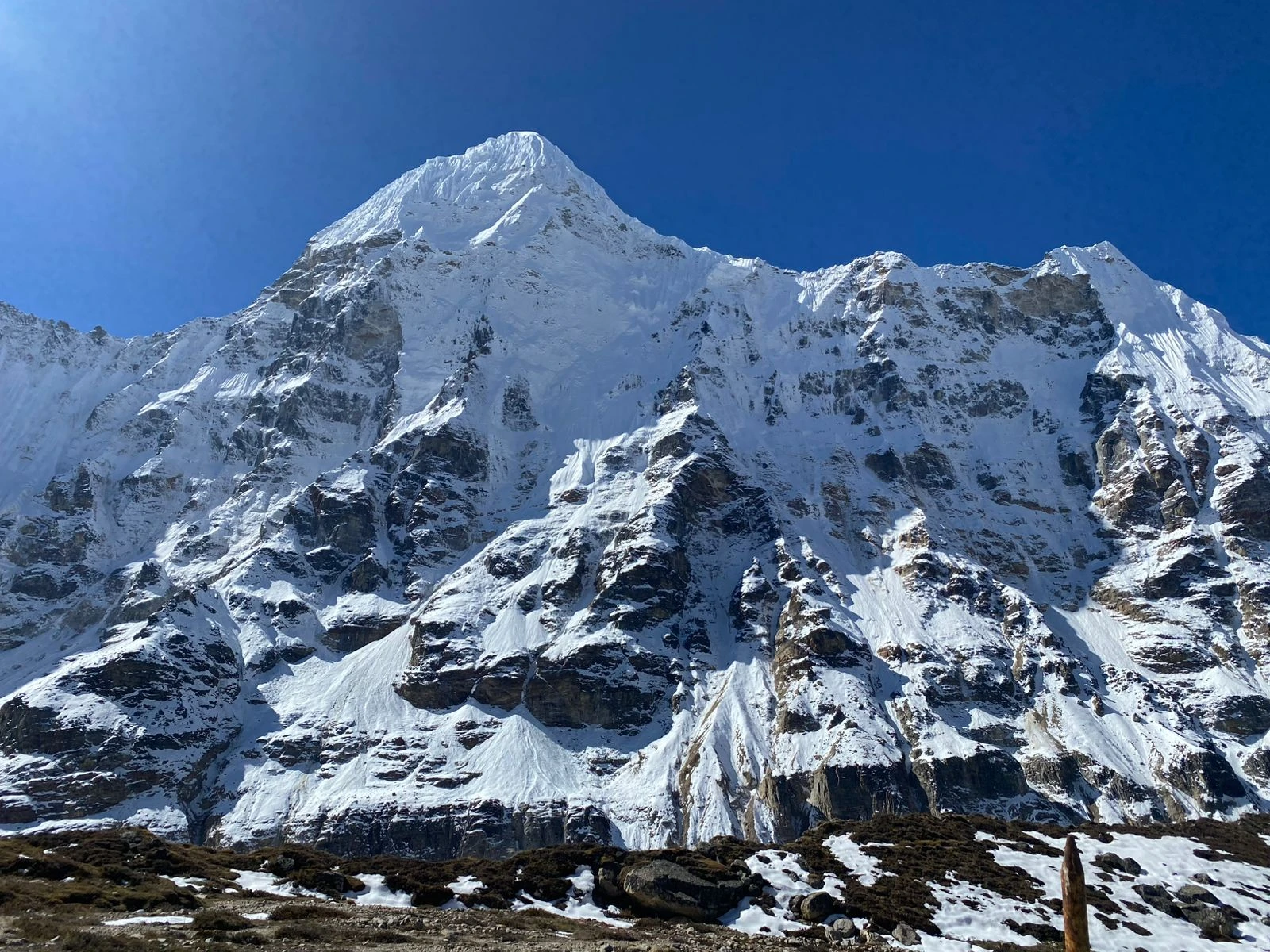
  • Close views of Mount Kanchenjunga (8,586 m), the third-highest mountain in the world
  • Trek through traditional Himalayan villages like Ghunsa, Khangpachen, Cheram, and Ramche
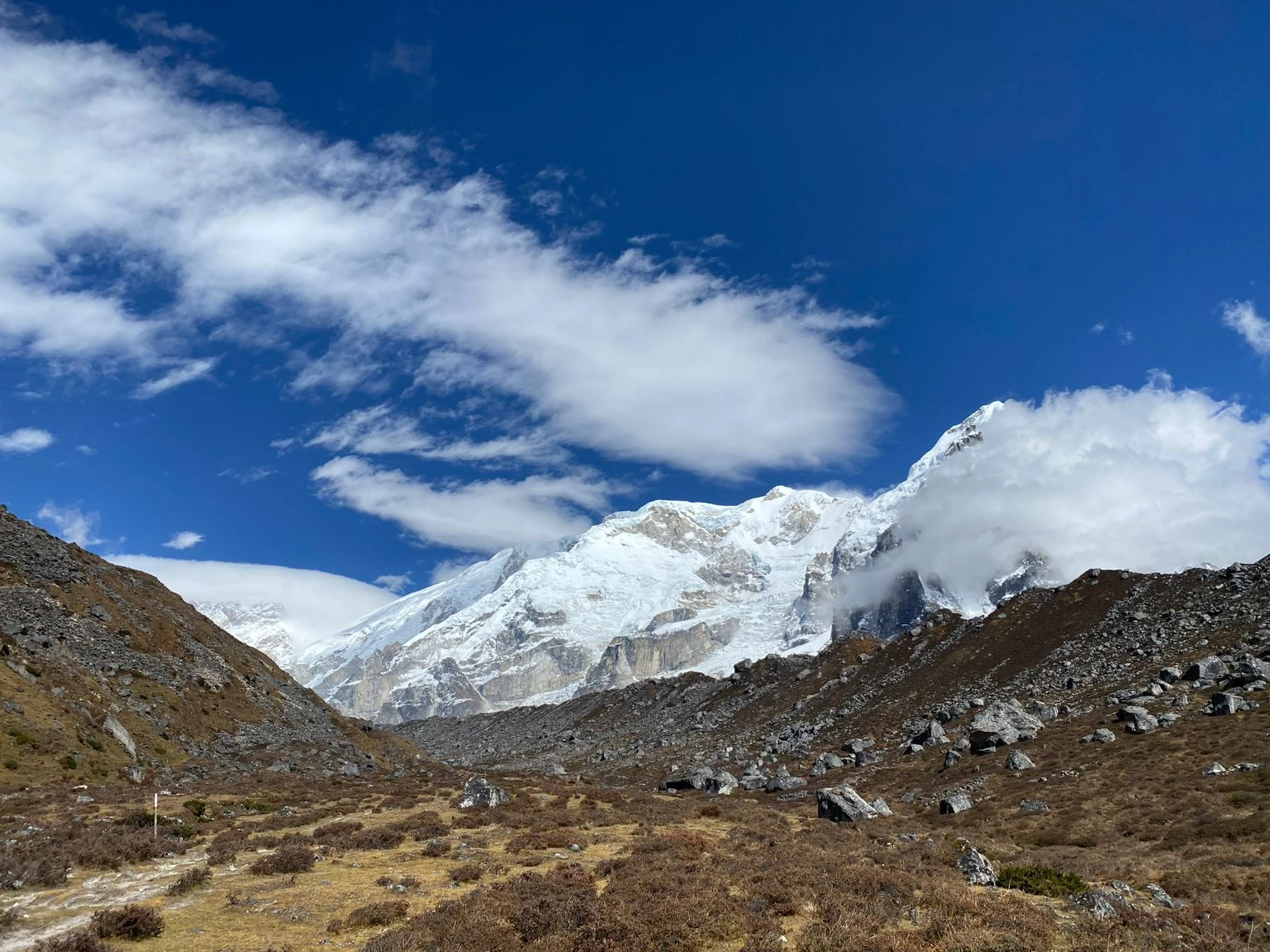
  • Diverse landscapes ranging from forests and river valleys to glaciers and alpine terrain
  • Proper acclimatization days and gradual altitude gain throughout the itinerary
  • Led by experienced local mountain guides with previous Kanchenjunga trekking experience
  • A complete Himalayan adventure combining remote trails, mountain culture, and both base camp experiences

Kanchenjunga Base Camp Trek Overview

The Kanchenjunga Base Camp Trek is a long and adventurous journey into one of the most remote mountain regions of Nepal. This 22-day itinerary takes you to both Kanchenjunga North Base Camp (5,143 m) and Kanchenjunga South Base Camp (4,730 m), offering a complete trekking experience around the world’s third-highest mountain.

The trip begins with your arrival in Kathmandu, followed by a flight to Bhadrapur and a scenic drive through the green hills of eastern Nepal toward Ilam and Sukethum. From there, the trekking section starts as the trail gradually moves deeper into the Kanchenjunga Conservation Area.

During the trek, you pass through villages like Amjilosa, Gyabla, Ghunsa, Khangpachen, and Lhonak while slowly gaining altitude. The northern section of the trek leads to Kanchenjunga North Base Camp at Pangpema, one of the biggest highlights of the journey, with close views of the massive north face of Kanchenjunga and surrounding Himalayan peaks.

After returning to Ghunsa, the route crosses the high Selele La and Sinelapche La passes before entering the southern side of the region. The trail then continues toward Ramche and Kanchenjunga South Base Camp, which offers a completely different landscape with glacier valleys and wide mountain views.

Unlike the more commercial trekking routes in Nepal, the Kanchenjunga region remains quiet and less crowded. The trail feels more raw, remote, and connected to nature throughout the journey.

The KBC Trek is designed for trekkers looking for a longer Himalayan adventure that combines remote trails, high mountain passes, traditional villages, and both north and south base camp experiences in a single itinerary.


Where Is Kanchenjunga Base Camp Located?

Kanchenjunga Base Camp is located in the far eastern region of Nepal, near the border with India’s Sikkim state and Tibet. The trek lies inside the Kanchenjunga Conservation Area, a protected Himalayan region known for its remote mountain landscapes and traditional villages.

The base camp sits below Mount Kanchenjunga (8,586 m), the third-highest mountain in the world. There are actually two base camp areas reached during the trek: Kanchenjunga North Base Camp (Pangpema – 5,143 m) and Kanchenjunga South Base Camp (around 4,730 m).

The journey to the region usually starts with a flight from Kathmandu to Bhadrapur, followed by a long drive toward Taplejung and Sukethum, where the trekking route begins. From there, the trail gradually moves deeper into the eastern Himalayas through remote valleys and mountain villages.


Why Is the Kanchenjunga Base Camp Trek Considered So Remote?

The Kanchenjunga Base Camp Trek is considered remote because much of the trail passes through isolated mountain valleys with very limited infrastructure and fewer settlements compared to Nepal’s more popular trekking regions.

Unlike Everest or Annapurna, the trails here remain quiet even during peak trekking seasons. It is common to walk for long hours without seeing many other trekking groups along the route. Many villages are small and widely spread apart, especially as you move deeper into places like Ghunsa, Khangpachen, Lhonak, and Ramche.

Facilities throughout the trek are also much more basic. Internet, electricity, transportation access, and modern services are limited in many parts of the region, particularly at higher elevations. In some sections, the trail feels completely surrounded by wilderness, glaciers, forests, and high Himalayan terrain without signs of commercial tourism.

This remoteness is also one of the biggest reasons why trekkers choose Kanchenjunga. The journey feels quieter, more raw, and far less crowded than Nepal’s mainstream trekking routes.


North vs South Kanchenjunga Base Camp: What’s the Difference?

One of the special parts of the Kanchenjunga Base Camp Trek is that the journey can include both the north and south sides of the mountain. Our 22-day itinerary covers both Kanchenjunga North Base Camp and Kanchenjunga South Base Camp.

The northern route leads to Kanchenjunga North Base Camp, the higher of the two base camps. This side feels more rugged and remote, with rocky trails, glaciers, and close views of the huge north face of Kanchenjunga. As the trail moves past Ghunsa toward Khangpachen and Lhonak.

The southern route goes toward Kanchenjunga South Base Camp (around 4,730 m) near Ramche. Compared to the north, this side feels more open and scenic, with glacier valleys, mountain walls, and wider Himalayan views along the trail.

Another major difference is that the two sides are connected by high mountain passes like Selele La and Sinelapche La. This makes the trek feel more like a complete Himalayan journey rather than simply returning on the same trail.

Many trekkers feel the north side is more raw and high-altitude focused, while the south side feels greener and more scenic. Experiencing both together gives a much fuller experience of the Kanchenjunga region.


How Difficult Is the Kanchenjunga Base Camp Trek Compared to Everest Base Camp?

The Kanchenjunga Base Camp Trek is generally considered more difficult than the Everest Base Camp Trek. The main reason is not just the altitude, but the overall length, remoteness, and trail conditions throughout the journey.

Unlike Everest Base Camp, where the trail passes through busy villages with well-developed trekking infrastructure, the Kanchenjunga region remains far more isolated. Facilities are more basic, villages are spread farther apart, and the trekking days can often feel longer and more demanding.

This itinerary also covers both Kanchenjunga North Base Camp (5,143 m) and Kanchenjunga South Base Camp (4,730 m), along with high passes like Selele La and Sinelapche La, which adds extra physical challenge compared to the standard Everest Base Camp route.

The terrain itself can also feel tougher at times. Some sections involve steep ascents, rocky trails, landslide-prone paths, and long walking days through remote valleys. Since the region receives fewer trekkers, the trails often feel less structured and more raw compared to Everest.

However, the altitude profile is relatively gradual in many sections of the trek, especially around villages like Ghunsa where acclimatization is planned properly. Trekkers with good physical fitness, patience, and some prior trekking experience usually handle the journey well.

Overall, Everest Base Camp is often considered more accessible and beginner-friendly, while the Kanchenjunga Base Camp Trek feels more like a longer and more remote Himalayan adventure.


What Permits Are Needed for the Kanchenjunga Base Camp Trek?

The Kanchenjunga Base Camp Trek requires two main permits because the route passes through both a protected conservation area and a restricted region in eastern Nepal.

Kanchenjunga Conservation Area Permit (KCAP)

This permit is required to enter the Kanchenjunga Conservation Area, which protects the region’s natural environment, forests, and wildlife.

Kanchenjunga Restricted Area Permit (RAP)

A Restricted Area Permit is also required for sections of the trek that fall under Nepal’s restricted trekking zone regulations.

Both permits are mandatory for trekkers visiting the Kanchenjunga region. Our Kanchenjunga Base Camp Trek package includes all the necessary permit arrangements and official paperwork required for the journey.


How Much Does the Kanchenjunga Base Camp Trek Cost in 2026?

The cost of the Kanchenjunga Base Camp Trek in 2026 generally ranges between USD 1,800toUSD 3,500+ per person, depending on the itinerary, group size, level of service, transportation, accommodation standard, and overall trip style.

Since the Kanchenjunga region is one of the most remote trekking areas in Nepal, the overall logistics cost is naturally higher compared to more commercial treks like Everest Base Camp or Annapurna Base Camp. Domestic flights, long ground transportation, guide and porter management, permit arrangements, and remote-area operations all play a major role in the final price.

Treks that include both Kanchenjunga North Base Camp and Kanchenjunga South Base Camp, like this 22-day itinerary, are usually more expensive because of the longer duration and additional logistical planning involved throughout the journey.

ItineraryDay to Day Itinerary
Expand AllCollapse All

  • Meals:Welcome Dinner
  • Accommodation:Hotel
  • Max Altitude:1310m
  • Duration:45 Minutes Drive

Upon your arrival in Tribhuvan International Airport (TIA), representative from Moon Himalaya Adventure will warmly welcome you with flower garland and transfer to hotel. In the evening you will have dinner with our guides where you will introduce with each other and talk about the trip.

  • Meals:Breakfast
  • Accommodation:Hotel
  • Max Altitude:1310m
  • Duration:5/6 hrs

On the second day, in the afternoon, our guide will brief you about the Kanchanjunga Trek and the gear you need. In case you miss out on some gear, you can buy or rent it. Today, we will also issue an special permit to do the trek.

  • Meals:Breakfast, Lunch & Dinner
  • Accommodation:Lodge
  • Max Altitude:1627m
  • Duration:55 minutes flight & 5/6 hrs Drive

We will check out of the hotel and head to the domestic airport after breakfast. We fly over the Kathmandu Valley, the surrounding hills, and some of Nepal's most iconic mountains on our quick journey to Bhadrapur. After reaching Bhadrapur, we'll take a vehicle to Ilam, which is the country's center for tea plantations. Overnight in hotel at Ilam.

  • Meals:Breakfast, Lunch & Dinner
  • Accommodation:Guest house
  • Max Altitude:1585m
  • Duration:Drive 7/8 hrs

After breakfast, we drive for 5 hours through terraced fields and hills to reach Phidim,Taplejung, Ranipul, Hellok & Sukethum. where we will spend the night.

  • Meals:Breakfast, Lunch & Dinner
  • Accommodation:Tea house
  • Max Altitude:2395m
  • Duration:5/6 hrs

We will start our proper trek from today and the walk includes crossing over the suspension bridges. We will also see the beautiful waterfall at Ghaiyabari (2160m). Amjilosa is a small Sherpa village where villagers used to use this place as a pasture land for yaks and sheep.

  • Meals:Breakfast, Lunch & Dinner
  • Accommodation:Lodge
  • Max Altitude:2730m
  • Duration:5/6 hrs

After breakfast, we will begin our trek and walk-through dense forest of pine, bamboo, rhododendron, and oak trees. We will observe that the people and culture are more similar to Tibetan culture. On the trail, we also come across beautiful waterfalls. We might find goats, sheep, yaks and a wide variety of birds on our way to Gyabla. Upon reaching Gyabla, you can visit monastery, chhorten, temple and school around Gyabla.

  • Meals:Breakfast, Lunch & Dinner
  • Accommodation:Lodge
  • Max Altitude:3427m
  • Duration:5/6 hrs

The trek continues through forests. We will pass through the Phale village (3215m), where Tibetan refugee camp was established decades ago. We will visit the monastery and chhorten in Phale village and continue our trek to Ghunsa. We will see the chhorten on our way to Ghunsa. Ghunsa is one of the largest villages in the area where we can find a Kanchanjunga Conservation Office, Check post, health post, post office and a police station.

  • Meals:Breakfast, Lunch & Dinner
  • Accommodation:Lodge
  • Max Altitude:3427m
  • Duration:4/5 hrs

As we have reached the high altitude, it is crucial to acclimatize. We will hike nearby the hills and visit monastery and nearby villages.

  • Meals:Breakfast, Lunch & Dinner
  • Accommodation:Lodge
  • Max Altitude:4050m
  • Duration:5/6 hrs

We will make our way to Khangpachen through beautiful waterfall enjoying the stunning mountain view. As, the rockfall might occur on the trail so, we have to take extra caution while walking.

  • Meals:Breakfast, Lunch & Dinner
  • Accommodation:Lodge
  • Max Altitude:4780m
  • Duration:5/6 hrs

As we have reached the higher altitude, we will be walking over the ridge following the trail that leads to the Kanchanjunga Glacier. We can see the stunning view of Wegde Peak (6802m), Merra Peak (6334m), and many others. There is no settlement yet we can find stone huts in Lhonak.

  • Meals:Breakfast, Lunch & Dinner
  • Accommodation:Lodge
  • Max Altitude:5143m
  • Duration:7/8 hrs

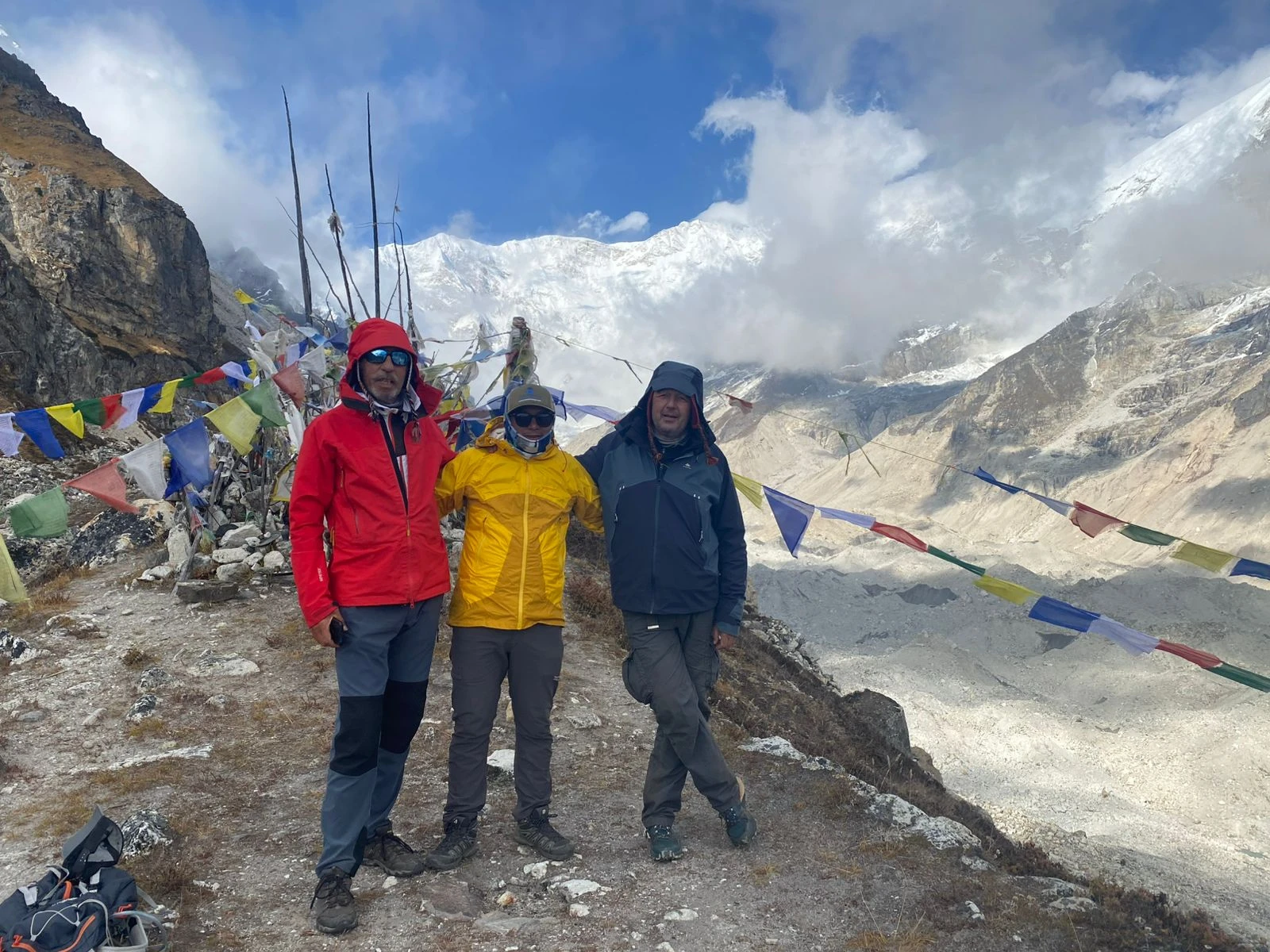
Today we will make our way to Kanchanjunga North Base Camp situated at an altitude of 5140m following the trail along the glacier. Kanchanjunga North Base Camp(Pangpema) is also the expedition base camp and is also known as Pang Pema. You will find Buddhist prayer flags. You can enjoy the beautiful view of surrounding mountains. After spending some time at base camp, you will return back to Lhonak.

  • Meals:Breakfast, Lunch & Dinner
  • Accommodation:Lodge
  • Max Altitude:3427m
  • Duration:6/7 hrs

We will return to Ghunsa following the trail that we used while climbing up. We will enjoy our lunch at Khambachen. After that, we will walk down to Ghunsa, where we will spend the night.

  • Meals:Breakfast, Lunch & Dinner
  • Accommodation:Lodge
  • Max Altitude:4200m
  • Duration:4/5 hrs

Today, we will be walking through the forestry and grassy ridge trail. We can see Ghunsa and Phole villages as well as an amazing view of Jannu (7710m), Nyukla Lachung (6012m), Ghabur or Temachungi (6305m), and other mountains.

  • Meals:Breakfast, Lunch & Dinner
  • Accommodation:Lodge
  • Max Altitude:4646m
  • Duration:6/7 hrs

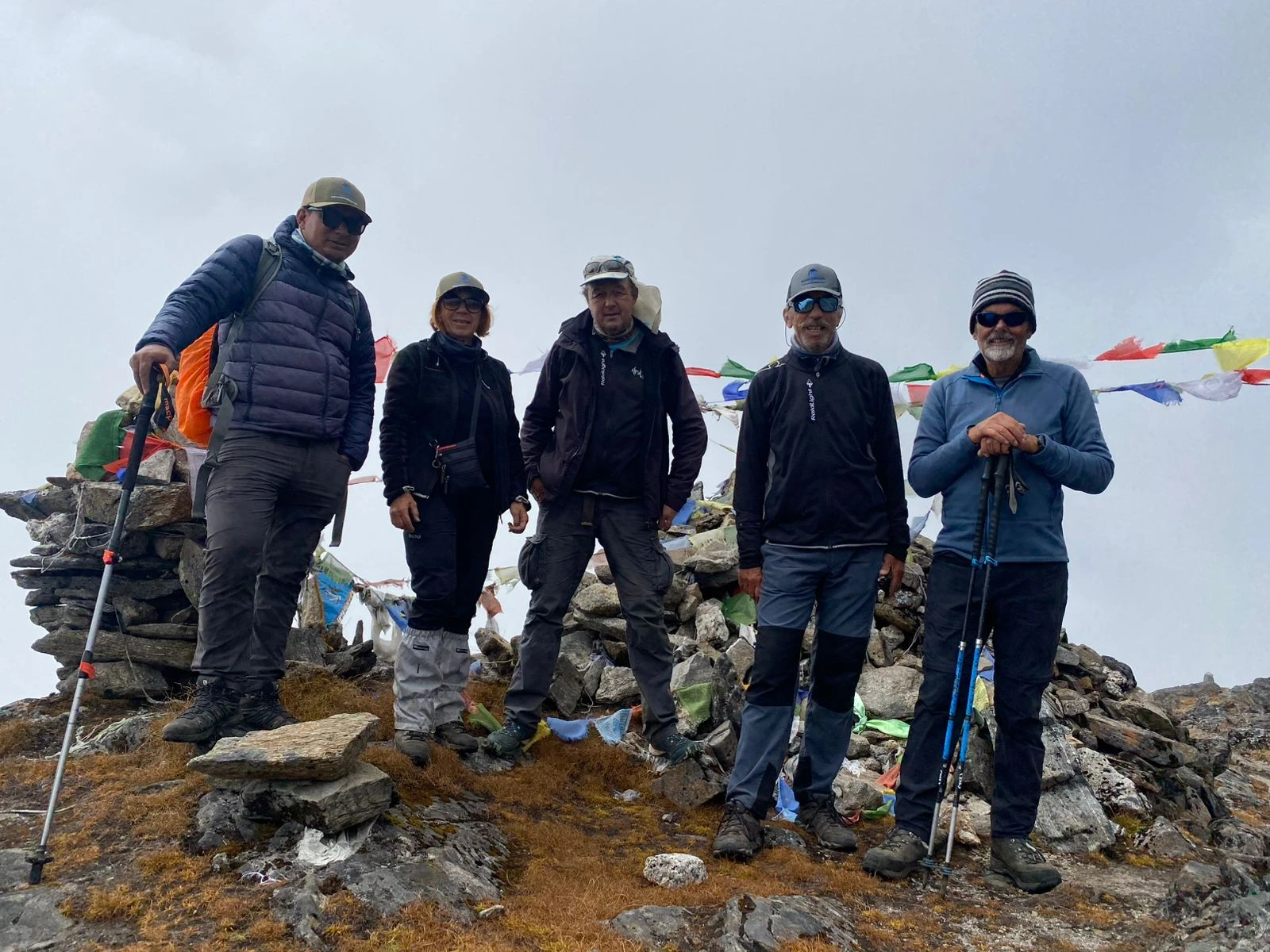
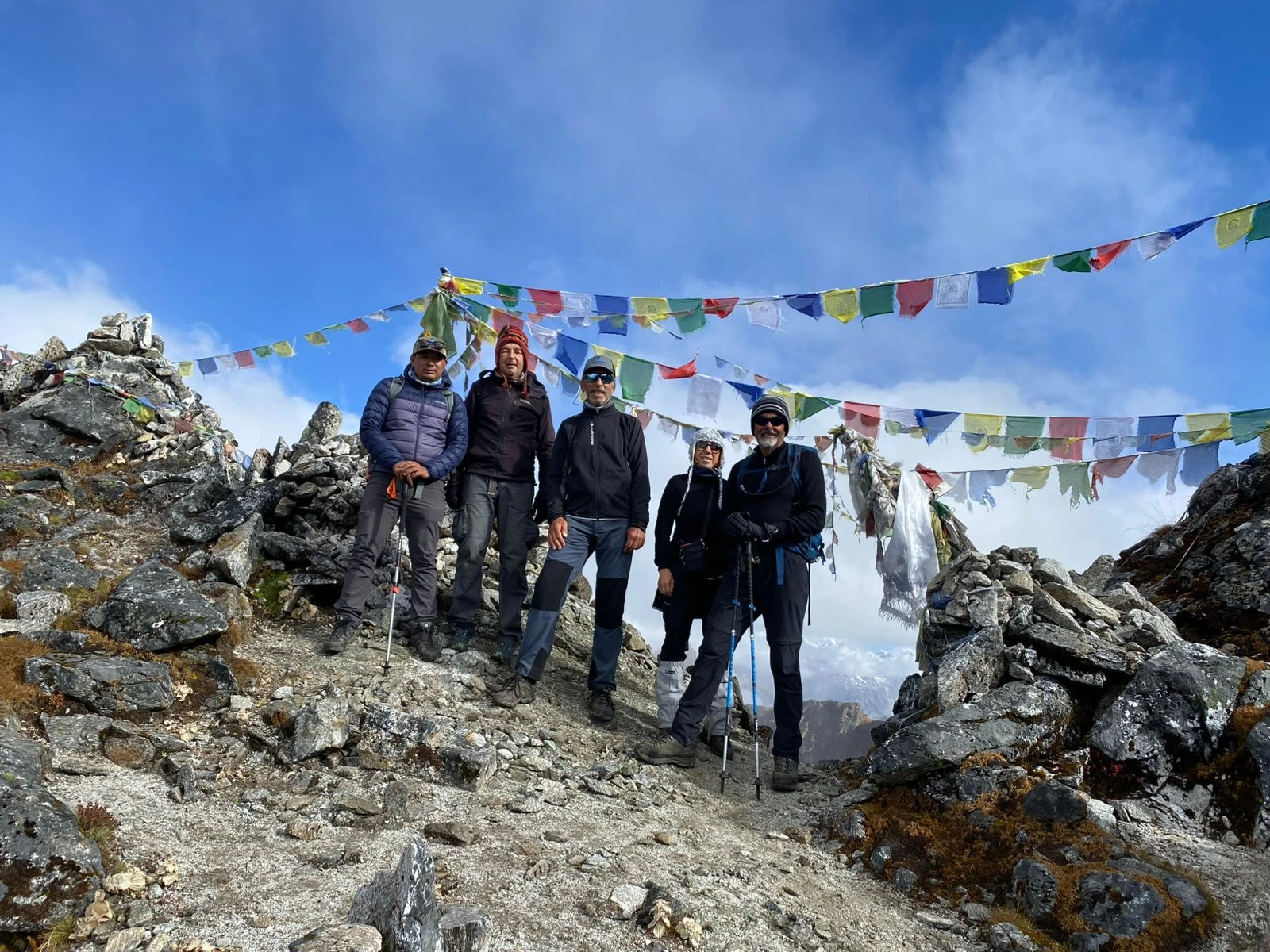
We will start our trek early morning. We have to cross two high passes, Mirgin La pass (4645m) and Sinelapche Bhyanjyang Pass (4645m). The stunning view of Yalung Glacier, Jannu (7710m), Makalu (8481m), Baruntse (7129m), Kanchenjunga (8586m), and many other mountain ranges can be seen from the high passes. After that, the trail descends down to Cheram.

  • Meals:Breakfast, Lunch & Dinner
  • Accommodation:Tea House
  • Max Altitude:4580m
  • Duration:4/5 hrs

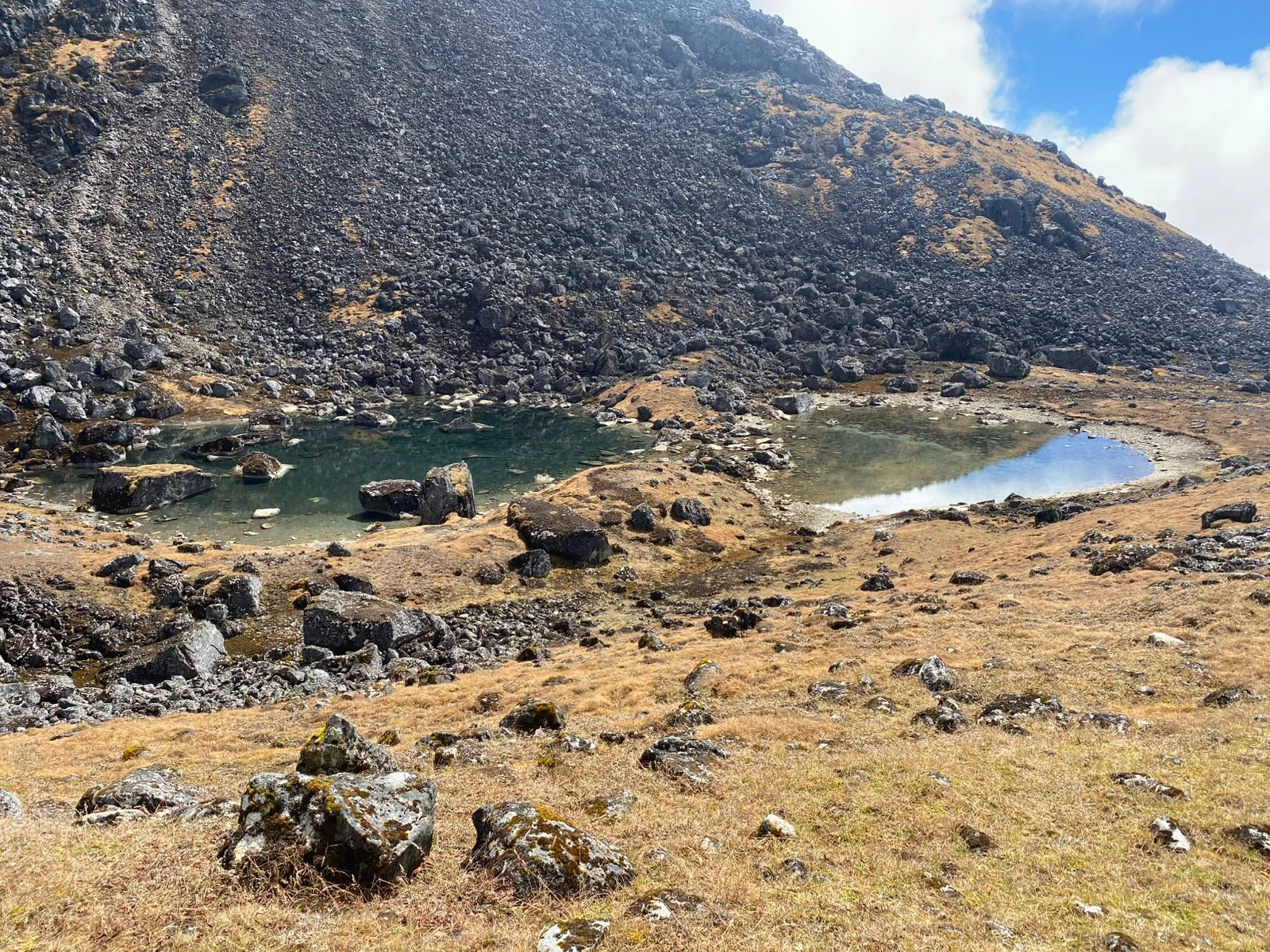
We climb up towards Ramche, passing through an ablation valley and the Yalung Glacier's moraines. On the way, we can see Rathong peak (6682m), a lake and a blue sheep grazing in the meadow on the verdant hills. We will visit small monastery at Ramche in the evening.

  • Meals:Breakfast, Lunch & Dinner
  • Accommodation:Lodge
  • Max Altitude:4730m
  • Duration:6/7 hrs

Today we will hike to Kanchenjunga South Base Camp or Oktang in the morning. Tibetan prayer flags encircle the Base Camp, which is situated just on the glacier's edge. The entire area is surrounded by the Himalayas and the views are just breathtaking. We will get our way back to Cheram after spending some time in Oktang.

  • Meals:Breakfast, Lunch & Dinner
  • Accommodation:Lodge
  • Max Altitude:2995m
  • Duration:4/5 hrs

The trail descends downhill until the final part to tortong. The final part is steep ascent through the forestry trail and over a landslide-prone region. Along the way to Tortong, we also come across a Chortens, monasteries, and waterfalls. There are few teahouses at Tortong where we will spend a night.

  • Meals:Breakfast, Lunch & Dinner
  • Accommodation:Lodge
  • Max Altitude:2144m
  • Duration:5/6 hrs

After breakfast, we will descend downhill which then gradually turns into a strenuous ascent. We will cross across two passes, Lasiya Bhanjyang (3415m) and Dhupi Bhanjyang (2665m). Then, we follow the steep downhill trail that goes through forests until we reach Ysasang.

  • Meals:Breakfast, Lunch & Dinner
  • Accommodation:Lodge
  • Max Altitude:1580m
  • Duration:5/6 hrs

Today, will be the last day of our walk and the trail will be easier as we will be walking at lower altitude. We will cross several suspension bridges, forests, villages and terraced farmland on our way to Ranipool.


  • Meals:Breakfast, Lunch & Dinner
  • Accommodation:Lodge
  • Max Altitude:1500m
  • Duration:7/8 hours drive

Today, we will take a vehicle and will have a long drive, taking in the beautiful scenery of rivers, verdant hills, snow-capped mountains, and people. In the evening, you can visit the beautiful hills covered with tea plantations.

  • Meals:Breakfast & Lunch
  • Accommodation:Hotel
  • Max Altitude:1310m
  • Duration:3/4 hrs Drive & 55 minutes flight

Today we will drive along the hills on our way to flatland of Bhadrapur. Upon reaching Bhadrapur, we will take a flight back to Kathmandu. Upon reaching Kathmandu, you can enjoy your dinner and relax in a comfortable hotel.

  • Meals:Breakfast
  • Max Altitude:1310m
  • Duration:45 Minutes Drive

Representative from Moon Himalaya Adventure will drop you at the airport 3 hours prior to the scheduled flight time.

The itinerary can be customized. You can spend a night at Kanchenjunga base camp and go for mountain hiking next morning at around 5700m and return to Lhonak. The itinerary made by Moon Himalaya Adventure is prepared on the basis of our years of experience. 

Cost DetailsWhat's Included
  • Airport pick up and drop.
  • Three-night hotel in Kathmandu.
  • Welcome and Farewell dinner.
  • Flight from Kathmandu to Bhadrapur.
  • Flight from Bhadrapur to Kathmandu.
  • Transportation from Bhadrapur to Ilam and from Ilam to Sukethum by jeep or bus.
  • Transportation from Ranipool to Kanyam and from Kanyam to Bhadrapur by jeep or bus.
  • Three meals (breakfast, lunch and dinner) during the trek.
  • Tea and coffee during the trek.
  • Desert after dinner (seasonal fruits).
  • Accommodation during the trek.
  • Kanchanjunga Conservation Area entry fee.
  • Restricted area permit fee.
  • Flight from Kathmandu to Bhadrapur and from Bhadrapur to Kathmandu for guide.
  • English speaking government license holder Trekking guide.
  • Porter.
    (For two person there will be one porter and the baggage should be 10kg only)
  • Food, accommodation, salary and Trekking insurance of guide, and porter.
  • First aid kit.
  • All necessary government taxes.
  • Certificate of accomplishment of the trek.
  • Arrangement of Emergency Helicopter service which will be paid by client Travel insurance company.
What's Excluded
  • Nepal entry visa fee (you may easily issue the visa upon your arrival at Tribhuwan International Airport – Kathmandu). You will require 2 passport size photos.
  • International airfare and airport departure tax.
  • Your Travel insurance (compulsory).
  • Food (lunch and dinner) while you are in Kathmandu.
  • Hotel in Kathmandu that goes beyond the scheduled program.
  • Your personal expenses and entrance fees while you do the tour in Kathmandu.
  • Entry fees in Monastries, temples, Museum.
  • Your personal expenses, shopping, donation to monasteries and school, wifi, laundry etc
  • All the alcoholic and non-alcoholic drinks.
  • Sweet things like chocolate bars.
  • Internet, Hot shower and battery charge during the trek.
  • Tips for the guide and staffs.
  • Things that go beyond "cost includes" list.
  • Any Additional cost due to Nature calamity and Unforeseen Circumstances etc.


Useful InformationGood to Know

Best Time to Do the Kanchenjunga Base Camp Trek

The best time to do the Kanchenjunga Base Camp Trek is during the spring (March to May) and autumn (September to November) seasons. These months usually offer the most stable weather, clearer mountain views, and better trekking conditions throughout the region.

Spring is one of the most popular times for the trek because the forests and hills become colorful with blooming rhododendrons and other wildflowers. Temperatures are also slightly warmer, especially at lower elevations, which makes the long trekking days more comfortable.

Autumn is another excellent season, particularly for clear mountain views. After the monsoon season ends, the skies are usually cleaner and visibility becomes much better. This is often considered the best time for seeing the surrounding Himalayan peaks clearly throughout the trek.

Winter trekking is possible in some cases, but heavy snowfall around the higher passes and base camp sections can make the route more difficult. Monsoon season is generally less recommended due to rain, slippery trails, landslides, and limited visibility in many parts of the region.

Since the Kanchenjunga region is more remote and less developed compared to other trekking areas in Nepal, choosing a stable trekking season becomes even more important for overall trail conditions and logistics.


Accommodation During the Kanchenjunga Base Camp Trek

Accommodation during the Kanchenjunga Base Camp Trek is mainly in local tea houses and simple mountain lodges throughout the route. Compared to Everest or Annapurna, the facilities in the Kanchenjunga region are much more basic due to the remoteness of the area.

In the lower villages, trekkers can usually expect simple private rooms with basic bedding and common dining areas. As the trail moves higher into places like Ghunsa, Khangpachen, Lhonak, Cheram, and Ramche, accommodation becomes more limited and simpler.

Most tea houses provide twin-sharing rooms with shared toilets. Attached bathrooms, luxury lodges, and modern facilities are generally not available in the higher sections of the trek. In some remote villages, availability can also depend on the trekking season and weather conditions.

The dining areas are usually the warmest and most social part of the tea house, where trekkers gather for meals and rest after long trekking days. Heating is mostly limited to the common dining space, while bedrooms can become quite cold at higher elevations.


Food and Meals on the Kanchenjunga Trek

Food during the Kanchenjunga Trek is served mainly through local tea houses and lodges along the route. While the menu is simpler compared to Everest or Annapurna, trekkers can still expect warm and filling meals throughout the journey.

The most common meal on the trek isDal Bhat, a traditional Nepali meal that includes rice, lentil soup, vegetables, and seasonal side dishes. It is popular among trekkers because it is nutritious, filling, and usually available in almost every village.

Besides Dal Bhat, many tea houses also serve foods like noodles, fried rice, pasta, soups, potatoes, eggs, chapati, pancakes, porridge, tea, and coffee. In lower villages, the menu options are generally wider, while food choices become more limited as you move toward higher elevations like Lhonak, Ramche, and the base camp areas.

Because the region is remote, most food supplies are carried manually by porters, mules, or yaks. This means food prices gradually increase as you gain altitude.

Meals during the trek are usually simple rather than luxurious, but they play an important role in maintaining energy during the long trekking days. Many trekkers also find that eating local meals throughout the journey becomes part of the overall mountain experience.


Why Choose Us for Your Kanchenjunga Base Camp Trek

The Kanchenjunga region is not just another trekking destination for us. We have real on-ground experience operating treks in this remote part of eastern Nepal and understand the route, trail conditions, logistics, and challenges that come with the journey.

Our team has previously led groups to Kanchenjunga Base Camp, including expeditions personally led by Mr. Lachhuman Tamang, the owner of Moon Himalaya Adventure and an experienced Himalayan trekking and mountain leader. Having direct experience in the region allows us to plan the journey more practically and manage the trek with a deeper understanding of the terrain and conditions.

Because Kanchenjunga is far more remote than Everest or Annapurna, proper coordination becomes very important throughout the trek. From transportation and permit arrangements to acclimatization planning and daily trail management, our team focuses on keeping the journey safe, smooth, and well organized from start to finish.

Most importantly, we aim to provide a trekking experience that feels professional, personal, and genuinely connected to the mountains rather than overly commercialized.

FAQsKanchenjunga Base Camp Trek - 22 Days FAQs
  • The Kanchenjunga Base Camp Trek typically takes around 18–25 days, depending on the route, acclimatization plan, and whether the itinerary includes both the north and south base camps. Our itinerary is designed as a 22-day journey, including arrival, preparation, transportation, trekking days, acclimatization, and departure.

  • Yes. Our itinerary covers both Kanchenjunga North Base Camp (Pangpema – 5,143 m) and Kanchenjunga South Base Camp (around 4,730 m) in a single journey.

  • The trek is considered challenging due to its long duration, remote trails, high altitude, and multiple mountain passes. It is more demanding than many standard tea-house treks in Nepal.

  • Previous high-altitude trekking experience is highly recommended. Trekkers should be comfortable walking for multiple days in remote mountain conditions.

  • The highest point reached during the trek is Kanchenjunga North Base Camp (Pangpema) at 5,143 meters.

  • Spring (March to May) and autumn (September to November) are generally considered the best seasons due to stable weather and clearer mountain views.

  • No. Compared to Everest or Annapurna, far fewer trekkers visit the Kanchenjunga region, which makes the trekking experience feel much quieter, less crowded, and more remote.

  • Accommodation is mainly in local tea houses and simple mountain lodges. Facilities are basic, especially in higher villages.

  • Tea houses usually serve meals like Dal Bhat, noodles, fried rice, soups, potatoes, eggs, tea, coffee, and other simple trekking meals.

  • The trek requires Kanchenjunga Conservation Area Permit (KCAP) and Restricted Area Permit (RAP)

  • Yes. The Kanchenjunga region is a restricted trekking area, so trekkers must travel with a licensed guide through a registered trekking agency.

  • Yes. Porters can be arranged to help carry trekking gear and personal belongings throughout the journey.

  • Yes. Since the trek reaches above 5,000 meters, altitude sickness is a possible risk. Proper acclimatization and gradual ascent are important parts of the itinerary.

  • Internet and phone connectivity are limited in many parts of the Kanchenjunga region, especially at higher elevations.

  • Temperatures can drop below freezing at higher elevations, especially during mornings, nights, and around the base camp areas.

  • Yes. Travel insurance that covers high-altitude trekking and emergency helicopter evacuation is mandatory for this trek.

  • The trek is generally not recommended for complete beginners due to its remoteness, long duration, and physical demands.

  • The remote location, longer itinerary, transportation logistics, permits, and operational costs make the Kanchenjunga trek more expensive compared to shorter and more commercial trekking routes.

ReviewsWhat Our Clients Says?
  • Adventurous experience along with great hospitality

    (Translated by Google) Due to the torrential rains which caused numerous landslides and made this trek very difficult, the Moon Himalaya Adventure agency team was considerate and attentive to its clients. Everything has been done to make our daily lives easier. Many thanks!

    (Original)
    En raison des pluies torrentielles ayant engendré de nombreux éboulements et rendant ce trek très difficile, l'équipe de l'agence Moon Himalaya Adventure s'est montrée prévenante et à l'écoute de ses clients. Tout à été mis en oeuvre pour nous faciliter le quotidien. Un grand merci !

    M
    Marie-Christine DuchêneFrance,October 18, 2024
    Google
Similar Trips
You May Also Like
Call us, we're at your service

Mobile:+977 9860455963 or WhatsApp Talk Phone

Our travel experts would love to create a package just for you.