Pharchamo Peak Climbing Overview
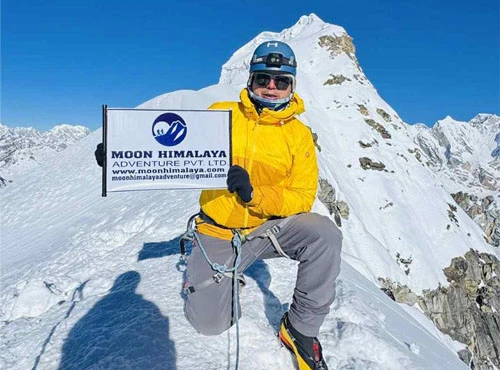
Pharchamo Peak stands at around 6,187 meters in the remote Rolwaling Valley. Unlike many popular trekking peaks in Nepal, it doesn’t see big crowds. There are no busy trails or long summit queues. Just reaching the mountain already feels like a proper expedition, not just a trek with a climb at the end.
What really makes Pharchamo special is its location. The Rolwaling region lies between the Everest and Langtang areas, but far fewer people go there. The villages are quiet, the trails feel more personal, and as you move deeper into the valley, you start to feel truly away from everything. By the time the climbing begins, you’re already used to this slower, more remote rhythm.
Most climbers combine Pharchamo with crossing the Tashi Lapcha Pass. This adds more challenge and makes the journey more complete. It’s not just about reaching the summit but about moving through glaciers, handling high mountain terrain, and stepping into a more technical side of climbing. It feels like something you build up to, not something easily accessed.
This peak isn’t usually chosen on impulse. It’s better suited for people who already have some trekking experience and want to take the next step. The days can be longer, logistics a bit more complex, and the environment more demanding than popular routes. But that’s exactly what makes it appealing.
Pharchamo Peak isn’t about convenience. It’s about a quieter, more committed Himalayan experience where the journey matters just as much as the summit.
Where is Pharchamo Peak Located?
Pharchamo Peak is located in the Rolwaling Valley of northeastern Nepal, right between the Everest region and the Langtang region.
It stands at around 6,187 meters and lies close to the Tashi Lapcha Pass, a high mountain route that connects Rolwaling with the Everest (Khumbu) side. Because of this, the peak is usually approached as part of a crossing route rather than a simple up-and-down climb.
Geographically, it sits in the Gaurishankar Himalayan range, an area that is much less developed compared to more popular trekking regions in Nepal. Even though it’s positioned between well-known areas, it doesn’t get the same number of climbers.
In simple terms, Pharchamo Peak is not on the main Everest trekking route. It’s just beyond it, in a quieter valley that feels more remote and less crowded.
What Makes Pharchamo Peak Different from Other 6000m Peaks?
Pharchamo doesn’t stand out because of height or popularity. In fact, it’s often overlooked compared to more well-known peaks. What really sets it apart is the kind of journey it offers from start to finish.
The biggest difference comes from its setting. Located in the Rolwaling Valley, the entire route feels quieter and less commercial. You don’t see the same steady flow of trekkers or climbers that you would in the Everest region. That alone changes the pace of the experience. It feels more personal, and at times, more committing.
Another thing that makes Pharchamo different is how the journey unfolds. Instead of heading straight toward a base camp, the route naturally builds through high mountain terrain, often involving the crossing of the Tashi Lapcha Pass. This gives the climb a more continuous, expedition-like rhythm rather than a single goal-focused push.
Because of this, the experience doesn’t revolve around just one summit day. It’s shaped by everything that leads up to it, the route, the environment, and the gradual shift into higher, more remote terrain.
How Difficult is Pharchamo Peak in Reality?
Pharchamo Peak is not one of the easiest 6,000-meter peaks in Nepal. The difficulty comes from a mix of factors rather than just one.
The altitude, at around 6,187 meters, already makes things challenging. At that height, your body is under constant pressure. But what really adds to it is the terrain. The climb involves glacier travel, snow and ice sections, and fixed ropes on steeper parts. It’s not highly technical compared to big expedition peaks, but you still need a basic understanding of climbing movement and equipment.
The approach is another part people often underestimate. By the time you reach the climbing phase, you’ve already gone through a long and remote route, usually crossing the Tashi Lapcha Pass. So you’re not starting fresh. Fatigue builds up slowly, and managing your energy becomes important.
Summit day is usually longandsteady rather than short and intense. It’s less about rushing and more about keeping a consistent pace in thin air, often on exposed sections. At this altitude, even small mistakes or poor pacing can feel much bigger.
Overall, Pharchamo sits somewhere in the middle. It’s not extremely technical, but it’s definitely not an easy “walk-up” peak either. It requires good fitness, some basic climbing knowledge, and the ability to stay focused in a remote environment.
If you expect it to feel like a typical trekking peak, it can be tougher than expected. But with proper preparation and the right mindset, it’s a challenging but very achievable climb.
Is Pharchamo Peak Suitable for Beginners?
Pharchamo Peak is not ideal as a first climbing experience if you have no trekking or high-altitude experience.
The main reason is not just the climb itself, but the overall commitment required. The route is longer, more remote, and less supported than many popular trekking peaks. It asks for a level of comfort in the mountains that usually comes from prior experience.
That said, it doesn’t mean beginners are completely excluded. If someone has already done a few high-altitude treks and feels confident spending multiple days in mountain conditions, Pharchamo can be a realistic next step. With proper preparation and guidance, it becomes manageable.
Where it becomes difficult is when someone approaches it without that foundation. This isn’t the kind of climb where you rely on the route to guide you through everything. It expects a bit more awareness and readiness from the start.
So in simple terms, Pharchamo is not a beginner peak in the strict sense. But for someone looking to move beyond trekking and step into a more involved climbing experience, it offers a strong and meaningful progression.
Permits Required for Pharchamo Peak Climbing
Climbing Pharchamo Peak requires a few standard permits, but because it’s in the Rolwaling region, the combination is a bit different from peaks in the Everest area.
The main one is the Pharchamo Peak climbing permit, issued by the Nepal Mountaineering Association. This is the official permit needed for trekking peaks in Nepal and is usually arranged in advance through a registered agency.
Since the peak lies inside the Gaurishankar Conservation Area, you’ll also need a Gaurishankar Conservation Area Permit (GCAP). This replaces permits like ACAP or Sagarmatha National Park permits that are required in other regions.
Along with that, a Trekkers’ Information Management System (TIMS) Card is required for safety and tracking during the trek.
These permits are included and managed as part of the climbing package, so you don’t have to arrange them on your own.