Naya Khang Peak (Ghanja La Chuli) 5844m

Nayakhang Peak Climbing
Trip Facts
  • Trip Duration14 Days
  • Difficulty Level Strenuous
  • Maximum Altitude 5844m
  • Activity Trekking & Peak Climbing
  • Starts/Ends Kathmandu / Kathmandu
  • Best Season Autumn (Sep - Dec) & Spring (Feb - May)
Highlights
  • A great first Himalayan peak at 5,844m, perfect for trekkers looking to step into real mountaineering
  • Scenic journey through the Langtang Valley with forests, rivers, open landscapes, and changing terrain along the way
  • Less crowded route compared to Everest and Annapurna regions, offering a more peaceful and authentic mountain experience
  • Stunning views of Langtang Lirung, Dorje Lakpa, and surrounding Himalayan peaks, especially around Kyanjin Gompa and summit
  • A balanced mix of teahouse trekking and actual climbing, including base camp, high camp, and a proper summit push
  • Easy access from Kathmandu with no domestic flights required, making the trip simpler, more reliable, and budget-friendly

Naya Khang Peak Climbing Overview

Naya Khang Peak (5,844 m), also known as Ganja La Chuli, is one of the most accessible trekking peaks in Nepal, located in the beautiful Langtang region, close to Kathmandu.

What makes Naya Khang special is the combination of a scenic valley trek and a real climbing experience. The journey begins with a drive to Syabrubesi, followed by a gradual trek through the Langtang Valley, passing forests, rivers, and traditional Tamang villages. As you move higher, the landscape opens up around Kyanjin Gompa, where you spend time acclimatizing and preparing for the climb.

From there, the route shifts from trekking to climbing. You head towards base camp and then high camp, where the terrain becomes more rugged and snow-covered. The summit push is the most demanding part of the trip, starting early in the morning with the support of a climbing guide. Fixed ropes are used where necessary, making it a true mountaineering experience, but still manageable for well-prepared beginners.

The full itinerary usually takes around two weeks, allowing enough time for proper acclimatization, which is key for both safety and a successful summit.

Naya Khang Peak is ideal for trekkers who want to take the next step into climbing. It offers a balanced experience, challenging but not overwhelming, with rewarding views of Langtang Lirung, Dorje Lakpa, and even distant Tibetan peaks from the summit.


Where is Naya Khang Peak located?

Naya Khang Peak lies in the Langtang region of Nepal, inside Langtang National Park, just north of Kathmandu and close to the Tibetan border. Compared to peaks in the Everest or Annapurna regions, this area is much quieter and less commercial, which is part of what makes the experience feel more raw and authentic.

The journey starts with a drive from Kathmandu to Syabrubesi, which is the main entry point to the Langtang Valley. From there, the trail follows the Langtang River, passing through forested sections, small villages, and open valleys before reaching Kyanjin Gompa. This is the last permanent settlement in the valley and also the key acclimatization point before heading towards the climbing route.

Naya Khang itself sits above the eastern side of the Langtang Valley. From Kyanjin, the route gradually moves away from the main trekking trail and heads toward base camp and high camp, where the landscape becomes more rugged and alpine.

One of the biggest advantages of this location is accessibility. Unlike Everest region peaks, there are no domestic flights involved, which makes the logistics simpler, more reliable, and often more budget-friendly.

At the same time, you still get close-up views of major Himalayan peaks like Langtang Lirung, Dorje Lakpa, and even parts of the Tibetan range, making it feel like a full Himalayan experience without going too far off the grid.


How Difficult is Naya Khang Peak in Reality?

Naya Khang Peak is often considered a beginner-friendly climbing peak, but that doesn’t mean it’s easy. It sits in that middle ground where it’s achievable for first-time climbers but still requires real effort, preparation, and the right mindset.

The trekking part of the journey is quite manageable. The trail through Langtang Valley is gradual, and with proper pacing and acclimatization around Kyanjin Gompa, most people handle this section well. If you have done multi-day treks before, this part won’t feel too overwhelming.

The real challenge begins once you move towards base camp and high camp.

From here, the terrain becomes more rugged, with snow-covered sections and steeper ascents. On summit day, you will start early in the morning and climb for several hours in cold conditions. This is where basic mountaineering skills come into play. You’ll be using equipment like crampons, harness, and ropes under the guidance of your climbing leader.

That said, it’s not highly technical. You don’t need prior climbing experience, but you do need to be physically fit and mentally prepared for a long and demanding summit push.


Is Naya Khang a Good Peak for Beginners?

Yes, Naya Khang is considered one of the better choices if you’re looking to attempt your first Himalayan peak, but it is important to understand what “beginner-friendly” really means here.

This isn’t a trek where you just walk to a viewpoint. It is a real climb that goes above 5,800 meters, so you will be dealing with altitude, cold conditions, and a long summit day. The difference is that Naya Khang doesn’t require advanced technical skills, which makes it suitable for people who are new to mountaineering but willing to prepare properly.

If you already have some trekking experience, like multi-day hikes in the mountains, you’re in a good position to take this step. The route also gives you time to adjust, with acclimatization days around Kyanjin Gompa before moving into the climbing phase.

During the summit push, you will be guided the entire way. Our climbing team will fix ropes where needed and show you how to use basic equipment like crampons and a harness. So even if you haven’t climbed before, you’re not expected to figure things out on your own.

That said, fitness matters a lot. You don’t need to be an athlete, but you should be comfortable walking for several hours a day and handling steep, high-altitude terrain without rushing.


Permits Required for Naya Khang Peak

To climb Naya Khang Peak, you will need a few standard permits that cover both the trekking route and the actual climbing section.

The main permits required are the following:

1. Langtang National Park Entry Permit

Since the entire route falls inside Langtang National Park, this permit is required from the start of the trek. It helps support conservation efforts and maintain the trekking trails in the region.

2. TIMS Card (Trekkers’ Information Management System)

This is used to keep track of trekkers for safety purposes. It becomes important in case of emergencies or if any assistance is needed during the trek.

3. Naya Khang Peak Climbing Permit

This is the key permit that allows you to actually climb the peak. It is issued by the Nepal Mountaineering Association (NMA), and the cost varies depending on the season (spring, autumn, or off-season).

All of these permits are checked at different points along the trail, especially near entry checkpoints and before moving into higher areas. Our team will handle most of the coordination, and you’ll just need to carry copies of your permits during the trek.

ItineraryDay to Day Itinerary
Expand AllCollapse All

  • Meals:Welcome Dinner
  • Accommodation:Hotel
  • Max Altitude:1310m
  • Duration:45 Minutes Drive

Upon your arrival team from Moon Himalaya Adventure will be at Tribhuvan International Airport to receive you and will transfer you to hotel. In the Evening you will have a briefing about your Round Annapurna trek with your guide.

  • Meals:Breakfast
  • Accommodation:Hotel
  • Max Altitude:1310m
  • Duration:5/6 hrs

On the second day after having your breakfast, our guide will explain to you about the Round Annapurna trek and the gear you need. In case you miss out on any gear you can buy or rent it. If you want then you can visit around the world heritage sites (Kathmandu Durbar Square, Bouddhanath, Pashupatinath, Swoyambhunath) but you have to pay entry fees on your own.

  • Meals:Breakfast, Lunch & Dinner
  • Accommodation:Lodge
  • Max Altitude:1503m
  • Duration:6/7 hrs drive

The drive begins after having breakfast at hotel. The scenic drive from Kathmandu to Syabrubesi offers beautiful views of gushing rivers, terraced farms, traditional Nepali villages, and snow-capped mountains. On reaching Syabrubesi we will rest on our Lodge.

  • Meals:Breakfast, Lunch & Dinner
  • Accommodation:Lodge
  • Max Altitude:2470m
  • Duration:5/6 hrs

The first day of our walk starts from Syabrubesi. We trek through the lush forest and terraced farmland along the Langtang River after crossing the Bhote Kosi. Up in the hills, we continue our ascent to the Lama Hotel.

  • Meals:Breakfast, Lunch & Dinner
  • Accommodation:Lodge
  • Max Altitude:3430m
  • Duration:5/6 hrs

Along the banks of the Langtang River, we make our way up through the forest. Snowy peaks will appear in the distance, luring us onward. Upon reaching Ghoda tabela we have to show our permits at army check point. After that, we will continue our walk to reach the Langtang Valley by crossing the river on its eastern bank. Leaving behind the prayer flags and water-powered prayer wheels, we make our way to the picturesque Tamang settlement of Langtang.

  • Meals:Breakfast, Lunch & Dinner
  • Accommodation:Lodge
  • Max Altitude:3830m
  • Duration:4/5 hrs

After a pleasant two hours of hiking through breathtaking mountain scenery, we will reach Kyanjin for lunch. As we make our way upward, the valley opens up and the scenery gets more breathtaking. We pass through a number of small villages and yak pastures. Beautiful panoramic view of Dorje Larpa (6,990 m), Langtang RI (6370 m), and Langtang Lirung (7245 m) can be seen while making our way to Kyanjin. We will stay for two nights at Kyanjin Gumba.

  • Meals:Breakfast, Lunch & Dinner
  • Accommodation:Lodge
  • Max Altitude:4984m
  • Duration:4/5 hrs

In order to acclimate, we will spend the night at Kyanjin Gompa. Incredible up-close views of majestic mountains and glaciers can be enjoyed from upper Langtang Valley. We will visit Kyanjin Gompa Monastery and the Yak cheese factory. We will hike to Tseku Ri (5033m) from where we can see the beautiful Himalayan peaks of Langtang Lirung (7,227m), Langtang II (6,596m), and Yala peak (5,500m). We will be back to our lodge and take good rest.

  • Meals:Breakfast, Lunch & Dinner
  • Accommodation:Tent
  • Max Altitude:4430m
  • Duration:4/5 hrs

The trek to Nayakhang Base Camp begins today. The journey provides breathtaking panoramas of the Himalayas. The path to base camp will be rough and covered in snow. Once we reach at base camp, you can begin making final preparations for the ascent. Team of Moon Himalaya Adventure will set up a camp at base camp where you will stay overnight in a tent.

  • Meals:Breakfast, Lunch & Dinner
  • Accommodation:Tent
  • Max Altitude:4960m
  • Duration:4/5 hrs

Getting to the high camp of Nayakhang Peak involves a slow but steady ascent. Beautiful vistas of the Himalayas await you throughout the route. At times, you'll need to climb a tough portion of the route. You will spend a night in a tent at high camp.

  • Meals:Breakfast, Lunch & Dinner
  • Accommodation:Tent
  • Max Altitude:5844m
  • Duration:7/8 hrs

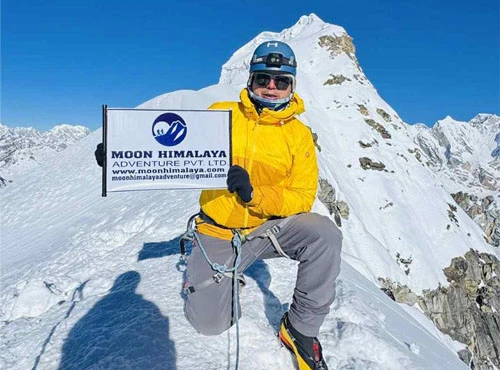
The most notable day of the trip is today as we will make an attempt to the summit. Get up very early in the morning, take a snack, and then head out to begin your ascent. During our ascent, we will take hot water and pack some food. Our climbing guide will take the lead and set up the fixing rope wherever it is required. When you reach the peak of Naya Khang, you will be treated to a breathtaking panorama. Naya Khang offers stunning panoramas of the Himalayas and the Tibetan countryside, including the 8,000-meter Shisapangma, the 7,000-meter Langtang Ri, Langtang Lerung, and more. We will make our way back to the base camp once you have had a chance to take pictures and admire the scenery.

  • Meals:Breakfast, Lunch & Dinner
  • Accommodation:Lodge
  • Max Altitude:2470m
  • Duration:6/7 hrs

While our staff wraps up the camping site, we will make our way down to the Lama Hotel. The trail retraces the route that we used while making our way up.

  • Meals:Breakfast, Lunch & Dinner
  • Accommodation:Lodge
  • Max Altitude:1503m
  • Duration:6/7 hrs

The trail gently descends from the Lama Hotel, passing through quaint villages and verdant forests. As you travel to Syabrubesi, you'll get some breathtaking vistas of Annapurna, Manaslu, and Ganesh Himal.

  • Meals:Breakfast & Lunch
  • Accommodation:Hotel
  • Max Altitude:1310m
  • Duration:7/8 hrs

The last day of the trek is when we will be back in Kathmandu on a private vehicle, watching the scenic beauty of rivers, villages, and hills. Upon arrival in Kathmandu, you will be dropped off at your hotel. In the evening, you will have a group dinner with your guide, where you can recall your memories of the trip with each other and enjoy the evening.

  • Meals:Breakfast
  • Max Altitude:1310m
  • Duration:45 Minutes Drive

Representative from Moon Himalaya Adventure will drop you to the Tribhuvan International Airport for final departure three hours prior to your flight schedule.

The itinerary can be personalized according to your requirement. 

Cost DetailsWhat's Included
  • Airport pick up and drop
  • Three-night hotel in Kathmandu.
  • Ground transportation from Kathmandu to Syabrubesi and from Syabrubesi to Kathmandu on private vehicle for our client.
  • Three meals (breakfast, lunch and dinner) during the trek.
  • Accommodation during the trek.
  • Langtang National Park entry fee.
  • Nayakhang Peak climbing permit fee.
  • Trekkers’ Information Management system (TIMS) card.
  • Group equipment (Fixed rope, Main rope, Snow bar, Ice screw, Rock Piton).
  • Sleeping Tent, Kitchen Tent, Dinning Tent.
  • Ground transportation from Kathmandu to Syabrubesi and from Syabrubesi to Kathmandu for the guide and porter.
  • One expert government license holder trekking & mountain guide.
    (For 1 to 4 clients there will be 1 guide)
  • For 2 clients there will be 1 Porter.
    (The baggage of 1 client should be 12kg only)
  • Cook for climbing period at base camp.
  • Food, accommodation, salary, climbing insurance and equipment for the guide.
  • Food, accommodation, salary and trekking insurance for the porter, sherpa, cook and other staffs.
  • First aid kit.
  • All necessary government taxes.
  • Certificate of accomplishment of Nayakhang peak.
  • Office service charge.
  • Arrangement of Emergency Helicopter service which will be paid by client Travel insurance company.
What's Excluded
  • International airfare
  • Lunch and dinner in Kathmandu.
  • Client travel insurance.
  • Nepal entry visa fee (can be obtain upon your arrival at Tribhuwan International Airport, Kathmandu, requires 2 copies of passport size photos)
  • All specialty drinks (mineral water/coke/fanta and alcoholic beverage) while trekking.
  • Hot shower, battery charging and wifi during the trek.
  • Entry fees in monastries, temples and museum.
  • Your personal expenses, shopping, donations to monasteries or schools, wifi, laundry etc
  • Tips for guide, porter and cook.
  • Things that go beyond "cost includes" list.
  • Any Additional cost due to Nature calamity and Unforeseen Circumstances etc.


Useful InformationGood to Know

Best Time to Climb Naya Khang Peak

The best time to climb Naya Khang Peak is during spring (March to May) and autumn (September to November). These are the two seasons when the weather is most stable, the skies are clearer, and the chances of a successful summit are higher.

In spring, the temperatures are slightly warmer, especially in the lower sections of the trek. As you move through the Langtang Valley, the trails feel more lively with greenery and blooming rhododendrons. By the time you reach higher altitudes, conditions are generally stable, which makes it a comfortable season for both trekking and climbing.

Autumn, on the other hand, is known for its clarity. After the monsoon season, the dust and haze settle, so the mountain views feel sharper and closer. The weather is dry and predictable, which is exactly what you want when you're heading towards base camp and preparing for summit day.

Winter is still possible, but it’s much colder, and the snow conditions can make the climb more difficult than necessary. Monsoon season brings heavy rain, slippery trails, and limited visibility, so it’s usually avoided.

If you’re planning your climb for the best overall experience, spring and autumn are the safest and most reliable choices.


What to Pack for Naya Khang Peak Climbing

Clothing

  • Base layers (thermal tops and bottoms) – 2 to 3 sets
  • Quick-dry T-shirts or trekking shirts – 3 to 4
  • Trekking pants – 2 to 3 pairs
  • Down jacket (-10°C or lower) – 1
  • Fleece or soft shell jacket – 1 to 2
  • Waterproof jacket with hood – 1
  • Waterproof/rain pants – 1
  • Warm hat, sun cap, and buff – 1 each
  • Lightweight gloves (liner) – 1 pair
  • Warm gloves (waterproof/shell) – 1 pair
  • Trekking socks – 4 to 5 pairs
  • Thick wool socks (for night) – 2 pairs

Footwear

  • Trekking boots (good ankle support) – 1 pair
  • Mountaineering boots (for summit) – 1 pair
  • Lightweight shoes or sandals – 1 pair

Technical Climbing Gear (usually provided by the team)

  • Crampons
  • Ice axe
  • Climbing harness
  • Helmet
  • Carabiners and safety gear
  • Ascender and descender devices
  • Climbing ropes
  • Prusik cord
  • Personal anchor system

Accessories

  • Polarized sunglasses with UV protection
  • Sunscreen (SPF 50+) and lip balm
  • Headlamp with extra batteries
  • Trekking poles

Bags

  • Backpack (30–40L for trekking)
  • Duffle bag (provided)

Sleeping & Essentials

  • Sleeping bag (-10°C or lower)
  • Sleeping bag liner
  • Reusable water bottles or hydration system
  • Basic first aid kit
  • Personal medications
  • Toiletries

Altitude Sickness and Safety on Naya Khang

Altitude is honestly the biggest challenge on this climb. Once you go above 5,000 meters, your body starts to feel the difference. Even simple things like walking or eating can feel harder than usual.

The good thing is, this itinerary doesn’t rush you. You gradually gain height through the Langtang Valley and spend time at Kyanjin Gompa before heading higher. That part really helps your body adjust.

But still, altitude doesn’t work the same for everyone. You can be fit and still feel it.

Most people start noticing small signs first. A headache, feeling a bit off, not really hungry, or having trouble sleeping. These are normal in the beginning, but the important thing is not to ignore them.

What usually makes things worse is trying to push through it just to stay on schedule or reach the summit. That’s where people get into trouble.

On this climb, our lead guide (Lacchuman Tamang) keeps a close eye on everyone. If someone is not adjusting well, the pace is slowed down, or sometimes you take an extra day. In some cases, going down is the safest option, and that’s completely okay. Reaching the top is great, but getting back safely matters more


How to Prepare for Naya Khang Peak (Training Guide)

You don’t need to be a professional climber for Naya Khang, but you also can’t just show up without preparation. The better you prepare, the more you’ll actually enjoy the climb instead of just struggling through it.

The most important thing is basic fitness and stamina. You will be walking for several hours a day, often uphill, and then there’s the summit day, which is longer and more demanding. So your body needs to be used to sustained effort.

A simple way to prepare is to start with regular walking or hiking. If you can, go for hikes with some elevation gain and carry a light backpack. This helps your body adjust to the kind of movement you will be doing during the trek.

You don’t need a complicated gym plan, but adding a bit of strength training helps. Focus on your legs and core. Things like squats, lunges, and step-ups go a long way. Even doing stairs regularly can make a big difference.

Cardio is just as important. Activities like jogging, cycling, or even fast walking will help build your endurance. You don’t need to go extreme, just stay consistent.

One thing people often forget is getting used to their gear. If you’re planning to wear trekking boots or carry a backpack, try using them before the trip. It avoids surprises like blisters or discomfort on the trail.

You don’t need prior climbing experience for Naya Khang, but having a basic idea of how things work helps. Our lead guide will show you how to use equipment like crampons and ropes during the climb, so you are not expected to already know everything.

Mentally, it’s about patience. The climb is not a race. Some days will feel easy, some will feel slow. Being okay with that makes the whole experience smoother.


Why Choose Naya Khang Peak?

There are many trekking peaks in Nepal, but Naya Khang stands out for a few simple reasons, it gives you a real Himalayan climbing experience without making things overly complicated.

First, the location makes a big difference. Being in the Langtang region, it’s much closer to Kathmandu compared to Everest or Annapurna peaks. You don’t need to deal with flights or long logistics. You just drive to the starting point and begin the trek, which makes the whole trip feel more straightforward.

Another thing is the crowd. Langtang is quieter. You won’t find the same level of traffic you see on Everest routes. The trail feels more open, more peaceful, and in many ways, more connected to the local culture.

It’s also a great step into climbing. If you’ve done trekking before and want to try something more, this peak makes that transition feel natural. You get to experience base camp, high camp, and a proper summit push with basic technical support, without it becoming too overwhelming.

At the same time, it’s still a complete experience. You’re not just going for the summit. The trek itself takes you through forests, rivers, and traditional Tamang villages, and the views around Kyanjin Gompa are already worth the journey.

And then there’s the cost. Compared to peaks in more commercial regions, Naya Khang is generally more budget-friendly while still offering a full climbing experience.

FAQsNaya Khang Peak (Ghanja La Chuli) 5844m FAQs
  • No, prior climbing experience is not mandatory. Pisang Peak is considered suitable for fit trekkers who are willing to learn basic climbing skills during the trip. However, previous high-altitude trekking experience is always helpful.

  • Pisang Peak is a moderate-level climb. It is not highly technical, but it does require good physical fitness, endurance, and the ability to handle altitude and long summit days.

  • The best seasons are spring (March to May) and autumn (September to November). These months offer stable weather, clear views, and safer climbing conditions.

  • Most Pisang Peak expeditions take around 16 to 20 days, depending on the itinerary, acclimatization plan, and route.

  • You need a Pisang Peak Climbing Permit, Annapurna Conservation Area Permit (ACAP), and a TIMS Card. These are usually arranged by the trekking agency.

  • The cost typically ranges between USD 3,000 to 5,000 per person, depending on the level of service. Our package is priced at USD 3,700 per person.

  • During the trek, accommodation is usually in tea houses, which are basic but comfortable lodges. Camp will be set in Mera High Camp where you will stay in Tents.

  • You will find a variety of meals in teahouses during the trek. During the climbing period, meals are prepared by the expedition team at base camp.

  • Yes, altitude is a major factor. Proper acclimatization, hydration, and a steady pace are important to reduce risks. Your guide will monitor your condition throughout the climb.

  • You will need proper trekking and climbing gear, including warm clothing, boots, and personal equipment. Technical gear such as ropes, crampons, and an ice axe, which is provided by the team.

  • Yes, most trekking and climbing gear can be rented in Kathmandu or Pokhara before the trip begins.

  • Yes, it is one of the best peaks in Nepal for beginners who want to experience their first Himalayan climb with proper support and preparation.

ReviewsWhat Our Clients Says?

Be the first to review, click post review.

Similar Trips
You May Also Like
Call us, we're at your service

Mobile:+977 9860455963 or WhatsApp Talk Phone

Our travel experts would love to create a package just for you.