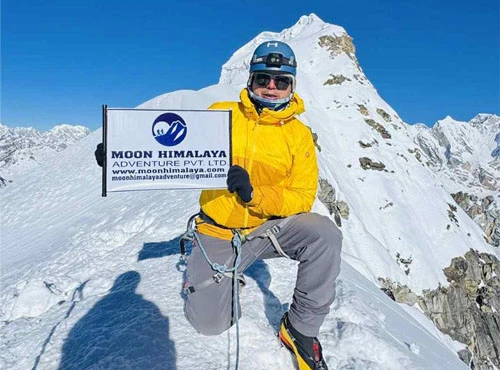
Yala Peak Climbing (5720m) - 13 Days

Yala Peak Climbing
Trip Facts
  • Trip Duration13 Days
  • Difficulty Level Moderate
  • Maximum Altitude 5720m
  • Activity Trekking & Climbing
  • Starts/Ends Kathmandu / Kathmandu
  • Best Season February to May & September to Mid-December
Highlights
  • One of the easiest and most beginner-friendly trekking peaks in Nepal at 5,732 meters, making it a perfect first Himalayan summit
  • No technical climbing required in normal conditions, allowing you to focus more on the experience rather than complex mountaineering skills
  • Short and accessible climb with a simple drive from Kathmandu, making it ideal even for those with limited time
  • A scenic journey through the peaceful Langtang Valley, passing forests, rivers, and traditional Tamang villages
  • Stunning summit views of Langtang Lirung, Dorje Lakpa, and surrounding Himalayan peaks, along with distant Tibetan landscapes on clear days
  • A well-balanced experience that offers a real sense of achievement without the pressure and complexity of more technical climbing peaks

Yala Peak Climbing Overview

Yala Peak (5,732 m), is one of the most accessible and beginner-friendly trekking peaks in Nepal. Located in the beautiful Langtang region, it offers a perfect introduction to Himalayan peak climbing without the need for technical mountaineering skills.

What makes Yala Peak special is how simple and achievable it feels compared to other Himalayan climbs. You trek through the scenic Langtang Valley, gradually gaining altitude until you reach Kyanjin Gompa, which acts as the base for your climb. From there, the summit push is straightforward in normal conditions, making it ideal for those who want to experience their first Himalayan summit.

This climb is not about technical difficulty. It is more about endurance, steady walking, and adjusting to altitude. For many trekkers, Yala Peak becomes that first real step into the world of mountaineering, without the pressure of ropes, ice walls, or advanced climbing techniques.

At the same time, the reward is just as real. From the summit, you get wide views of surrounding peaks, including Langtang Lirung, Dorje Lakpa, and even distant Tibetan mountains on a clear day. The entire journey feels less crowded and more peaceful compared to busier regions like Everest or Annapurna.

If you are looking for a short, achievable, and meaningful Himalayan climbing experience, Yala Peak is often one of the best places to start.


Where is Yala Peak Located?

Yala Peak lies in the Langtang Region of Nepal, close to the border with Tibet. It is just above Kyanjin Gompa, which is the main base for acclimatization and the starting point for the climb.

One of the biggest plus points of Yala Peak is how easily accessible it is compared to other Himalayan peaks. The journey begins with a drive from Kathmandu to Syabrubesi, which usually takes around 6 to 7 hours. From there, the trail follows the Langtang Valley, passing through forests, rivers, and traditional Tamang villages.

As you move higher, you reach Kyanjin Gompa, a peaceful settlement surrounded by mountains. This is where most trekkers spend time acclimatizing before heading towards Yala Peak. Unlike more remote climbing routes, everything is relatively close and straightforward, which is why Yala is often considered one of the most convenient peaks to attempt in Nepal.


How Difficult is Yala Peak in Reality?

Yala Peak is considered one of the easier trekking peaks in Nepal, but that does not mean it is effortless. The difficulty is not in technical climbing, but in how your body handles altitude and long days of walking.

In normal conditions, Yala Peak does not require ropes, ice climbing, or advanced mountaineering skills. The route is mostly a steady walk over rocky and sometimes snow-covered terrain. This is why many people choose it as their first Himalayan summit.

The real challenge begins as you go above Kyanjin Gompa. At higher altitudes, even simple movement starts to feel slower and more tiring. Breathing becomes harder, energy levels drop, and the summit day can feel physically demanding, especially during the early morning push.

The trekking part leading up to the climb is moderate. You walk for several days through the Langtang Valley, gaining altitude gradually. If you have a basic level of fitness and can handle 5 to 7 hours of walking per day, this part is usually manageable.

So in reality, Yala Peak is not technically difficult, but it still requires preparation. If you take your time, acclimatize properly, and maintain a steady pace, it becomes a very achievable climb for most beginners.


Is Yala Peak Good for Beginners?

Yes, Yala Peak is often seen as one of the best options for beginners, especially for those who want to experience their first Himalayan summit without getting into technical climbing.

What makes it suitable is how straightforward the climb feels in normal conditions. You are not dealing with ropes, steep ice sections, or complicated mountaineering skills. Most of the route is a steady walk over rocky and sometimes snow-covered terrain, which makes it much more approachable than other popular peaks.

The journey itself also helps ease you into the experience. As you move through the Langtang Valley and spend time around Kyanjin Gompa, your body gradually adjusts to the altitude. By the time you attempt the summit, you are already better prepared than you might expect.

That said, it is still a high-altitude climb. You will be walking for several hours a day, and the summit push can feel tiring, especially in the early morning. So while it is beginner-friendly, it still requires a basic level of fitness and the right mindset.

For many people, Yala Peak becomes that first real step into the mountains. It gives you the experience of standing on a Himalayan summit without making the process feel overwhelming, which is exactly why it is such a popular starting point.


What Makes Yala Peak Different from Other Peaks?

What really sets Yala Peak apart is how simple and approachable the entire experience feels compared to most Himalayan climbs. While many popular peaks in Nepal involve technical sections, fixed ropes, or longer expedition-style setups, Yala keeps things much more straightforward.

In normal conditions, the climb does not require mountaineering techniques. You are mostly walking on rocky and sometimes snow-covered terrain, which makes it very different from peaks where rope work and glacier travel become necessary. This makes a big difference for first-time climbers who want to experience a summit without feeling overwhelmed.

Another thing that makes Yala stand out is its location. Being in the Langtang Region, it is much closer and easier to access compared to peaks in the Everest or Annapurna regions. You can reach the trailhead with a simple drive from Kathmandu, which keeps the overall journey shorter and more convenient.

The climb itself is also less time-consuming. You do not usually need multiple high camps or a long expedition plan. Most of the preparation happens around Kyanjin Gompa, and from there, the summit push is relatively direct. This makes Yala Peak a great option for those who have limited time but still want a complete Himalayan experience.

At the same time, the trail feels quieter and less commercial. Compared to more crowded routes, the Langtang Valley offers a more relaxed atmosphere, where the focus is more on the journey rather than the rush to the summit.

In many ways, Yala Peak is different because it removes the complexity without taking away the experience. You still get the feeling of climbing a Himalayan peak, but in a way that feels more natural, manageable, and beginner-friendly.


Permits Required for Yala Peak Climbing

For Yala Peak, you do not need a separate climbing permit. Unlike many other trekking peaks that require a permit from the Nepal Mountaineering Association, Yala Peak falls under a category where a climbing permit is not required, which makes the overall process easier and more affordable.

The main permits you will need are for the trekking region itself. Since the peak lies inside the Langtang National Park, you are required to have a Langtang National Park entry permit. Along with that, you will also need a Trekkers’ Information Management System (TIMS) card, which helps track and ensure the safety of trekkers in the region.
ItineraryDay to Day Itinerary
Expand AllCollapse All

  • Meals:Welcome Dinner
  • Accommodation:Hotel
  • Max Altitude:1310m
  • Duration:45 Minutes Drive

Upon your arrival team from Moon Himalaya Adventure will be at Tribhuvan International Airport to receive you and will transfer you to hotel. In the Evening you will have a briefing about your Langtang Gosaikunda trek with a guide.


  • Meals:Breakfast
  • Accommodation:Hotel
  • Max Altitude:1310m
  • Duration:4/5 hrs

On the second day after having your breakfast, our guide will brief you about the trek. You can visit the world heritage sites (Kathmandu Durbar Square, Bouddhanath, Pashupatinath, Swoyambhunath) but you have to pay entry fees on your own.

  • Meals:Breakfast, Lunch & Dinner
  • Accommodation:Lodge
  • Max Altitude:1503m
  • Duration:6/7 hrs drive

The drive begins after having breakfast at hotel. The scenic drive from Kathmandu to Syabrubesi offers beautiful views of gushing rivers, terraced farms, traditional Nepali villages, and snow-capped mountains. On reaching Syabrubesi we will rest on our Lodge.


  • Meals:Breakfast, Lunch & Dinner
  • Accommodation:Lodge
  • Max Altitude:2470m
  • Duration:5/6 hrs

The first day of our walk starts from Syabrubesi. We trek through the lush forest and terraced farmland along the Langtang River after crossing the Bhote Kosi. Up in the hills, we continue our ascent to the Lama Hotel.

  • Meals:Breakfast, Lunch & Dinner
  • Accommodation:Lodge
  • Max Altitude:3430m
  • Duration:5/6 hrs

Along the banks of the Langtang River, we make our way up through the forest. Snowy peaks will appear in the distance, luring us onward. Upon reaching Ghoda tabela we have to show our permits at army check point. After that, we will continue our walk to reach the Langtang Valley by crossing the river on its eastern bank. Leaving behind the prayer flags and water-powered prayer wheels, we make our way to the picturesque Tamang settlement of Langtang.

  • Meals:Breakfast, Lunch & Dinner
  • Accommodation:Lodge
  • Max Altitude:3830m
  • Duration:4/5 hrs

After a pleasant two hours of hiking through breathtaking mountain scenery, we will reach Kyanjin for lunch. As we make our way upward, the valley opens up and the scenery gets more breathtaking. We pass through a number of small villages and yak pastures. Beautiful panoramic view of Dorje Larpa (6,990 m), Langtang RI (6370 m), and Langtang Lirung (7245 m) can be seen while making our way to Kyanjin. We will stay for two nights at Kyanjin Gumba.

  • Meals:Breakfast, Lunch & Dinner
  • Accommodation:Lodge
  • Max Altitude:4984m
  • Duration:4/5 hrs

In order to acclimate, we will spend the night at Kyanjin Gompa. Incredible up-close views of majestic mountains and glaciers can be enjoyed from upper Langtang Valley. We will visit Kyanjin Gompa Monastery and the Yak cheese factory. We will hike to Tseku Ri (5033m) from where we can see the beautiful Himalayan peaks of Langtang Lirung (7,227m), Langtang II (6,596m), and Yala peak (5,500m). We will be back to our lodge and take good rest.


  • Meals:Breakfast, Lunch & Dinner
  • Accommodation:Tent
  • Max Altitude:4400m
  • Duration:5/6 hrs

After having breakfast, we'll be on our way to Yala Peak base camp. The climb first passes through the fields and then continues along a steep route. Along the way, you'll get to take in the sights of mountains like Naya Kang, Yala Peak, Tserko Ri, and many more. The team of Moon Himalaya Adventure will set up camp at base camp before your arrival, where you will spend a night.

  • Meals:Breakfast, Lunch & Dinner
  • Accommodation:Tent
  • Max Altitude:5720m
  • Duration:7/8 hrs

The highlight of the trip will be today, as we will make an attempt to reach the top of Yala Peak. We will make an early start as the day is going to be long. Incredible scenery awaits you at the peak. Many of the majestic Himalayan peaks can be seen from the summit, including Langtang Lirung (7227m), Yansa Tsenji (6500m), Shishapangma (8012m), Langshisa Ri (6800m), Dorje Lakpa (6966m), Ganchenpo (6388m), Naya Kang (5844m), and Yobra (6264m). After that, we will descend to the base camp. 

  • Meals:Breakfast, Lunch & Dinner
  • Accommodation:Lodge
  • Max Altitude:3830m
  • Duration:4/5 hrs

While our staff wraps up the camping site, we will get going on the descent that will take us all the way to Kyangjin Gompa after having our breakfast at the base camp.


  • Meals:Breakfast, Lunch & Dinner
  • Accommodation:Lodge
  • Max Altitude:2470m
  • Duration:4/5 hrs

After having our breakfast at Kyangjin Gompa, we will trek back to Lama Hotel. The trail retraces the route that we used while making our way up.

  • Meals:Breakfast, Lunch & Dinner
  • Accommodation:Lodge
  • Max Altitude:1503m
  • Duration:5/6 hrs

The trail gently descends from the Lama Hotel, passing through quaint villages and verdant forests. As you travel to Syabrubesi, you'll get some breathtaking vistas of Annapurna, Manaslu, and Ganesh Himal.

  • Meals:Breakfast, Lunch & Farewell dinner
  • Accommodation:Hotel
  • Max Altitude:1310m
  • Duration:7/8 hrs

The last day of the trek is when we will be back in Kathmandu on a private vehicle, watching the scenic beauty of rivers, villages, and hills. Upon arrival in Kathmandu, you will be dropped off at your hotel. In the evening, you will have a group dinner with your guide, where you can recall your memories of the trip with each other and enjoy the evening.

  • Meals:Breakfast
  • Max Altitude:1310m
  • Duration:45 Minutes drive

Representative from Moon Himalaya will drop you to international airport for final departure three hours prior to your flight schedule.

The itinerary can be personalized according to your requirement. 

Cost DetailsWhat's Included
  • Airport pick up and drop
  • Three-night hotel in Kathmandu.
  • Ground transportation from Kathmandu to Syabrubesi and from Syabrubesi to Kathmandu on private vehicle for our client.
  • Three meals (breakfast, lunch and dinner) during the trek.
  • Accommodation during the trek.
  • Langtang National Park entry fee.
  • Trekkers’ Information Management system (TIMS) card.
  • Group equipment (Fixed rope, Main rope, Snow bar, Ice screw, Rock Piton).
  • Sleeping Tent, Kitchen Tent, Dinning Tent.
  • Ground transportation from Kathmandu to Syabrubesi and from Syabrubesi to Kathmandu for the guide and porter.
  • One expert government license holder trekking & mountain guide.
    (For 1 to 4 clients there will be 1 guide)
  • For 2 clients there will be 1 Porter.
    (The baggage of 1 client should be 12kg only)
  • Cook for climbing period at base camp.
  • Food, accommodation, salary, climbing insurance and equipment for the guide.
  • Food, accommodation, salary and trekking insurance for the porter, sherpa, cook and other staffs.
  • First aid kit.
  • All necessary government taxes.
  • Certificate of accomplishment of Yala peak.
  • Office service charge.
  • Arrangement of Emergency Helicopter service which will be paid by client Travel insurance company.
What's Excluded
  • Lunch and dinner in Kathmandu.
  • Client travel insurance.
  • Nepal entry visa fee (can be obtain upon your arrival at Tribhuwan International Airport, Kathmandu, requires 2 copies of passport size photos)
  • All specialty drinks (mineral water/coke/fanta and alcoholic beverage) while trekking.
  • Hot shower, battery charging and wifi during the trek.
  • Entry fees in monastries, temples and museum.
  • Your personal expenses, shopping, donations to monasteries or schools, wifi, laundry etc
  • Tips for guide, porter and cook.
  • Things that goes beyond "cost includes" list.
Useful InformationGood to Know

Best Time to Climb Yala Peak

The best time to climb Yala Peak is during spring (March to May) and autumn (September to November). These two seasons offer the most stable weather, clearer skies, and overall comfortable conditions for both trekking and climbing.

In spring, the temperatures are slightly warmer, especially in the lower sections of the Langtang Valley. As you move through the trail, you will notice blooming rhododendrons and a more lively atmosphere. The snow conditions near the summit are generally manageable, making it a good time for beginners attempting their first peak.

Autumn, on the other hand, is known for its crystal clear mountain views. After the monsoon season clears the dust and haze, the visibility becomes excellent. The weather is dry and stable, which makes summit days more predictable. Many climbers prefer this season for the sharp, uninterrupted views of surrounding peaks.

Winter is still possible, but it becomes colder, especially at higher altitudes. Snow conditions can make the climb slightly more challenging, and temperatures during the summit push can drop significantly. It is usually recommended only for those who are comfortable trekking in cold conditions.

The monsoon season, from June to August, is generally not ideal. Heavy rainfall can affect the trail conditions, making it slippery and less enjoyable. Clouds and poor visibility also reduce the mountain views, which is a big part of the experience.


Altitude Sickness and Safety on Yala Peak

Altitude is the main challenge on Yala Peak, not the climbing itself. As you move higher above Kyanjin Gompa, your body starts to feel the reduced oxygen levels, and this is where most people need to be careful.

The itinerary is designed to help with this. You gain altitude gradually through the Langtang Valley and spend time at Kyanjin Gompa to acclimatize before heading higher. This slow progression plays a big role in reducing the risk of altitude sickness.

Still, it is important to understand that altitude affects everyone differently. You might feel symptoms like headache, loss of appetite, or difficulty sleeping as you go higher. These are common signs and usually manageable if you take it slow and stay hydrated.

The key to staying safe is simple: listen to your body. There is no rush in the mountains. Maintaining a steady pace, drinking enough fluids, and allowing proper rest can make a big difference. If symptoms get worse, descending to a lower altitude is always the safest option.


How to Prepare for Yala Peak (Training Guide)

Preparing for Yala Peak is more about building basic endurance and getting comfortable with long days of walking than anything technical. Since the climb itself does not require mountaineering skills, your focus should be on fitness, consistency, and how your body handles altitude.

A good place to start is simple cardio. Regular walking, light jogging, or hiking a few times a week can make a big difference. If you can comfortably walk for 5 to 6 hours a day with short breaks, you are already on the right track. It also helps to practice walking with a backpack, as that is how most of your trekking days will feel.

If you have access to stairs or uphill trails, use them. Climbing steadily for longer periods helps prepare your legs for the gradual ascents in the Langtang Valley. You do not need intense workouts, just consistent effort over a few weeks.

Mental preparation is just as important. Some days will feel slow, especially as you gain altitude. Being comfortable with a steady pace and not rushing yourself is part of the experience. The summit day, in particular, starts early and can feel tiring, so having the right mindset helps a lot.

It is also worth making sure your gear feels comfortable before the trek. Good shoes, a properly fitted backpack, and basic layering for changing weather conditions will make your experience much smoother.

In the end, you do not need to train like a mountaineer for Yala Peak. With a reasonable level of fitness, some preparation, and the willingness to take things step by step, the climb becomes very achievable for most people.


Why Choose Yala Peak Climbing?

Yala Peak is one of those climbs that feels just right if you are looking for your first Himalayan summit without making the journey too complicated or overwhelming. It gives you a real sense of achievement, but in a way that feels manageable from start to finish.

One of the biggest reasons people choose Yala is how approachable it is. You do not need prior climbing experience, and in normal conditions, the route does not involve technical sections. It allows you to focus on the experience itself rather than worrying about complicated climbing techniques.

Its location in the Langtang Region also makes a big difference. Being close to Kathmandu, the journey is shorter and easier to plan compared to more remote peaks. This makes it ideal for those who have limited time but still want to experience high-altitude climbing.

Another reason is the overall pace of the trip. The gradual ascent through the Langtang Valley, combined with time spent around Kyanjin Gompa, gives your body enough time to adjust. It feels less rushed and more natural, especially for beginners.

At the same time, the reward is just as real. Standing on the summit and seeing the surrounding Himalayan peaks up close gives you that same sense of accomplishment you would expect from any climb.

Yala Peak is often chosen because it removes unnecessary complexity while still delivering a complete mountain experience. It is simple, achievable, and meaningful, which is exactly what many first-time climbers are looking for.

FAQsYala Peak Climbing (5720m) - 13 Days FAQs
  • Yes, Yala Peak is one of the best options for beginners in Nepal. In normal conditions, it does not require technical climbing skills, which makes it a great first Himalayan summit. However, you still need a basic level of fitness and the ability to walk for several hours a day.

  • No, prior climbing experience is not required for Yala Peak. The route is straightforward, and most of the climb is non-technical. A good guide and proper acclimatization are usually enough for a safe and successful climb.

  • Yala Peak is considered easy compared to other trekking peaks. The main challenge is altitude rather than technical climbing. With proper preparation and a steady pace, most people with decent fitness can complete it.

  • The full trip usually takes around 10 to 14 days, including trekking through the Langtang Valley and time for acclimatization before the summit push.

  • No, a separate climbing permit is not required for Yala Peak. You only need the Langtang National Park entry permit and a TIMS card, which makes the process simpler and more affordable.

  • The best time is during spring (March to May) and autumn (September to November). These seasons offer stable weather, clear views, and comfortable climbing conditions.

  • Yes, altitude sickness is possible since the peak reaches 5,732 meters. However, with proper acclimatization around Kyanjin Gompa and a steady pace, the risk can be managed.

  • You do not need technical training, but basic cardio fitness is important. Regular walking, light hiking, and some uphill practice are usually enough to prepare.

ReviewsWhat Our Clients Says?

Be the first to review, click post review.

Call us, we're at your service

Mobile:+977 9860455963 or WhatsApp Talk Phone

Our travel experts would love to create a package just for you.