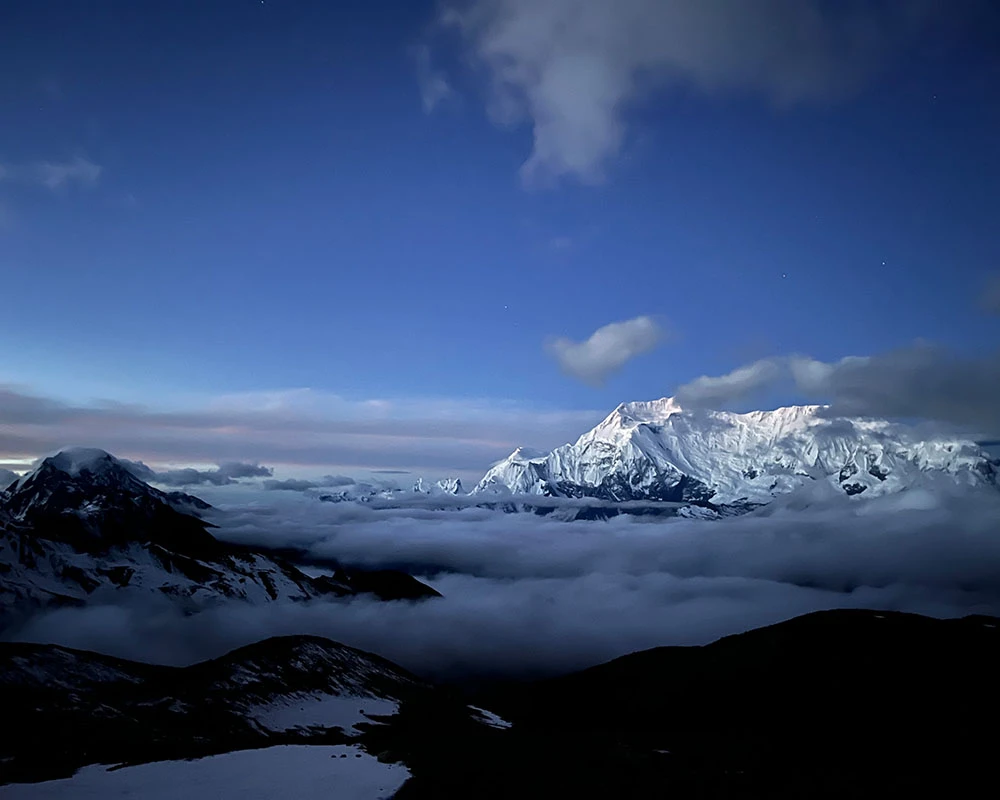
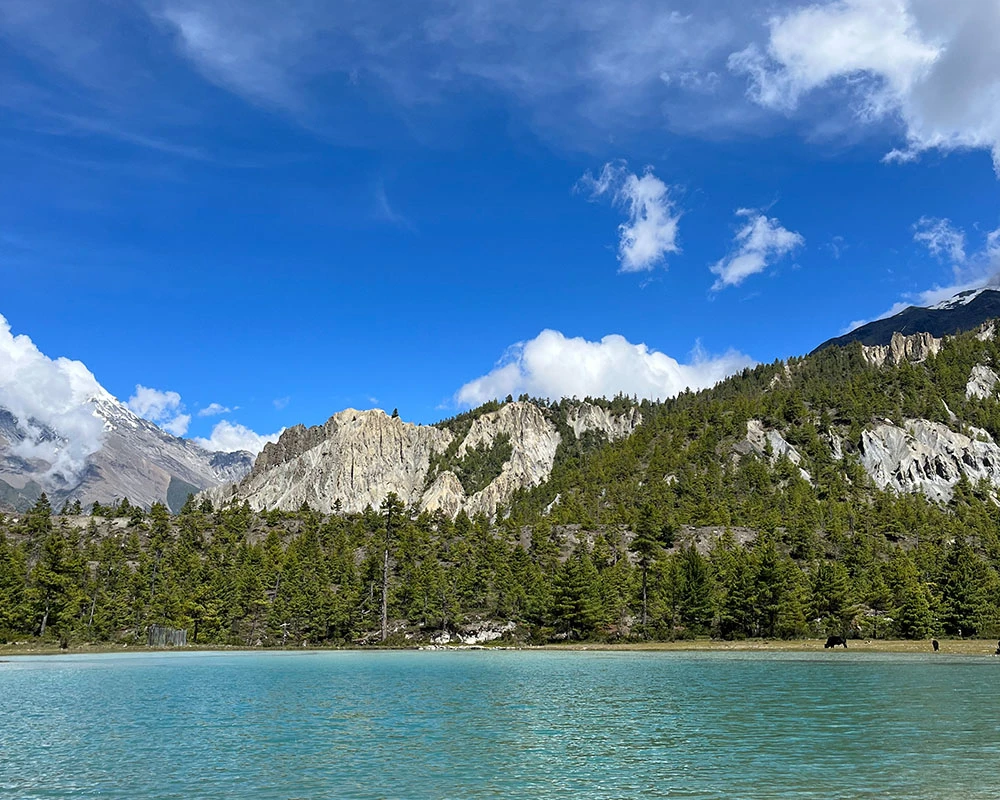
Chulu Far East Peak (6584m) - 20 Days

Chulu East Peak
Trip Facts
  • Trip Duration20 Days
  • Difficulty Level Strenuous
  • Maximum Altitude 6429m
  • Activity Trekking & Climbing
  • Starts/Ends Kathmandu / Kathmandu
  • Best Season February to May & September to mid December
Highlights
  • Summit a stunning and less-crowded 6,000-meter peak, offering a true sense of adventure away from busy climbing routes.
  • Enjoy breathtaking panoramic views of the Himalayas, including close-up vistas of iconic peaks like Annapurna and surrounding ranges.
  • Experience a unique route that perfectly combines the classic Annapurna trekking trail with an exciting peak climbing expedition.
  • Cross one of the highest trekking passes in Nepal, Thorong La Pass (5,416m), adding both challenge and incredible scenery.
  • Be guided by experienced, government-certified mountain guides with strong knowledge of the region and high-altitude safety.
  • Benefit from a well-planned itinerary with proper acclimatization days to enhance safety and increase summit success.
  • An ideal introduction to Himalayan mountaineering, suitable for adventurous trekkers looking to step into high-altitude climbing.

    Chulu Far East Peak Overview

    Chulu Far East Peak is a beautiful and less crowded climbing peak located in the Annapurna region of Nepal. Standing at around 6,500 meters, it offers a perfect mix of trekking and peak climbing for those who want to take a step beyond regular trekking.

    This journey is not just about reaching the summit. It is a full mountain experience that takes you through diverse landscapes, local villages, and high-altitude terrain. The trip begins from Kathmandu and gradually moves towards the Annapurna region, following a scenic drive and trek through places like Dharapani, Chame, Pisang, and Ngawal. Along the way, you get to experience local culture, monasteries, and stunning views of mountains like Annapurna II, III, and Tilicho Peak.

    As the trek continues, the environment slowly changes. Green forests turn into dry alpine landscapes, and the air becomes thinner. You spend time acclimatizing properly before heading towards Chulu Far East Base Camp, where your real climbing journey begins.

    At the base camp, you will have a preparation day where your climbing guide will teach you how to use basic climbing equipment. This helps build confidence before the summit push. The summit day is the most challenging and rewarding part of the trip, offering incredible views of the surrounding Himalayan ranges.

    After the summit, the journey continues through the famous Thorong La Pass and down towards Muktinath and Jomsom, making the entire trip even more diverse and memorable.

    Overall, Chulu Far East Peak is a great choice for trekkers who want to experience both trekking and climbing in one trip, while exploring one of the most beautiful regions of Nepal.


    How Difficult is Chulu Far East Peak Climbing

    Chulu Far East Peak climbing is moderately difficult, but it feels more demanding than a standard trekking peak mainly because of the altitude and summit push.

    The difficulty increases gradually as you gain height. What starts as a steady trek becomes more physically demanding due to thinner air and longer walking hours at higher elevations. Even simple movements can feel slower and more tiring.

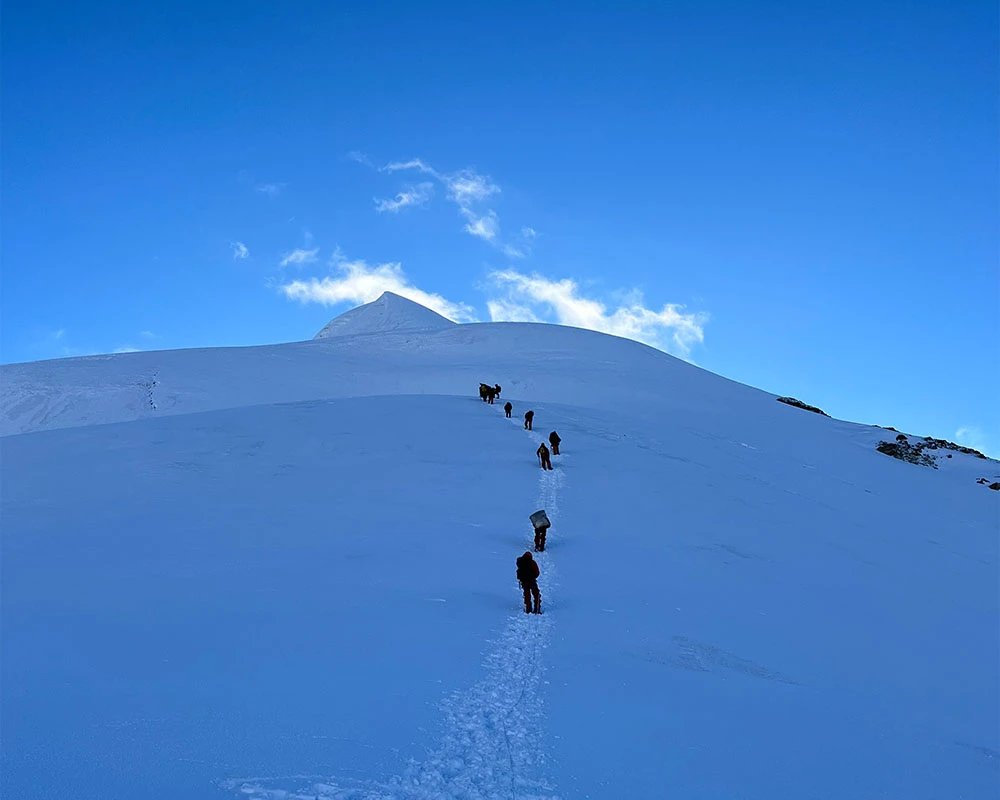
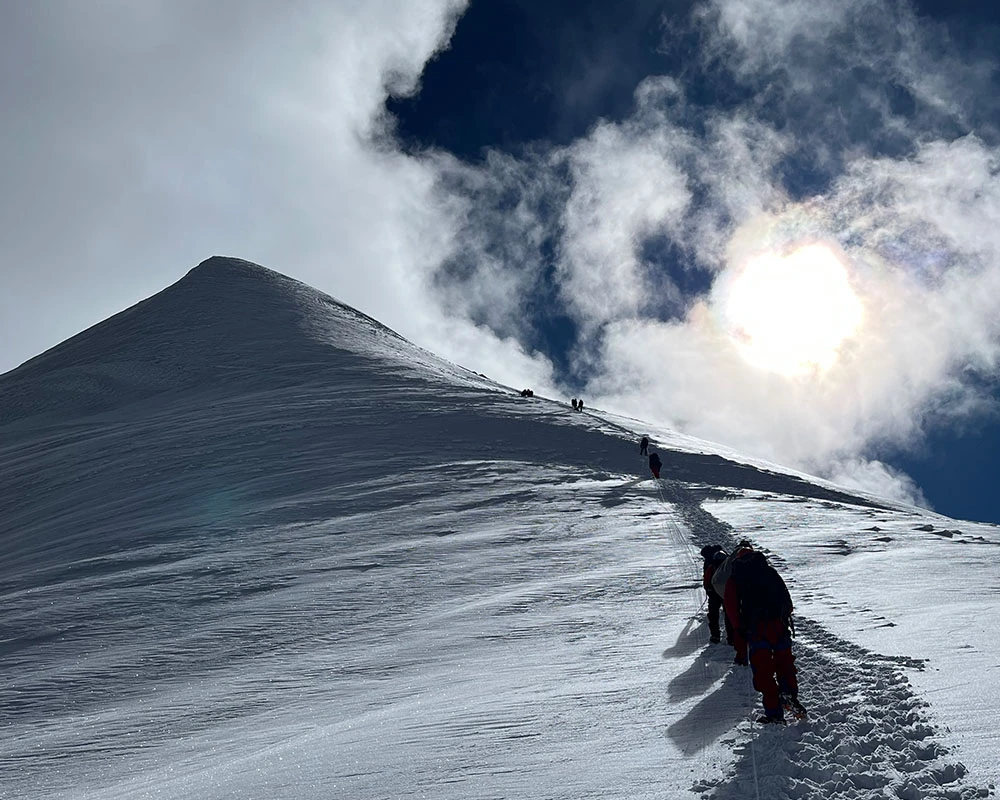
    The most challenging part is the summit day. It involves walking on snow, dealing with cold temperatures, and maintaining energy for several hours at high altitude. The climb requires focus and endurance rather than advanced technical skills.

    Another factor that adds to the difficulty is the overall length of the journey. Since it is not just a climb but a long expedition, maintaining consistent energy day after day becomes important.

    In simple terms, the climb is not technically complex, but it is physically demanding. Your fitness, stamina, and ability to handle altitude will define how difficult the experience feels.


    Required Experience and Fitness Level for Chulu Far East Peak

    You do not need prior mountaineering experience to climb Chulu Far East Peak, but you should have prior trekking experience and strong physical fitness.

    If you have done multi day treks at higher altitude, such as the Everest Three Pass Trek or the Annapurna Circuit Trek, you will find it easier to adjust during this journey. Being familiar with long walking days, basic mountain conditions, and simple outdoor routines makes the experience much smoother.

    In terms of fitness, you should be comfortable walking for 5 to 7 hours a day for several days in a row. The trail involves continuous uphill and downhill sections, so good leg strength and stamina are important. Regular walking, stair climbing, and light cardio training before the trip can make a big difference.

    Mental readiness is equally important. Staying consistent, patient, and positive during long days in the mountains plays a big role in completing the climb.

    Basic climbing skills are not required beforehand, as your guide will provide training at base camp before the summit push.


    Cost of Chulu Far East Peak Climbing

    The cost of Chulu Far East Peak climbing can vary depending on the level of service, group size, and overall expedition support. In the current market, most packages for this climb are typically priced between US$3200 to US$4500, depending on what is included and the experience of the operator.

    Our Chulu Far East Peak climbing package is priced at US$3499, which offers a balanced approach between quality support and overall value.

    This price reflects the length of the expedition, the altitude involved, and the level of coordination required for a safe and well-managed climb. Since this is not just a short trek but a full climbing journey, the cost also considers the extended duration, logistics in remote areas, and the experienced team supporting the expedition.

    When comparing prices, it is important to look beyond just the number and understand what level of service, safety standards, and support you are receiving throughout the journey.


    Permits Required for Chulu Far East Peak

    To climb Chulu Far East Peak, you will need a few permits issued by the Nepal government. These permits are mandatory and are arranged before the start of the trip.

    The main permit required is the Peak Climbing Permit, which allows you to legally attempt the summit. The cost of this permit can vary depending on the season.

    Since the route lies within the Annapurna region, you will also need the Annapurna Conservation Area Permit (ACAP). This permit helps support conservation efforts and maintain the trekking trails in the region.

    In addition to this, a Trekkers’ Information Management System (TIMS) card is also arranged. While it may not always be strictly required, we include it as an extra safety measure. It helps keep track of trekkers and improves overall safety and coordination in the region.

    All these permits are included in the package and will be arranged by the company, so you do not need to worry about the process.
    ItineraryDay to Day Itinerary
    Expand AllCollapse All

    • Meals:Welcome Dinner
    • Accommodation:Hotel
    • Max Altitude:1310m
    • Duration:45 Minutes

    Upon your arrival in Tribhuvan International Airport (TIA), a representative from Moon Himalaya Adventure will welcome you and assist in the transfer to hotel. In the evening you will have dinner with our guide where you will introduced to each other and talk about the trip.

    • Meals:Breakfast
    • Accommodation:Hotel
    • Max Altitude:1310m
    • Duration:5/6 hrs

    On the second day after having breakfast our guide will brief you about the Chulu East peak climbing and the gear you need. If you forgot or don't have the appropriate gear you can buy or rent the items required. If you want then you can visit the world heritage sites (Kathmandu Durbar Square, Bouddhanath, Pashupatinath, Swoyambhunath) but you have to pay entry fees on your own.

    • Meals:Breakfast, Lunch & Dinner
    • Accommodation:Lodge
    • Max Altitude:1860m
    • Duration:8/9 hrs drive

    The journey begins with a scenic drive from Kathmandu to Besisahar and continues till we reach Dharapani.

    • Meals:Breakfast, Lunch & Dinner
    • Accommodation:Lodge
    • Max Altitude:2670m
    • Duration:5/6 hrs

    The first day of the trek begins from Dharapani with an average walk of 5 to 6 hrs. On the way you'll see plenty of pine and fir trees, a number of monasteries, and several authentic Tibetan settlements. Views of Annapurna II, Manaslu, and other mountains can also be seen on our way to Chame. Chame is the headquarter of Manang district.

    • Meals:Breakfast, Lunch & Dinner
    • Accommodation:Lodge
    • Max Altitude:3200m
    • Duration:5/6 hrs

    Today we'll continue on to Pisang through Bratang (2850m) and Dhiku Pokhari (3240m). We'll be making our way down a narrow and steep slope before dropping down to the quaint village of Pisang for the night.

    • Meals:Breakfast, Lunch & Dinner
    • Accommodation:Lodge
    • Max Altitude:3660m
    • Duration:5/6 hrs

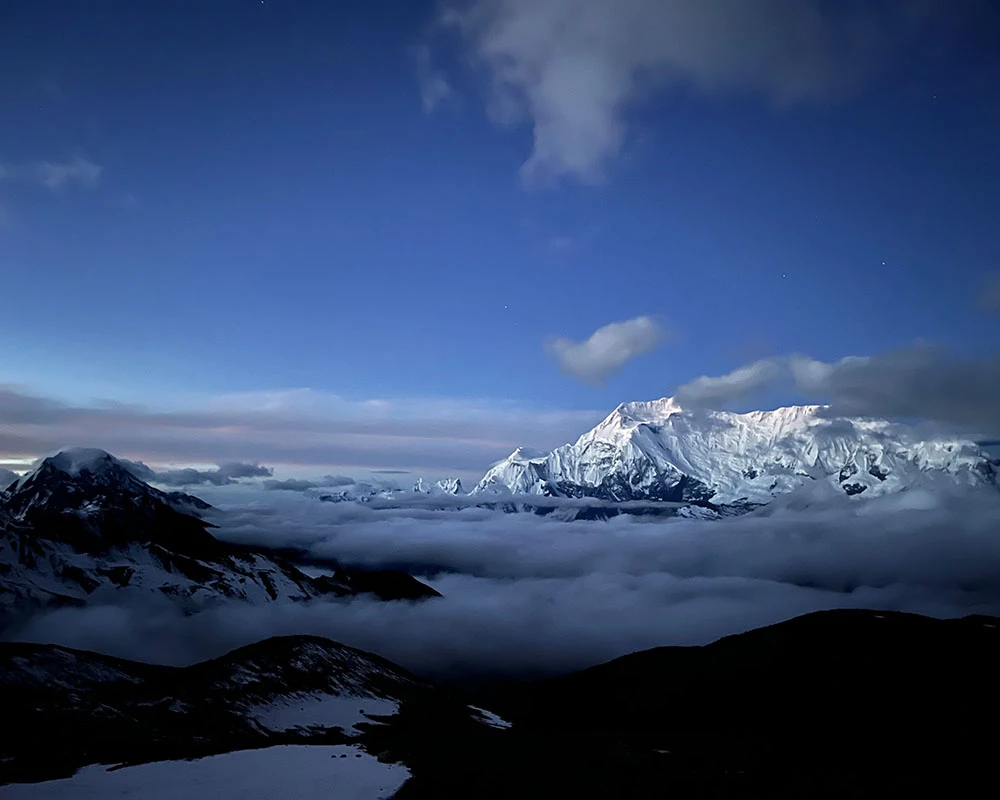
    In the morning, get up early to catch the sun rising over Annapurna II. Then after breakfast, we will resume our journey to Ngawal. After reaching Humde (3300m) we will gradually climb for about 40 minutes. The path to Ngawal offers spectacular views of Annapurna II and III, as well as Pisang Peak. We'll stay at Ngawal for the night.

    • Meals:Breakfast, Lunch & Dinner
    • Accommodation:Tent
    • Max Altitude:4300m
    • Duration:4/5 hrs

    Our plan entails heading in a northern direction towards Yak Kharka. We will be treated to awe-inspiring sights of Annapurna, Gangapurna, and Tilicho Peak on our way to Yak Kharka.

    • Meals:Breakfast, Lunch & Dinner
    • Accommodation:Tent
    • Max Altitude:4500m
    • Duration:4/5 hrs

    Today we will ascend towards Chulu East base camp. The journey promises to be captivating, offering splendid vistas of the nearby mountains. We will hike for approximately five hours until we reach the Chulu East Peak base camp, situated at an altitude of 5,140m. Upon arrival, we will take a well-deserved break.

    • Meals:Breakfast, Lunch & Dinner
    • Accommodation:Tent
    • Max Altitude:5000m
    • Duration:3/4 hrs

    It is very important to spend one more day at base camp. Our climbing guide will train you to use the climbing gear and equipment such as harness, climbing helmet, carabiners, ascender, descender etc. Taking proper rest will be beneficial for next day as you will be making to the summit.

    • Meals:Breakfast, Lunch & Dinner
    • Accommodation:Tent
    • Max Altitude:6429m
    • Duration:8/9 hrs

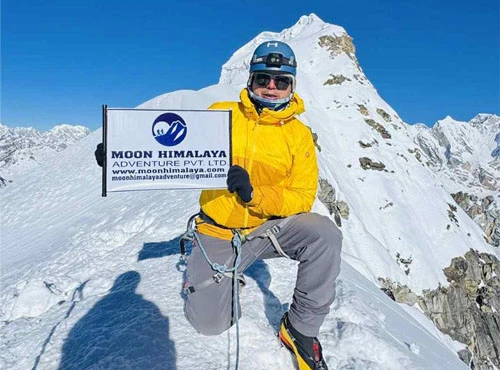
    The most awaiting day of the trip will be today as we will make our way to the summit of Chulu East Peak. We will start early so it is very important to carry headlight. Once we reach the summit of Chulu East peak (6584m) we will realize that it was worth our hard climb. The amazing vistas of surrounding mountains is worth the climb. We will descend our way back to base camp.

    • Meals:Breakfast, Lunch & Dinner
    • Accommodation:Lodge
    • Max Altitude:3660m
    • Duration:5/6 hrs

    Today we will descend to Ngawal. We will be back to the human settlements and spend night on lodge after spending three nights in a tent. You can interact with the locals to learn about their culture, tradition and lifestyle.

    • Meals:Breakfast, Lunch & Dinner
    • Accommodation:Lodge
    • Max Altitude:3540m
    • Duration:4/5 hrs

    Following the banks of the Marsyangdi River, we will make our way to Manang. Ahead, you'll see the Tilicho Peak and Annapurna ranges while passing through forests and villages like Braga and Paugh. Upon arriving in Mungli, we will once again be following the regular Annapurna hiking routes. We continue our hike till we reach Manang, our final destination for the day.

    • Meals:Breakfast, Lunch & Dinner
    • Accommodation:Lodge
    • Max Altitude:3540m
    • Duration:3/4 hrs

    We will stay at Manang to take rest as we have one higher pass to cross. We'll spend the day exploring Manang. We'll start the day with a hike up to Gangapurna Lake/Ice Lake. We can enjoy the breathtaking views of Annapurna III, Tilicho, Pisang, and Chulu Peaks. Visiting the nearby Manang village is yet another choice.

    • Meals:Breakfast, Lunch & Dinner
    • Accommodation:Lodge
    • Max Altitude:4200m
    • Duration:5/6 hrs

    We will continue our trek to Leder after an acclimatization day in Manang. The trail goes through Yak Kharka (4050m). Along the way, we'll see grasslands and juniper trees. We'll be going through the quaint village of Gunsan on our way farther into the mountains, where locals live in homes with flat mud roofs. We will also see yak pastures and horse pastures on our way to Leder.

    • Meals:Breakfast, Lunch & Dinner
    • Accommodation:Lodge
    • Max Altitude:4833m
    • Duration:5/6 hrs

    After breakfast, we will head to Thorong High Camp via Thorong Phedi (4600m). The trail to Thorong Phedi gradually ascends through yak pastures. Some areas require extra caution due to the possibility of rock fall. You can reach Throng High Camp by hiking up an extremely steep and moraine-filled trail.

    • Meals:Breakfast, Lunch & Dinner
    • Accommodation:Lodge
    • Max Altitude:5416m
    • Duration:8/9 hrs

    It is today that we will climb over Thorong La Pass. The scenery from the Thorong La Pass is well worth the cold, the long climb, and the high altitude that we experience. Many of the Annapurna Mountain ranges are seen in the background. Afterwards, we'll make our way down to Muktinath. It will take about three to four hours to reach Muktinath. Muktinath is religiously significant for both Hindu and Buddhist. We can go for a walk around the area, which is home to a Vishnu temple and a monastery.

    • Meals:Breakfast, Lunch & Dinner
    • Accommodation:Lodge
    • Max Altitude:2720m
    • Duration:5/6 hrs

    The stunning Kali Gandaki Gorge lies below us as we make our way through the barren landscape. First, we make our way to the village of Ekle Bhatti, and then to the villages of Jharkot and Khingar, where we will visit several stunning monasteries. On our way to Jomsom, we'll pass through Kagbeni and along the banks of the Kali Gandaki River. Throughout the hike, we will be treated to a breathtaking panorama of Dhaulagiri and Nilgiri.

    • Meals:Breakfast, Lunch & Dinner
    • Accommodation:Hotel
    • Max Altitude:822m
    • Duration:20 minutes flight

    We will take an early morning flight to Pokhara after having breakfast. Our flight will pass through two of the world's tallest mountains Annapurna and Dhaulagiri. Upon arriving at Pokhara we will be transferred to the hotel nearby lakeside. We take our time walking near Fewa Lake, Nepal's second-largest lake, taking in the scenery of Machhapuchhare in the distance. Evening walk nearby the lakeside in one of the famous activities in Pokhara. We can also boat in Fewa Lake.

    • Meals:Breakfast & Lunch
    • Accommodation:Hotel
    • Max Altitude:1310m
    • Duration:6/7 hrs drive

    We will leave Pokhara in a private vehicle after taking breakfast. It will take around 7 hours to reach Kathmandu.

    • Meals:Breakfast
    • Max Altitude:1310m
    • Duration:45 Minutes Drive

    Representative from Moon Himalaya Adventure will drop you to the international airport for final departure three hours prior to your flight schedule.

    This Itinerary can be personalized according to your need. 

    Cost DetailsWhat's Included
    • Airport pick-up and drop-off in Kathmandu
    • Private ground transportation: Kathmandu → Dharapani and Pokhara → Kathmandu (for clients)
    • Private ground transportation for guide and support staff (same sectors)
    • Domestic flight: Jomsom → Pokhara (for clients and guide)
    • 3 nights hotel in Kathmandu
    • 1 night hotel in Pokhara
    • Teahouse/lodge accommodation during the trek
    • Fully equipped tented accommodation during the climbing period (Sleeping, Kitchen, and Dining tents)
    • Full-board meals (breakfast, lunch, and dinner) during the trek and climbing period
    • Annapurna Conservation Area Permit (ACAP)
    • Trekkers’ Information Management System (TIMS) Card
    • Chulu East Peak climbing permit
    • All necessary government taxes and official fees
    • 1 government-licensed, experienced trekking & climbing guide (1 guide for up to 4 clients)
    • Porter service (1 porter for 2 clients; max load: 12–15 kg per client)
    • Climbing base camp cook
    • Support staff as required (porter, Sherpa, cook, etc.)
    • Food, accommodation, salary, insurance, and equipment for guide
    • Food, accommodation, salary, and insurance for porter(s), cook, and support staff
    • Group climbing equipment: fixed rope, main rope, snow bars, ice screws, rock pitons
    • Comprehensive first aid kit
    • Emergency helicopter evacuation arrangement (covered by client’s travel insurance)
    • Certificate of successful ascent of Chulu East Peak
    • Office service charges
    What's Excluded
    • International airfare
    • Lunch and dinner in Kathmandu
    • Nepal entry visa fee (obtainable upon arrival at Tribhuvan International Airport; requires passport-size photos)
    • Travel insurance (mandatory for clients)
    • All beverages (mineral water, soft drinks, and alcoholic drinks) during the trek
    • Hot shower, battery charging, and Wi-Fi services during the trek
    • Entry fees for monasteries, temples, and museums
    • Personal expenses (shopping, donations, Wi-Fi, laundry, etc.)
    • Tips for guide, porter, cook, and support staff
    • Any services not specifically mentioned in the inclusions
    • Additional costs due to natural calamities, weather conditions, or unforeseen circumstances


    Useful InformationGood to Know

    Best Time to Climb Chulu Far East Peak

    The best time to climb Chulu Far East Peak is during the spring (March to May) and autumn (September to November), when the weather is more stable and the mountain conditions are favorable.

    From March to May, is one of the most popular times. The weather is generally clear, and the views of the surrounding mountains are at their best. Temperatures are also slightly warmer compared to other seasons, which makes the overall experience more comfortable.

    From September to November, is another excellent time for the climb. After the monsoon season, the skies are usually clear, and visibility is very good. The trails are dry, and the conditions are well suited for both trekking and climbing.

    Winter months can be much colder, with heavy snow and more challenging conditions, making the climb more demanding. The monsoon season, from June to August, brings rain, slippery trails, and poor visibility, which is why it is generally avoided.

    Overall, choosing the right season plays a big role in your experience, and spring and autumn offer the most reliable conditions for a safe and enjoyable climb.


    Do You Need Travel Insurance for Chulu Far East Peak

    Travel insurance is mandatory for Chulu Far East Peak climbing.

    Since this expedition involves high altitude and remote mountain areas, having proper insurance is essential. It ensures that you are covered in case of any unexpected situations during the trip.

    One of the most important aspects is emergency evacuation. In case of altitude related illness or any medical emergency, helicopter evacuation may be required, which can be very expensive without insurance.

    Your insurance policy must cover high altitude trekking and peak climbing, along with emergency evacuation services.

    Without valid travel insurance, it is not possible to join the climb.


    Equipment List for Chulu Far East Peak Climbing

    Clothing

    • Base layers (thermal tops and bottoms) – 2 to 3 sets
    • Quick-dry T-shirts or trekking shirts – 3 to 4
    • Trekking pants – 2 to 3 pairs
    • Down jacket (-10°C or lower) – 1
    • Fleece or soft shell jacket – 1 to 2
    • Waterproof jacket with hood – 1
    • Waterproof/rain pants – 1
    • Warm hat, sun cap, and buff – 1 each
    • Lightweight gloves (liner) – 1 pair
    • Warm gloves (waterproof/shell) – 1 pair
    • Trekking socks – 4 to 5 pairs
    • Thick wool socks (for night) – 2 pairs

    Footwear

    • Trekking boots (good ankle support) – 1 pair
    • Mountaineering boots (for summit) – 1 pair
    • Lightweight shoes or sandals – 1 pair

    Technical Climbing Gear (usually provided by the team)

    • Crampons
    • Ice axe
    • Climbing harness
    • Helmet
    • Carabiners and safety gear
    • Ascender and descender devices
    • Climbing ropes
    • Prusik cord
    • Personal anchor system

    Accessories

    • Polarized sunglasses with UV protection
    • Sunscreen (SPF 50+) and lip balm
    • Headlamp with extra batteries
    • Trekking poles

    Bags

    • Backpack (30–40L for trekking)
    • Duffle bag (provided)

    Sleeping & Essentials

    • Sleeping bag (-10°C or lower)
    • Sleeping bag liner
    • Reusable water bottles or hydration system
    • Basic first aid kit
    • Personal medications
    • Toiletries

    Our Chulu Far East Expedition Team

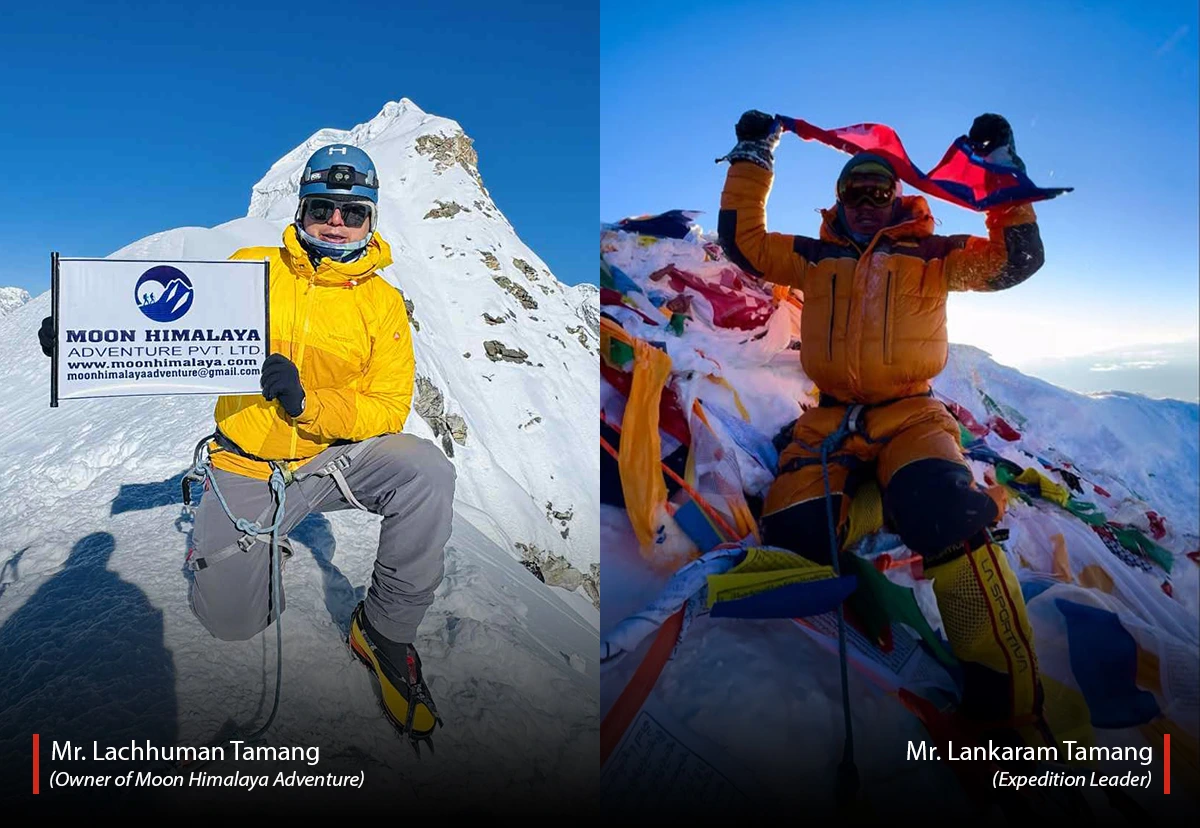
    Himalayan climbers Lachhuman Tamang and Lankaram Tamang on summit
    Our Expert Peak Climbing Leader in the Himalayas

    Our Chulu Far East Peak expedition is led by Mr. Lacchuman Tamang, the director of Moon Himalaya Adventure and an International Mountain Leader (UIMLA) with over 20 years of experience in trekking and mountaineering. He has led numerous expeditions across 6000m, 7000m, and 8000m peaks and has been actively involved in training and guiding in Nepal.

    He is supported by Mr. Lankaram Tamang, an experienced climbing guide and Everest summiteer, with over 30 successful peak climbs including 2X Ama Dablam (6812 m), 2X Barun Tse (7129m), Island Peak, Lobuche Peak, and Mera Peak. His strong high altitude experience and calm approach make him a reliable guide on challenging climbs.

    We run our climbs with a focus on safety, clear guidance, and steady support throughout. With proper preparation, even beginners can take part.

    FAQsChulu Far East Peak (6584m) - 20 Days FAQs
    • Chulu Far East Peak stands at 6,584 meters (21,601 feet) above sea level, making it one of the popular trekking peaks in the Annapurna region.

    • Chulu Far East is considered a moderately difficult peak. It is less technical compared to many Himalayan climbs, but still requires good fitness, basic mountaineering skills, and the ability to handle high altitude.

    • Prior climbing experience is helpful but not mandatory. If you have done high-altitude treks (like EBC or ABC), you can attempt this peak with proper guidance and basic training.

    • The standard expedition takes around 18 to 20 days, including trekking, acclimatization, and the summit push.

    • The best seasons are spring (March to May) and autumn (September to November). These months offer stable weather, clear views, and safer climbing conditions.

    • You will need:

      • Annapurna Conservation Area Permit (ACAP)
      • TIMS Card
      • Chulu Far East Peak Climbing Permit (issued by Nepal Mountaineering Association)
    • The cost varies depending on the package. A standard expedition can range from $2,000 to $4,000, depending on services, group size, and logistics.

    • It is suitable for fit beginners with trekking experience. Complete beginners with no high-altitude exposure may find it challenging.

    • You should focus on:

      • Cardio (hiking, running)
      • Strength (legs and core)
      • Endurance (long walks with a backpack)

      Basic rope and ice axe training is recommended before the climb. However, we provide all the necessary training required for the expedition.

    • Yes, altitude sickness is a real risk as the climb goes above 6,000 meters. Proper acclimatization, hydration, and a gradual ascent help reduce the risk.

      Travel insurance with high-altitude coverage and mandatory helicopter evacuation is required for this climb.

    • The success rate is generally good during the peak seasons of March to May and August to October, especially with experienced guides and proper acclimatization. Weather and fitness play a major role.

    • Yes, hiring a guide is mandatory for Chulu Far East Peak climbing. The guide must be a certified climbing guide, as this is different from a regular trekking guide. Climbing guides are trained in technical mountaineering skills, rope fixing, and high-altitude safety, which are essential for a safe and successful summit.

    • The climb is usually done via the Annapurna Circuit route, passing through Manang, with acclimatization before reaching base camp and then pushing for the summit.

    ReviewsWhat Our Clients Says?

    Be the first to review, click post review.

    Similar Trips
    You May Also Like
    Call us, we're at your service

    Mobile:+977 9860455963 or WhatsApp Talk Phone

    Our travel experts would love to create a package just for you.