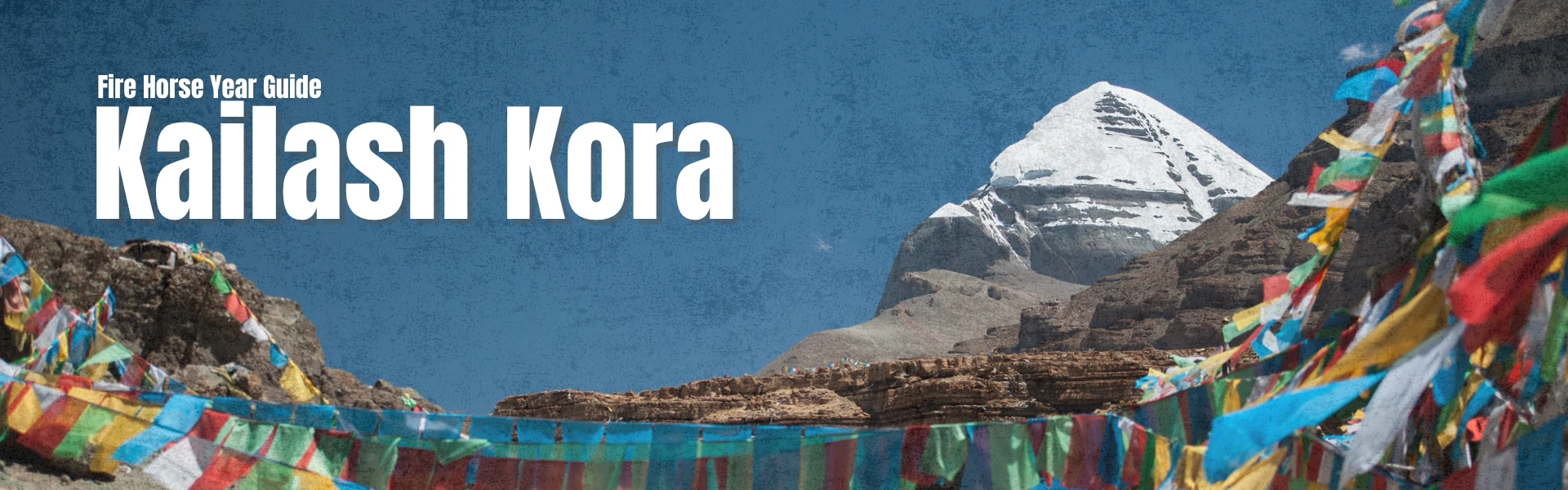
The ultimate guide to the 2026 Fire Horse Year Kailash Kora: a 60-year pilgrimage where one Kora equals 12x spiritual merit. Find essential details on required 45-day permits, optimal travel dates, and high-altitude training tips.
2026 Kailash Yatra Guide: Everything You Need to Know for the Fire Horse Year
Table of Contents
2026 is the Tibetan Year of the Fire Horse. This cycle comes around once every 60 years, and across Hindu, Buddhist, Jain, and Bon traditions, it is considered the most auspicious time in a lifetime to complete the Kailash Kora. One circumambulation of the mountain this year is believed to carry the merit of 12 in any other year. The peak spiritual date is 31 May 2026, the Saga Dawa Full Moon. The season runs from May through September in Kathmandu. Four permits are needed for the Kailash region, and they take a minimum of 45 days to process. Do not leave it this late.
Enquire now about our 2026 Kailash Mansarovar Yatra packages.
A Few Words Before We Begin
I want to tell you something before we get into the details of permits and packing lists.
I have been guiding people to Mount Kailash for over twenty years. I have walked that Kora more times than I can easily count. And still, every single time I come around the final bend on Day 3 and Darchen appears below me, I feel something that I genuinely cannot put into words.
The mountain does that. It does it to everyone. I have watched it happen to retired schoolteachers from Lyon and software engineers from San Francisco and grandmothers from Gujarat who told me at the start they were not sure they could make it. The mountain does not care about your fitness level or your job title or which religion you follow. It just does what it does.
I am telling you this because 2026 is not a normal year to attempt this journey. The spiritual weight that pilgrims across four traditions attach to the Fire Horse Year is real, and the number of people who will be making this pilgrimage this season reflects that. If you are reading this and wondering whether this is your year, I think you probably already know the answer.
Now, the practical details.
Why 2026 Is the “Mahakumbh” of Mount Kailash
The Fire Horse Phenomenon: A 60-Year Cycle That Changes Everything
The Tibetan calendar works on a 60-year cycle. Twelve animals, five elements, cycling through until they complete. Each animal returns every 12 years. But a specific pairing of animal and element, the Fire Horse for example, only comes back once in that full 60-year turn.
The Horse Year alone already brings exceptional numbers of pilgrims to Kailash every 12 years. 2014 was the last one. But this year carries the Fire element too, and that is what makes 2026 different from any Horse Year in living memory.
In Tibetan tradition, Fire represents transformation and intense spiritual energy. The Horse carries the spirit of Lungta, the Wind Horse, which is the life-force energy that carries prayers to the heavens. When these two combine, the belief is that the spiritual atmosphere around Kailash reaches a level that simply is not available in other years.
The Fire Horse Year started on 17 February 2026, which was Losar, the Tibetan New Year. It runs until 5 February 2027. Before 2026, you would have needed to be alive in 1966 to have seen this. After 2026, the next one is 2086.
Most of us reading this will not see another one.
The 12x Merit Rule: One Kora That Does the Work of Twelve
There is a belief, rooted in centuries of Tibetan Buddhist and Hindu scripture, that completing one Kora around Mount Kailash during the Horse Year carries the spiritual merit of 12 Koras in any ordinary year.
I have heard people describe this as a marketing claim. It is not. It is why the Horse Year Kailash pilgrimage is called the Mahakumbh of Kailash in the first place, directly compared in religious significance to the great Kumbh Mela at Prayagraj which draws tens of millions of Hindu devotees every 12 years. The 2025 Mahakumbh brought over 600 million pilgrims to Prayagraj. The 2026 Kailash season, in this rarer 60-year Fire Horse configuration, is expected to be the most attended international pilgrimage at this mountain in living memory.
There are three specific reasons behind this belief across traditions.
In Tibetan Buddhist teaching, the Horse Year is the birth cycle year of the historical Buddha Shakyamuni. Good deeds during this period, and especially during the Saga Dawa month, are multiplied many times in spiritual benefit.
Milarepa, the great 11th-century Tibetan saint, is believed to be the only person ever to have reached the summit of Kailash. He is said to have made that climb during a Fire Horse Year. When you walk the Kora in 2026, you are walking in his footprint.
In Hindu scripture, Lord Shiva blesses those who complete the Kailash Kora during the Horse Year with liberation from accumulated karma and an accelerated path toward moksha. A ritual bath in Lake Mansarovar this year is said to purify not just this lifetime’s sins but those carried from previous lifetimes.
Cultural Significance: Four Faiths, One Mountain
I have guided pilgrims of every background to this mountain. Hindus, Tibetan Buddhists, Jains, Bon followers, and people who would not describe themselves as belonging to any tradition but who felt drawn here anyway.
What strikes me every time is that while they all approach Kailash differently, they all arrive at the same thing. Reverence. Silence. The feeling that this place matters in a way that is hard to rationalise.
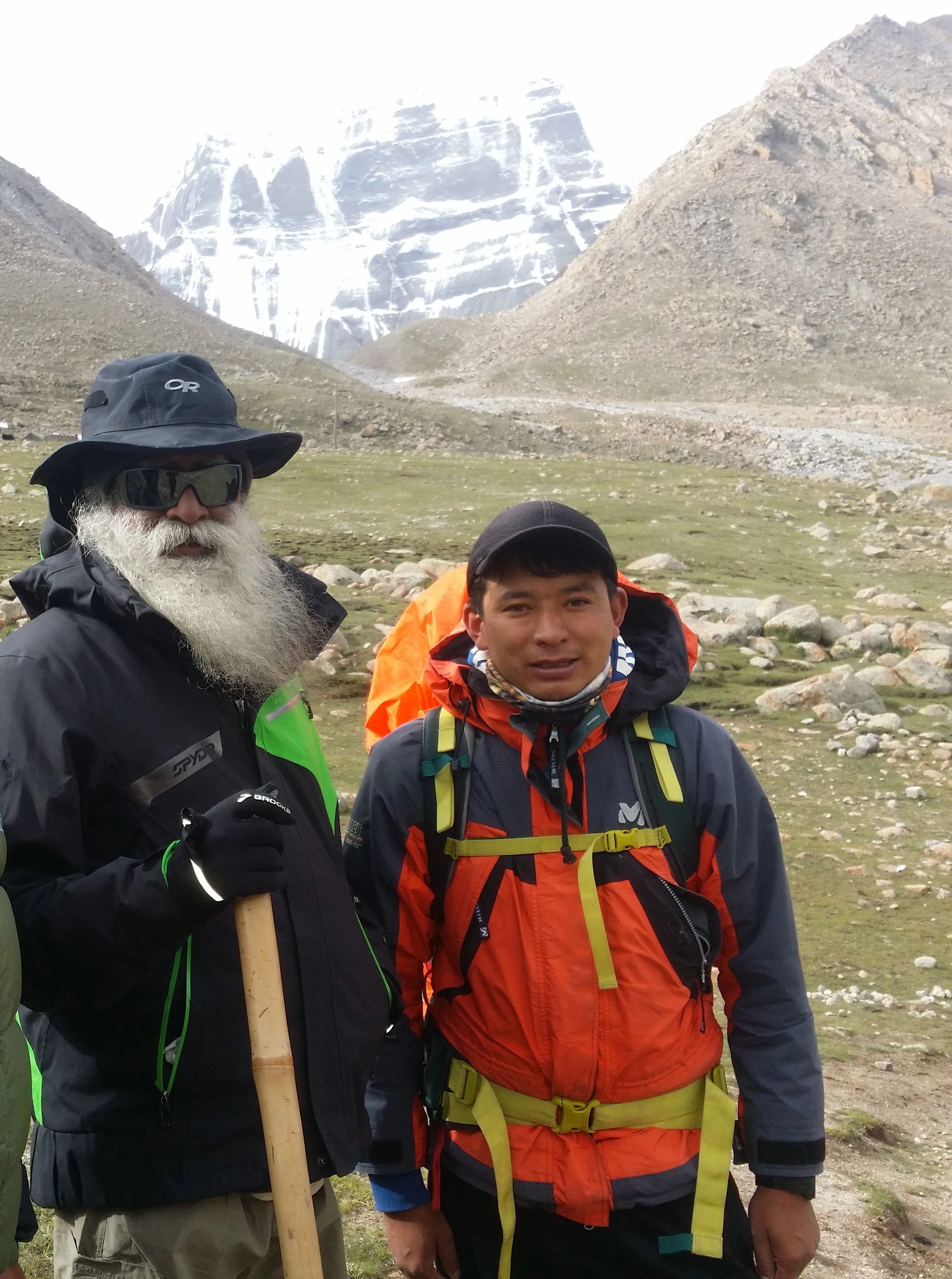
For Hindus, Kailash is the eternal throne of Lord Shiva and Goddess Parvati. Lake Mansarovar was created by Lord Brahma. The Kora is devotion to the god of destruction and transformation.
For Tibetan Buddhists across the Kagyu, Nyingma, Sakya, and Gelug schools, Kailash is the mandala palace of Chakrasamvara. The Kora generates merit toward liberation from the cycle of rebirth.
For Jains, this is Ashtapada, the mountain where Rishabhdev, the first of the 24 Tirthankaras, attained moksha.
For Bon practitioners, the oldest spiritual tradition in Tibet, the Kora is walked counterclockwise. Kailash is the seat of Shenrab Miwo, the founder of Bon, and the axis of the entire universe.
In 2026, pilgrims of all four traditions will walk this mountain in the same season. The collective devotion of that gathering is itself considered to amplify everything.
Top 2026 Travel Dates: Full Moon and Saga Dawa
The Saga Dawa Festival: 31 May 2026
If there is one date I would circle on the calendar for 2026, it is 31 May.
That is Saga Dawa, the full moon of the fourth Tibetan lunar month. It marks the birth, enlightenment, and parinirvana of Lord Buddha and is considered the most sacred day in the Tibetan Buddhist calendar. According to the Library of Tibetan Works and Archives, good deeds on this day are believed to multiply in merit by thousands of times.
At Kailash, Saga Dawa centres on Tarboche near Yam Dwar, the ceremonial flagpole that marks the start of the Kora. On the full moon day, lamas and thousands of pilgrims gather to raise a new prayer flagpole in a ceremony that has taken place for centuries. I have stood there many times. The chanting, the prostrations, the sheer collective energy of that gathering at the foot of Kailash, there is nothing quite like it anywhere in the world that I have been.
In 2026, this falls inside the Fire Horse Year. The last time that happened was 1966.
To be there for Saga Dawa, you need to leave Kathmandu around 18 to 22 May. This window fills before any other. If this is your target, contact us now.
Full Moon Calendar for Lake Mansarovar Darshan
A full moon night at Lake Mansarovar is something I recommend every pilgrim tries to plan for if at all possible. The lake at 4,590 metres, the moon reflected on still water, Kailash to the north. I am not going to oversell it. You just have to be there.
Note that the Kailash region is closed to foreign tourists in June and July, so the available full moon dates for the 2026 season are:
Full Moon Date | Day | Notes |
31 May 2026 | Sunday | Saga Dawa, the most sacred date of the season |
28 August 2026 | Friday | First full moon after the June/July closure |
26 September 2026 | Saturday | Final full moon of the 2026 season |
Tibetan lunar calendar dates can vary by one day depending on regional observance. We confirm exact dates with all booked clients before departure.
2026 Route Options: Choosing Your Path
Overland via Kerung: Best for Acclimatisation and Scenery
This is the route I take most of my groups on, and it is the one I would recommend to most people.
The Kerung border crossing between Nepal and Tibet reopened in late 2025 and is fully operational for 2026. The overland drive across the Tibetan Plateau is not just getting from A to B. It is part of the pilgrimage. The landscape is vast and strange and unlike anywhere else on earth. You gain altitude gradually, stopping at Nyalam, Saga, and Mansarovar before reaching Darchen. By the time you begin the Kora, your body has had days to adjust, and your mind has had days to settle.
The route runs from Kathmandu to the Kerung border, Nyalam at 3,750 metres, Saga at 4,640 metres, Lake Mansarovar at 4,590 metres, Darchen at 4,675 metres, then three days on the Kora and back. Total time from Kathmandu is 12 to 15 days.
See full details on our Kailash Mansarovar Yatra 15-day package. I recommend this for most pilgrims, especially those coming to high altitude for the first time.
Kailash Yatra by Helicopter: For Those with Limited Time
Not everyone can take two weeks. Not everyone should be doing long days in a jeep at high altitude with certain health conditions. The helicopter option is there for exactly these situations, and it is a genuine and meaningful way to complete the pilgrimage.
Flying in from Kathmandu or Nepalgunj cuts the travel time significantly while still allowing the Kora to be completed on foot. We manage the reduced acclimatisation time with careful pacing, oxygen availability, and close guide support. Duration is 7 to 10 days.
If time or physical condition is a factor, do not rule out the pilgrimage because of the overland journey. Get in touch, and we will work out what is realistic for you.
Lhasa to Kailash: Combining Potala Palace with the Pilgrimage
Some people want more than Kailash. They want Lhasa, the Jokhang Temple, the Potala Palace, and Tashilhunpo Monastery. The full breadth of Tibet before arriving at the mountain.
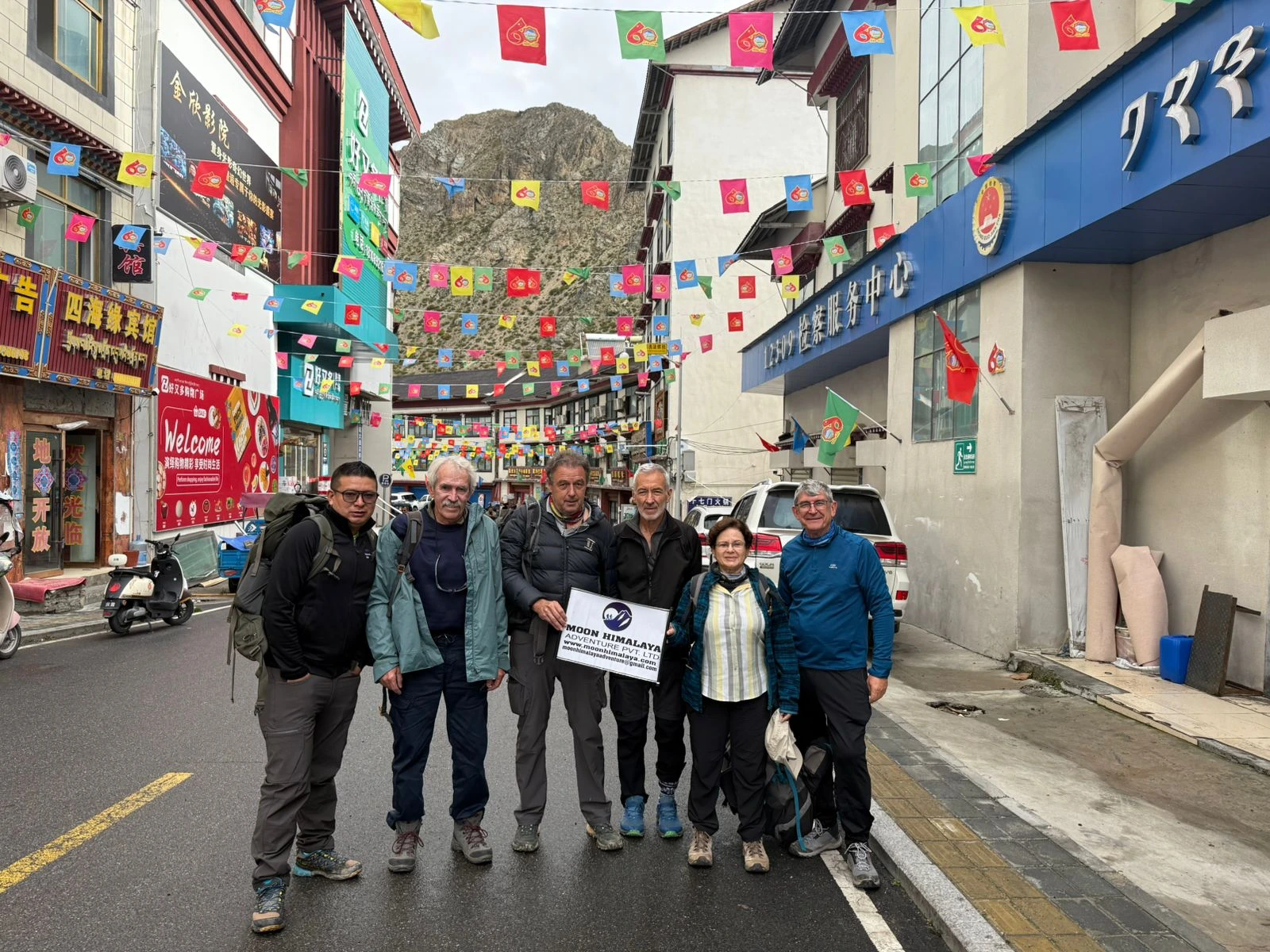
Our Lhasa Kailash Overland Tour with EBC flies into Lhasa, either from Chengdu or Kathmandu, at 3,650 metres. You spend two to three days in the Tibetan capital acclimatising and visiting its sacred sites, then drive west along the Friendship Highway, with an optional stop at Everest Base Camp, before continuing to Mansarovar and Kailash. Total duration is 18 to 22 days.
In 2026, Lhasa’s own Saga Dawa celebrations at the Jokhang will be remarkable in their own right inside the Fire Horse Year. If you have the time and Tibet itself has always called to you, not just Kailash, this is the itinerary to consider.
Crucial 2026 Permit and Visa Regulations
Read this section carefully. Tibet permits are not like most travel documentation. They are physical documents that must be in your possession before you cross any border or board any flight into Tibet. There is no collecting them at the gate. There is no fixing it on arrival.
FNMIS: Nepal’s New Digital Registration
From 1 January 2026, Nepal launched the Foreign Nationals Management Information System, FNMIS, a digital platform managed by Nepal’s Department of Immigration. It links immigration with hotels, airlines, trekking companies, and tour operators across the country.
Phase 1, from January, made registration mandatory for star hotels in Kathmandu Valley. Phase 2, from 1 March 2026, extended this to all star hotels, airlines, and travel companies nationwide, including all trekking operators.
For clients booking the Yatra with Moon Himalaya Adventure, we handle this registration as part of our pre-departure process. The visitor-facing side of FNMIS is not fully active yet, and standard Nepal entry procedures remain unchanged for now. You do not need to do anything before arrival. We will keep everyone updated as this develops.
For broader guidance on entering Nepal, visit our Nepal Travel Guide.
The Four Tibet Permits You Need
For the Kailash and Mansarovar region specifically, four permits are required. More than anywhere else in Tibet.
- The Tibet Travel Permit is the foundation, issued by the Tibet Tourism Bureau in Lhasa and processed only through a licensed Tibet travel agency coordinating with your Nepal operator. It cannot be obtained independently.
- The Alien’s Travel Permit covers travel beyond Lhasa into regions including Ngari, where Kailash is located.
- The Military Permit is required specifically for Ngari Prefecture because of its proximity to the Nepal and India borders. This one takes the longest, up to 30 days on its own.
- The Foreign Affairs Permit, sometimes called the Border Pass, is required for the border areas, including Kailash and Mansarovar.
All four together need a minimum of 35 to 40 days. For 2026, with Fire Horse Year demand, we are advising everyone to allow 45 days. For more details on what permits are required for trekking and travel in Nepal and Tibet, read our guide to permits in Nepal for trekking and expeditions. Moon Himalaya Adventure handles all four Tibet applications on your behalf. You give us your passport documents. We do the rest.
Chinese Visa: Get in Touch for Guidance Specific to Your Nationality
Visa requirements for Tibet entry depend on your nationality, your route into Tibet, and regulations that do change. Rather than publish something here that may become outdated, we would prefer to give you accurate guidance based on your specific passport. For general Nepal visa information, see our Nepal Visa Info page.
For Tibet-specific visa guidance, get in touch directly, and we will confirm exactly what you need.
WhatsApp: +977 9860455963
Medical Requirements
A medical certificate confirming fitness for travel above 4,500 metres is strongly recommended for everyone. If you have any pre-existing cardiac, pulmonary, or orthopaedic conditions, get written clearance from your doctor before you book. We also strongly recommend reading our guide on high altitude sickness before travelling. Travel insurance must cover emergency evacuation above 5,000 metres and is verified before departure. See our guide to Nepal travel insurance for what to look for in a policy.
Horse-riding support is available throughout the Kora from Darchen and can be arranged on arrival.
Preparing for the 5,630 Metre Challenge
Physical Fitness: Training for Dolma La Pass
The Kora is 52 kilometres over three days. The highest point is Dolma La Pass at 5,630 metres. No technical climbing. But real physical preparation.
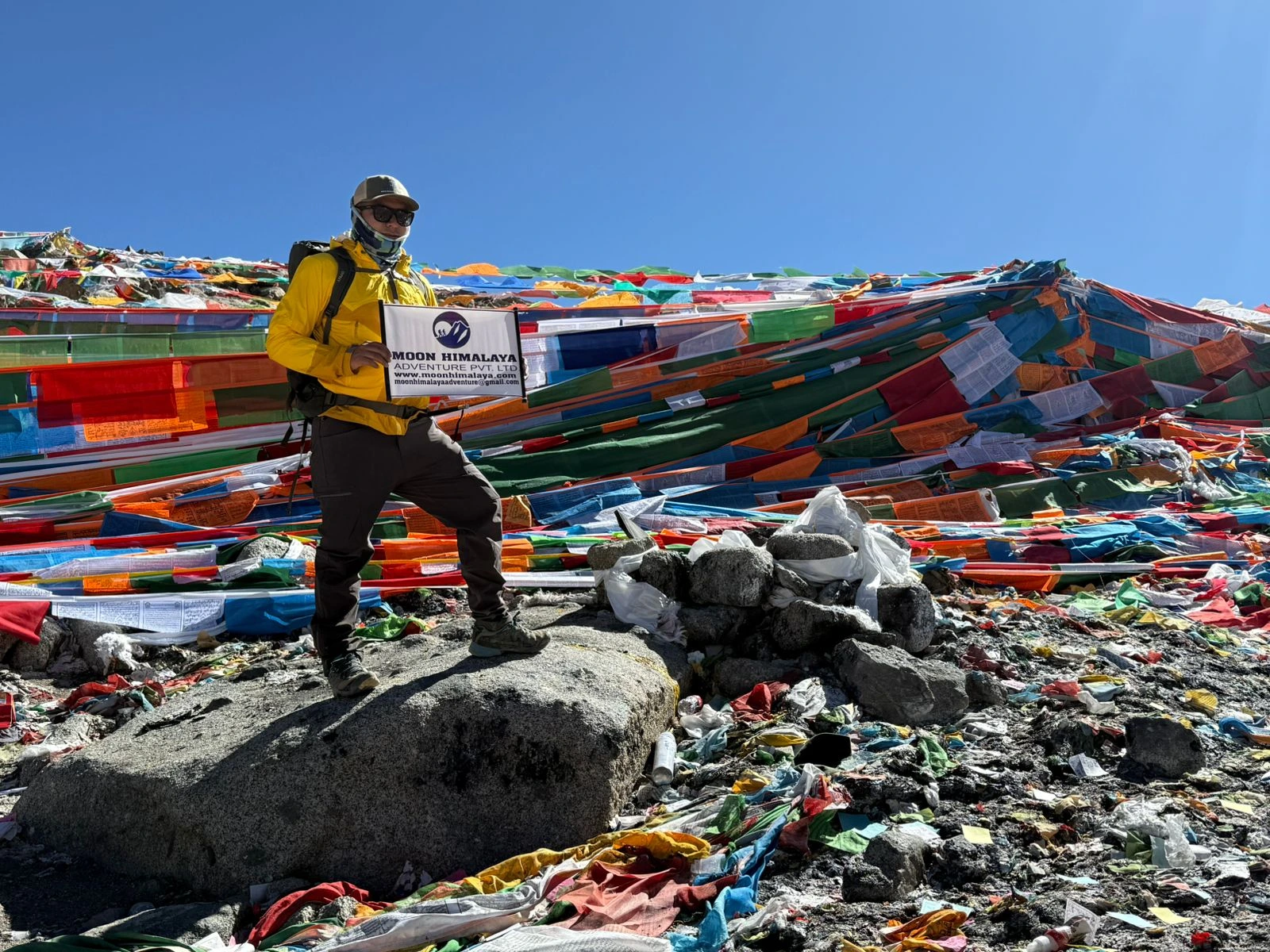
Here is what I tell my clients. I have seen very fit people struggle badly at altitude, and I have seen people in their sixties who trained properly walk the whole thing without drama. Training matters more than natural fitness.
Start at least 8 weeks before departure, 12 if you can. First month: daily walks building to 8 to 10 kilometres, with longer 15-kilometre weekend hikes carrying a light pack. Second month: add incline walking and stair climbing with a loaded 8-kilogram pack, plus two or three cardio sessions a week. Final weeks: complete at least one multi-day back-to-back hike so your body knows what three consecutive days of sustained walking actually feels like.
You are not training for speed. You are training to keep moving, day after day, at altitude.
Altitude Safety: How We Manage AMS
Acute Mountain Sickness is the most common serious problem on this journey. The entire Tibet section sits above 3,600 metres. Dolma La is at 5,630 metres. We do not treat altitude management as a footnote.
Our itinerary builds in proper acclimatisation stops at Nyalam and Saga before reaching Darchen. Cutting these days is where other operators create problems for their clients. We do not cut them.
We carry portable oxygen on all Kailash departures, available at Dirapuk and Zutulpuk camps. Our guides are trained in descent protocols and use them when needed. Before departure, we brief every client in detail on symptoms, medications, hydration, and when to raise a concern. We recommend reading our full guide on high altitude sickness before you travel. Acetazolamide is commonly used for prevention but needs a prescription, so discuss this with your own doctor.
One rule that does not change: serious AMS symptoms mean immediate descent. No debate. The mountain will be there. The pilgrimage can be re-attempted. Your health cannot be recovered if you ignore the warning signs.
Packing Checklist
The Tibetan Plateau is cold, high, sunny, and unpredictable. At Dolma La in May, the wind chill can go below minus 10 degrees Celsius. The same day can bring harsh UV sun. Pack for both.
Clothing: thermal base layers, top and bottom, at least two sets. A mid-layer fleece or packable down jacket. Waterproof and windproof hard shell jacket and trousers. Warm hat and balaclava. Buff or neck gaiter. Waterproof gloves with liner gloves inside. Merino wool trekking socks, five pairs minimum. Waterproof trekking boots that are genuinely broken in. Not new. Broken in.
Gear: trekking poles, especially for the Dolma La descent on Day 2. Headlamp with spare batteries. Sleeping bag rated to minus 10 at minimum. UV400 sunglasses. SPF 50 sun cream and lip protection.
Medications to discuss with your doctor: Acetazolamide for altitude prevention if prescribed. Ibuprofen and paracetamol. Oral rehydration salts. Anti-diarrhoeal medication. All personal prescriptions with extra supply.
Documents: original passport, all Tibet permits from Moon Himalaya Adventure, Chinese visa as applicable, travel insurance confirming evacuation cover above 5,000 metres. For currency guidance before you travel, see our page on currencies and credit cards in Nepal.
Frequently Asked Questions
Why is 2026 so sacred for the Kailash Mansarovar Yatra?
2026 is the Tibetan Year of the Fire Horse, a cycle that occurs once every 60 years. Completing one Kailash Kora this year is believed across Hindu and Tibetan Buddhist tradition to carry the merit of 13 Koras in any other year. The Fire element only aligns with the Horse once every 60 years, making this configuration more powerful than an ordinary Horse Year. The last Fire Horse Year was 1966. The next is 2086.
When is Saga Dawa 2026?
Saga Dawa is 31 May 2026, the 15th day of the fourth Tibetan lunar month and the full moon. It marks the birth, enlightenment, and parinirvana of Lord Buddha. To be at Kailash for this date, leave Kathmandu around 18 to 22 May 2026. Contact us to check availability for this window.
What permits are required for the Kailash Yatra?
Four permits: the Tibet Travel Permit, Alien’s Travel Permit, Military Permit, and Foreign Affairs Permit. All arranged by Moon Himalaya Adventure through our Tibet partners. Allow 45 days minimum for processing. We handle all applications on your behalf. Read more about trekking permits in Nepal.
What Chinese visa do I need?
Requirements vary by nationality and current regulations. Contact us before applying for anything. WhatsApp: +977 9860455963.
How hard is the Kailash Kora physically?
52 kilometres over three days, reaching 5,630 metres at Dolma La Pass. No technical climbing. But genuine fitness preparation starting 8 to 12 weeks before departure is essential. Read our guide on high altitude sickness and speak to your doctor before travelling. Horse support and porters are available from Darchen.
Which route is best?
Overland via Kerung for most people, best acclimatisation and deepest experience. Helicopter for those with limited time or physical constraints. The Lhasa Kailash Overland Tour is for those wanting the full Tibet circuit.
Is Kailash open in June and July?
Yes, June and July are the peak season for Kailash parikrama but the Kailash region is opened from May to September.
How urgently do I need to book?
Very. This is a 60-year event, and demand is unlike any normal season. June through September 2026 still has availability, but it is going fast. Enquire now.
Booking
Why You Cannot Leave This Until Later
In a normal Kailash season, booking three or four months ahead is fine. This is not a normal season.
Permit offices, teahouses, and guesthouses in Darchen, operator capacity across the board, everything is under pressure from the Fire Horse Year demand that has not been seen in six decades. The 45-day Military Permit processing time is fixed. It does not speed up because you booked late.
For May 2026 departures, the deadline has passed. For June through September, there is still availability, but less every week.
Book now, start the permit process, and secure your dates. Some pilgrims combine their Kailash journey with a Muktinath pilgrimage tour or time in Kathmandu, visiting Pashupatinath, Boudhanath and Swayambhunath, both of which our team can arrange.
Enquire about 2026 Kailash Yatra availability
WhatsApp: +977 9860455963
Moon Himalaya Adventure Pvt. Ltd., Kathmandu
Tourism Licence: 3100/079
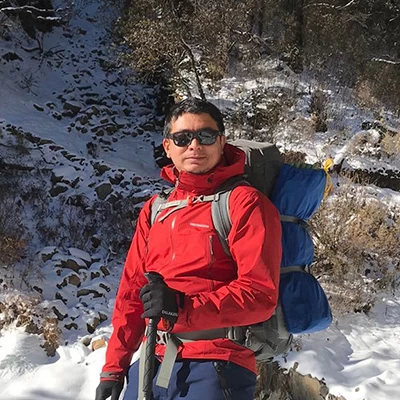
Mr. Lachhuman Tamang – A Pioneer in Trekking and Mountaineering
Call us on WhatsApp+977 9860455963OrChat with us