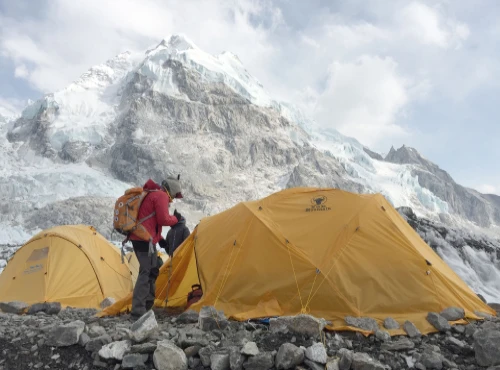
Lobuche Peak is where the Everest trekking journey begins to feel like real Himalayan climbing. This guide explains how the route prepares you, what summit day feels like, how difficult the climb is, and who it is best suited for.
Lobuche Peak Climbing: The Climb That Turns Trekkers Into Mountaineers
Table of Contents
For many trekkers, the Everest region begins with a familiar dream: walking through the Khumbu, reaching Everest Base Camp, and watching the Himalayas from Kala Patthar. Lobuche Peak follows much of that same journey but takes it beyond a regular trek.
Here, Lobuche Peak usually refers to Lobuche East, the trekking peak commonly climbed from the Everest trail. The route still includes Sherpa villages, suspension bridges, tea houses, and gradual acclimatization. But after Lobuche village, the focus begins to change. You are no longer only walking from one place to another. You are preparing for a summit
That is what makes Lobuche Peak memorable. You begin using climbing equipment, moving on steeper terrain, and preparing for a cold summit push from High Camp. Reaching the top is not simply about going higher than Everest Base Camp. It is where a familiar trekking journey begins to feel like real Himalayan climbing.
In this guide, we will look at why Lobuche is a natural next step for trekkers, how the Everest route prepares you, what summit day feels like, how difficult the climb really is, who it is suitable for, and how to prepare before coming to Nepal.
Why Lobuche Is a Natural Next Step for Trekkers
Lobuche Peak appeals to trekkers because it does not feel like a sudden jump into an unknown world. The journey begins on the same Everest trail used by thousands of trekkers each year. You pass through Sherpa villages, stay in tea houses, and gain altitude slowly over several days.
That familiar approach helps. If you have already done a high-altitude trek, you understand the basic mountain routine: walk steadily, drink enough water, rest properly, eat even when your appetite is low, and pay attention to how your body reacts as the air gets thinner.
But Lobuche also asks more from you than a normal trek. As you move closer to High Camp, the focus shifts from reaching a viewpoint to preparing for a summit. The terrain becomes colder and more serious. Climbing equipment becomes part of the journey. The mountain starts asking for more care, more discipline, and more trust in your team.
This is why Lobuche feels like a natural next step rather than a random challenge. It gives strong trekkers a chance to experience Himalayan climbing without going straight into a highly technical expedition. For the right person, it can be the first real bridge between trekking and mountaineering.
From Lukla to Lobuche: How the Everest Route Prepares You
One of the reasons Lobuche Peak suits experienced trekkers is the way the route builds up slowly. You do not land in Lukla and attempt the summit immediately. The journey through the Everest region gives your body time to adjust and your mind time to understand the rhythm of the mountains.
By the time you reach Lobuche, you have already completed several walking days, slept at higher elevations, and learned how altitude affects your pace, appetite, sleep, and energy. This does not make the climb easy, but it gives you a stronger base before moving toward High Camp.
Namche and Dingboche: Where Acclimatization Really Begins
The early part of the route passes through places like Phakding, Namche Bazaar, Tengboche, and Dingboche. These villages are not just overnight stops. They are part of the acclimatization process that helps prepare your body for the higher sections of the trip.
Namche is often the first place where trekkers properly feel the altitude. Dingboche is another important stage because you are now higher, colder, and closer to the climbing part of the journey. Rest days and short acclimatization hikes around these places are not wasted time. They give your body a chance to adjust before you move above 5,000 m.
This is also when you begin to understand your own body better. Some trekkers feel strong in the beginning but slow down later. Others need a few days to settle into the mountain rhythm. Lobuche rewards those who do not rush this process.
Everest Base Camp and Kala Patthar Before the Climb
Many Lobuche Peak itineraries include Everest Base Camp and Kala Patthar before the summit attempt. These are not technical climbs, but they are useful preparation for what comes next.
The hike to EBC is long and tiring. Kala Patthar usually involves an early uphill climb above Gorakshep. Both experiences help you understand how it feels to move slowly, save energy, and stay focused when breathing becomes harder.
By the time you return from these sections and begin preparing for Lobuche, you have already spent time in thin air. That exposure matters. It helps you approach High Camp with more awareness of your body and a better understanding of how high-altitude days feel.
From Lobuche Village to High Camp
Lobuche village is where the trip starts to feel different. The main Everest trail is still nearby, but your focus begins to shift. You are no longer only following the trekking route. You are preparing for a climb.
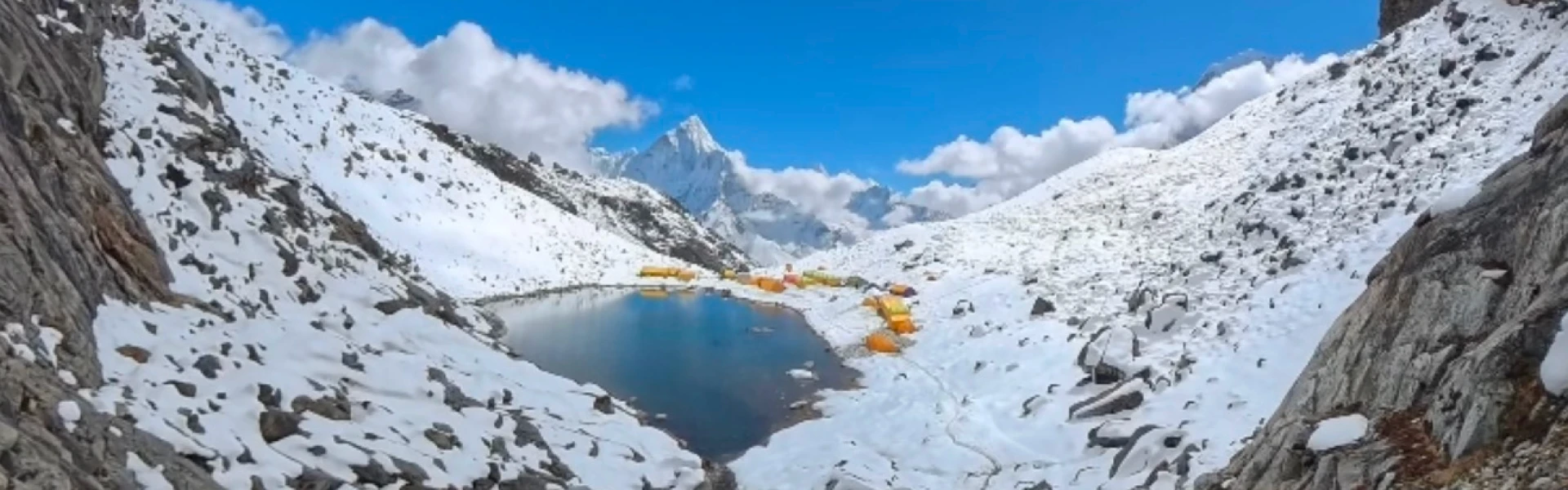
The move from Lobuche village toward High Camp feels quieter and more serious. The surroundings become more open, colder, and more exposed. The comfort of the tea-house trail begins to fade, and attention turns to the summit plan, equipment checks, and the training session.
By the time you reach High Camp, the approach has already done much of its job. You have walked gradually into the altitude, tested your body on long trekking days, and learned how to move carefully in the high Himalayas. Now the climbing part begins.
Basic Climbing Skills You Learn at High Camp
Lobuche Peak does not expect you to arrive as a trained mountaineer. Before the summit attempt, the climbing team usually holds a practical training session near Base Camp or High Camp. This gives you time to understand the basic equipment before using it on the mountain.
The training is not a full climbing course. Its purpose is simple: to make you familiar with the gear, teach a few essential movements, and help you understand what your guide will ask you to do during the climb.
Crampons and Ice Axe Practice
For many trekkers, wearing crampons is the first moment Lobuche feels different from a normal trek. Crampons are metal spikes attached to your boots to improve grip on snow, ice, or hard-packed ground.
During training, your guide will show you how they should fit and how to walk without catching the spikes on your trousers or the terrain. The aim is not to move fast. It is to place your feet carefully and stay balanced.
You may also learn how to carry or use an ice axe for balance on snowy sections. The exact equipment depends on the route and conditions at the time, so the climbing team will decide what is needed.
Harness, Fixed Rope, and Jumar Use
Higher on Lobuche East, climbers may use fixed ropes for extra security on steeper sections. This is where your harness, safety attachment, and jumar become important.
A jumar is a device that helps you move upward along a fixed rope. During the training session, your guide will show you how it connects, how it slides along the rope, and how to stay safely attached while climbing or waiting.
This can sound unfamiliar before the trip, but most trekkers understand the basic system once they practice it on the ground. You do not need to master everything immediately. You need to listen carefully, ask when something is unclear, and follow the guide’s instructions during the climb.
Why the Training Session Matters
The training session is not just a formality. It gives the climbing team a chance to check your equipment and make sure you are comfortable with the basic movements.
It also removes some of the nervousness before summit day. The next morning may involve darkness, cold, altitude, and tired legs. If you already understand how your gear works, you can focus more on your breathing, pace, and footing.
For first-time climbers, this short practice often makes the summit attempt feel less intimidating. You do not need to be perfect. You simply need to stay calm, move carefully, and trust the system your guide has shown you.
Summit Day From Lobuche High Camp
Summit day is the part of Lobuche Peak that most climbers remember clearly. It is colder, quieter, and more demanding than the trekking days before it. By this point, you have already spent days adjusting to altitude and practicing with your climbing team, but the summit push still feels different.
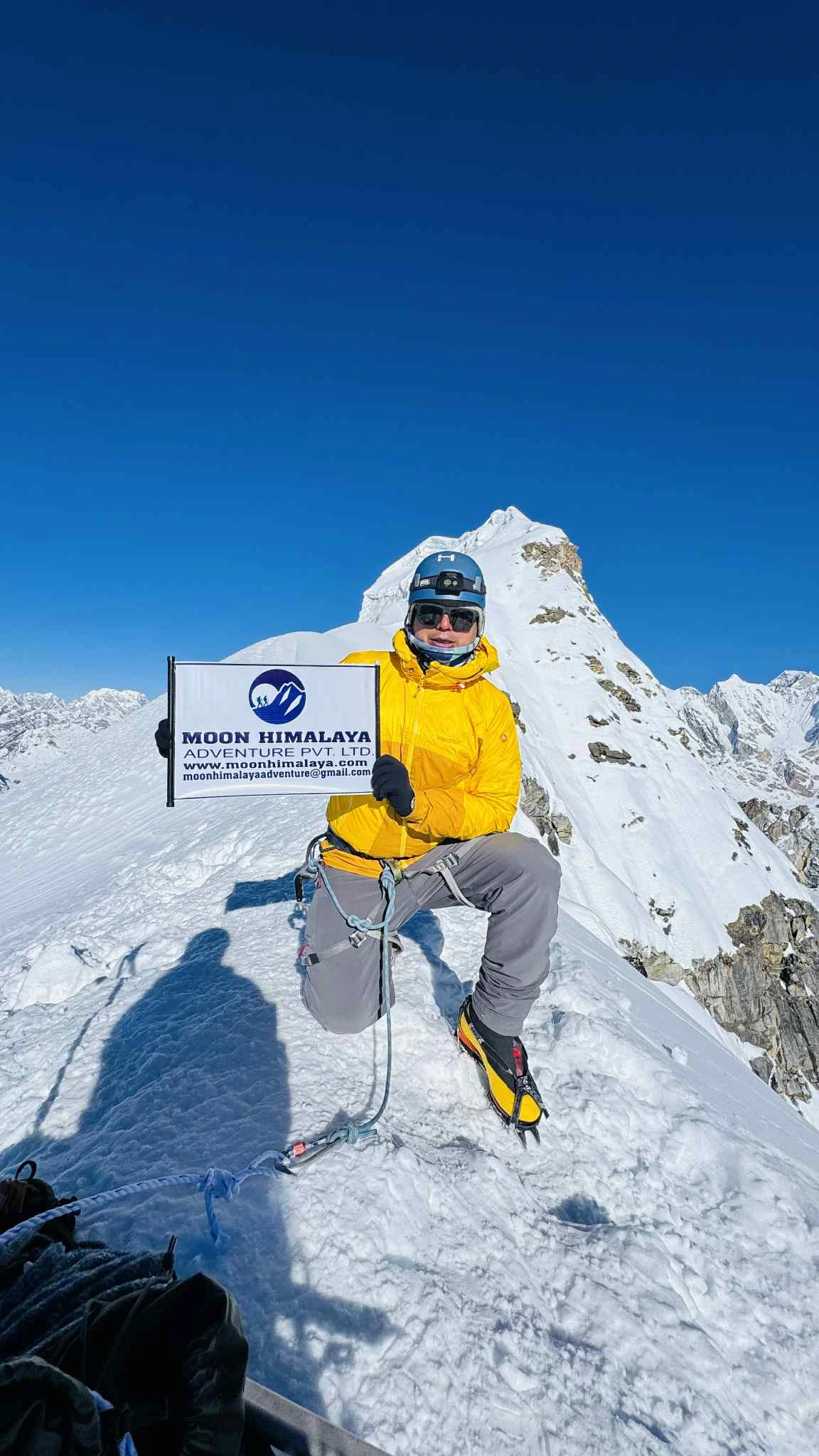
This is not a day for rushing. It is a day for steady movement, clear communication, and patient decision-making.
Leaving Lobuche High Camp Before Sunrise
The summit attempt usually begins while it is still dark. After a light breakfast and a final check of your boots, headlamp, warm layers, and climbing gear, the group leaves High Camp under the light of headlamps.
Starting early gives the team a better chance to climb in stable morning conditions and return before the weather changes later in the day. The first few minutes outside can feel very cold, especially before your body warms up.
This is often when the climb starts to feel real. The tea houses and busy trekking trail are far below. Around you is a quiet mountain slope, cold air, and the slow movement of headlamps going upward.
Finding Your Rhythm Above High Camp
Above High Camp, even moderate ground can feel tiring because of the altitude. It is normal to take a few steps, pause briefly, breathe, and continue again. The goal is not to match another climber’s speed. The goal is to keep a rhythm you can maintain for hours.
Your guide will usually set the pace. Breaks are kept short because standing still too long can make you cold, but there is time to drink water, adjust clothing, and recover when needed.
The climb can test your patience. At times, the summit may look close but still take much longer than expected. It helps to focus on the next section of the route instead of thinking about the whole mountain at once.
The Fixed-Rope Section on Lobuche East
Higher on Lobuche East, the route becomes more technical than a normal trekking trail. Depending on snow and route conditions, there may be a steeper section where fixed ropes are used.
This is where the training session becomes useful. You use the equipment as shown by your guide, move carefully, and keep a safe distance from the climber ahead. The section requires attention, but it does not need to feel overwhelming if you stay calm and follow instructions.
For many first-time climbers, this is the moment they understand the difference between trekking and mountaineering. Fitness matters, but so do technique, focus, and trust in the team.
Summit Views and the Descent Back to High Camp
Reaching the summit of Lobuche Peak is a powerful moment. After hours of climbing through cold and darkness, the Himalayas open around you. On a clear day, the views can include Everest, Lhotse, Nuptse, Ama Dablam, Pumori, and many other peaks across the Khumbu.
But the summit is only one part of the day. Because of the altitude, wind, and cold, climbers usually spend only a short time at the top before beginning the descent. This is not about cutting the experience short. It is part of climbing safely in the mountains.
The way down needs just as much care as the climb up. Your legs may be tired, the fixed-rope sections still need attention, and the team must return safely to High Camp. Many climbers feel the real satisfaction only once they are back at camp: tired, relieved, and aware that they have completed something far beyond an ordinary trek.
Not everyone reaches the summit. Weather, snow conditions, fatigue, or altitude symptoms can all affect the decision. On Lobuche Peak, a safe return will always matter more than forcing the final few meters.
How Difficult Is Lobuche Peak, Honestly?
Lobuche Peak is difficult because it combines several challenges at once. You are dealing with high altitude, long trekking days, cold conditions at High Camp, an early summit start, and basic climbing equipment when your body is already tired.
For someone who has only done lower-altitude hikes, Lobuche can feel like a major step up. Trekkers who have completed routes such as Everest Base Camp, Annapurna Circuit, Manaslu Circuit, or Langtang may find the mountain routine more familiar, but the climb should still be taken seriously.
Altitude is usually the biggest challenge. On summit day, you climb above 6,000 m, where the air is thin and every movement takes more effort. Even simple steps can feel slow. This is why proper acclimatization, pacing, food, hydration, and rest matter so much before the climb.
The technical side also adds pressure. Lobuche is not an advanced expedition peak, but the upper section can involve snow, ice, and fixed ropes. You may need to use crampons, a harness, and a jumar in cold conditions. These skills are manageable for many beginners, but only if they take the training seriously and follow instructions carefully.
The mental side should not be underestimated. You may wake up tired, step outside into the cold, and face a climb that feels longer than expected. The summit can look close and still take hours to reach. The climbers who cope best are usually not the fastest ones. They are the ones who protect their energy and stay steady when the climb becomes uncomfortable.
Lobuche is often called a suitable first Himalayan peak because the approach gives time for acclimatization and the climbing team provides support. But it is not an easy extension of Everest Base Camp. It is a serious mountain objective. With good fitness, previous high-altitude trekking experience, and the right mindset, it is achievable for many prepared trekkers.
Who Is Lobuche Peak Suitable For?
Lobuche Peak is best suited to trekkers who already feel comfortable spending several days in the mountains and want to experience something beyond a regular trekking route. You do not need to arrive as an experienced mountaineer, but it helps to understand what high-altitude travel feels like.
People who have completed high-altitude treks usually have a stronger starting point. They already know that mountain travel is not only about fitness. It also involves pacing yourself, resting properly, eating and drinking well, and continuing steadily when conditions feel uncomfortable.
Lobuche can be a good first Himalayan climbing experience for someone who is fit, willing to prepare properly, and interested in learning basic climbing skills. You should be comfortable with long walking days, uphill and downhill terrain, cold mornings, and following instructions when the route becomes more serious.
It can be especially appealing for trekkers who have already reached Everest Base Camp and want to return for a more demanding goal. Rather than repeating the same journey, Lobuche adds a new purpose to the familiar Everest route. The trail may feel known, but the summit attempt brings a different level of focus and responsibility.
At the same time, Lobuche may not be the right first choice for everyone. Someone with no trekking experience, very limited time to train, or strong discomfort around snow, steep terrain, and cold early starts may be better off starting with a high-altitude trek first. There is no need to rush into peak climbing.
The right person for Lobuche is not always the fastest or strongest trekker. It is someone who prepares honestly, listens to the climbing team, stays calm when conditions become difficult, and understands that the mountain cannot be forced to match personal ambition.
How to Prepare for Lobuche Peak Before Coming to Nepal
Preparing for Lobuche Peak does not mean training like a professional climber. What matters most is arriving with enough fitness, stamina, and mountain awareness to handle long trekking days, altitude, cold mornings, and the summit push from High Camp.
A simple preparation plan should focus on these areas:
1. Build walking endurance
Regular walking or hiking is the most useful preparation. Try to include long walks, uphill trails, stair climbing, or treadmill incline sessions in the weeks before your trip. Lobuche is not about short bursts of speed. It is about having the endurance to keep moving for several hours over many days.
2. Strengthen your legs and core
Leg and core strength can make the trek more comfortable, especially on uphill climbs, uneven trails, and long descents. Squats, lunges, step-ups, calf raises, and simple core exercises can help. You do not need an extreme gym routine, but consistent training makes a difference.
3. Practice walking with a daypack
During the trek, you will usually carry water, extra layers, snacks, gloves, sunscreen, and personal items. Practicing with a light daypack before the trip helps your shoulders, back, and legs get used to the weight. It also helps you understand what pack setup feels comfortable.
4. Prepare for cold and early starts
Lobuche Peak involves cold mornings, simple accommodation, and a summit start from High Camp while it is still dark. Try to be mentally ready for discomfort. Some days will feel strong and enjoyable, while others may require patience. The goal is not to force your pace but to manage your energy wisely.
5. Test your important gear before the trip
Make sure your trekking boots are already broken in before coming to Nepal. Also test your backpack, gloves, warm layers, socks, and headlamp. Do not leave every practical detail until Kathmandu or High Camp. The more familiar you are with your own gear, the easier it is to focus once you are in the mountains.
6. Give enough time for acclimatization
Fitness cannot replace acclimatization. Choose an itinerary that gives your body enough time to adjust along the Everest trail before moving toward Lobuche High Camp. Arrive prepared, follow the planned route patiently, and let your guide and climbing team help you adjust as the journey progresses.
Is Lobuche Peak Worth Climbing?
Lobuche Peak is worth climbing for trekkers who want more than the usual Everest experience. It follows the familiar journey through the Khumbu but gives the trip a different purpose: reaching a Himalayan summit after learning to move safely in more serious mountain conditions.
What makes the climb meaningful is not only the view from the top. It is everything you learn before reaching it. You begin to understand why acclimatization cannot be rushed, why climbers start early, why weather decisions matter, and why steady movement is often more useful than raw fitness.
For many experienced trekkers, Lobuche becomes a realistic next step after high-altitude trekking. It is demanding enough to feel like a serious challenge, but still achievable with good fitness, enough time in the itinerary, basic climbing preparation, and a reliable team.
At the same time, Lobuche should not be climbed only for the sake of saying you reached a 6,000 m peak. The value of the climb is not lost if weather, fatigue, or altitude forces a careful decision before the summit.
In the end, Lobuche Peak is not simply an Everest trek with a summit added at the end. It teaches you to prepare more carefully, pay closer attention to your body, trust your team, and respect the conditions around you. For a prepared trekker, that is what makes the climb memorable long after the summit day is over.
Mr. Lachhuman Tamang – A Pioneer in Trekking and Mountaineering
Call us on WhatsApp+977 9860455963OrChat with us