Is the Manaslu Circuit Trek truly remote? This guide explains the reality of the trail, from the long drive in and basic teahouses to limited signal and emergency logistics.
How Remote Is the Manaslu Circuit Trek? (What No One Tells You)
Table of Contents
Most trekkers arrive on the Manaslu Circuit expecting true wilderness. What they find is more complicated than that.
You will still pass through mountain villages, stay in local teahouses, and find warm meals along much of the route. But Manaslu has a way of making you feel far from convenience much sooner than you expect.
Once you are a few days into the valley, a delayed road transfer, poor phone signal, limited room availability, bad weather, altitude issues, or a sudden change in plans can take much longer to manage than they would on Everest Base Camp or the Annapurna Circuit.
This guide breaks down what that remoteness really looks like, from the long drive in to Wi-Fi, charging, and getting help when plans change.
What Does "Remote" Actually Mean Here?
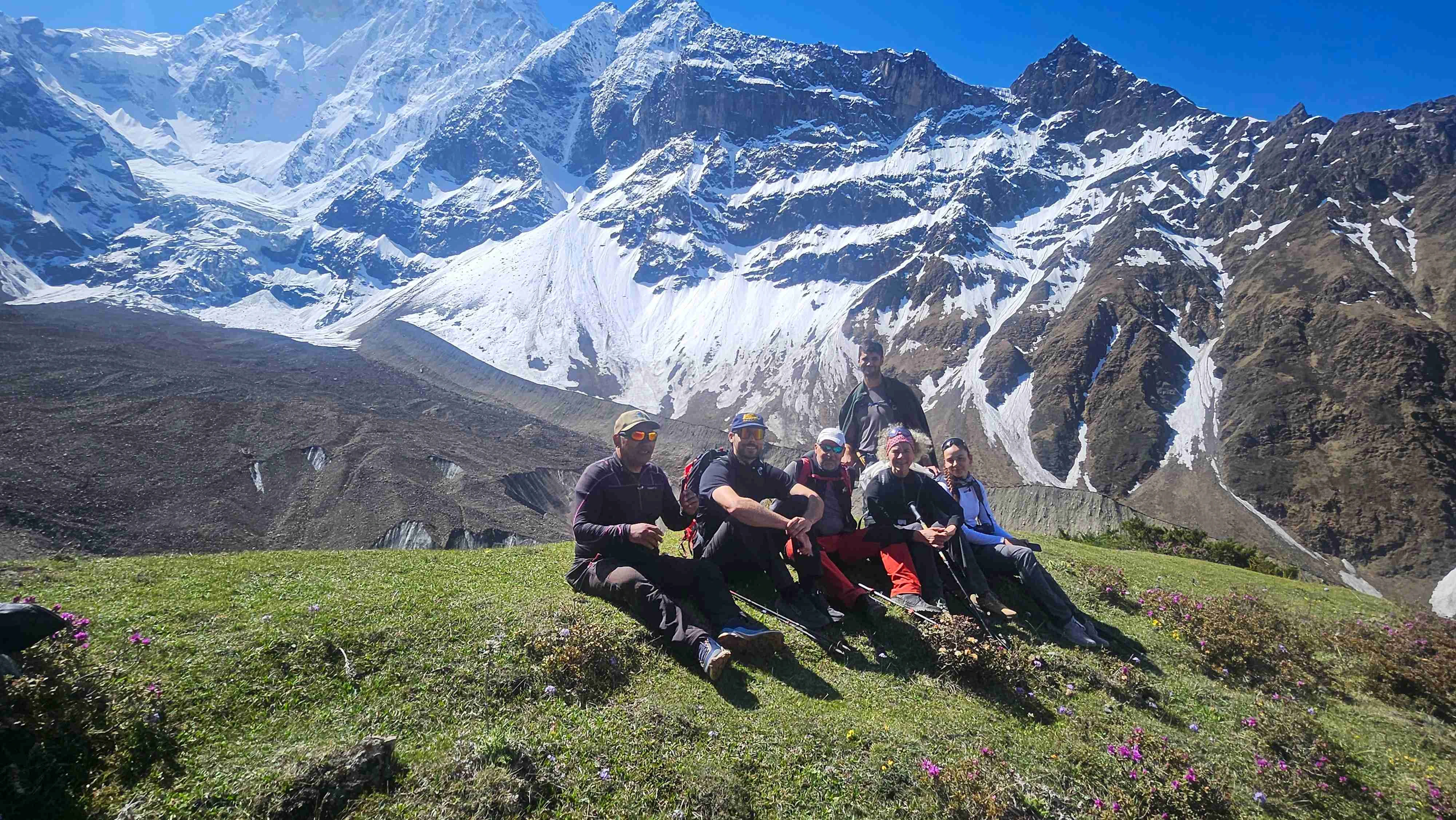
On Manaslu, “remote” is not about being completely cut off from people. It is about having fewer alternatives when something does not go as planned.
On more developed routes, you may have another lodge nearby, a road within easier reach, several transport options, or a better chance of changing your itinerary without much disruption. On Manaslu, those options become fewer as you move deeper into the valley.
The trek gives you less margin for error. A small delay can affect where you sleep that night. A change in weather can affect the next few days. And leaving the route early is not always as simple as finding a jeep or making a quick call.
It Starts Before You Even Hit the Trail (the 8–10 hr drive)
For many trekkers, the Manaslu Circuit Trek starts feeling remote before they take their first proper step on the trail.
The drive from Kathmandu to the usual starting point around Machha Khola often takes around 8–10 hours, sometimes longer when road conditions are poor. The journey begins on more familiar highways, but the final sections can be slow, rough, dusty, or muddy depending on the season.
This is not simply a long transfer you need to get through before the “real” trek begins. It is your first reminder that Manaslu does not run on the same smooth schedule as Nepal’s more developed trekking routes.
During the monsoon or after heavy rain, conditions can change quickly. Landslides, roadwork, traffic, or vehicle issues may delay the journey, so it is better to treat the drive as part of the adventure rather than expecting a perfectly timed transfer.
Remoteness by Section: A Simple Breakdown
The Manaslu Circuit Trek does not feel equally remote from start to finish. The lower trail still has regular village life and a sense of movement, while the upper section feels quieter, higher, and much further removed from everyday convenience.
Lower Trail (Surprisingly Connected)
From the starting area around Machha Khola through Jagat and toward Deng, the trail follows the Budhi Gandaki valley through a series of small settlements. You are still walking through a rural part of Nepal, but it does not feel completely cut off.
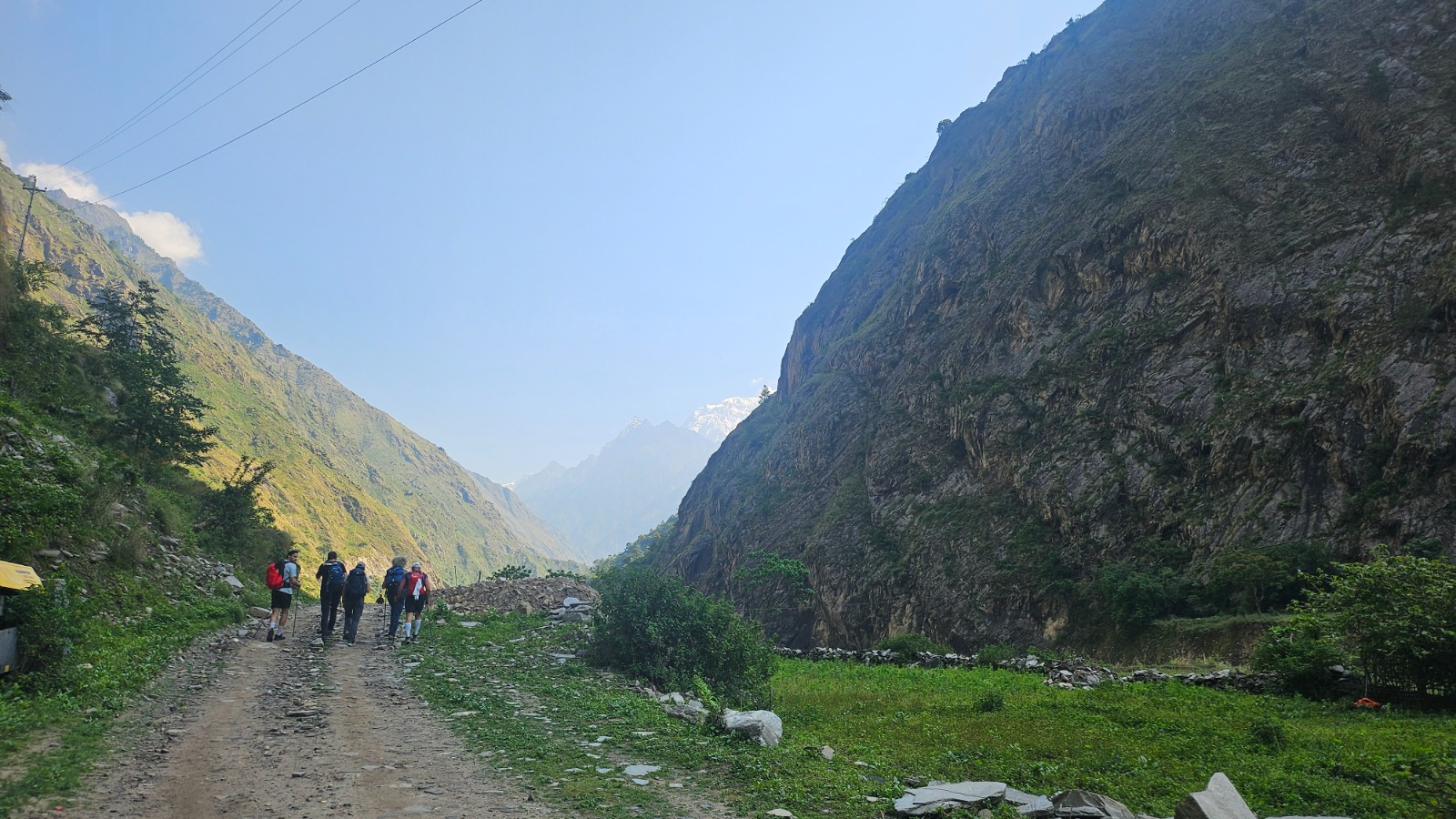
There are local teahouses, small shops, suspension bridges, farming villages, and regular movement from guides, porters, local residents, and other trekkers. Depending on the season and exact location, you may also see jeeps or signs of road access in parts of the lower valley.
This is often the part of Manaslu that surprises people. The route may be quieter than the Everest region or the Annapurna region, but it still feels lived-in. You are not alone on an empty mountain trail; you are moving through communities along the Budhi Gandaki.
It is still wise to carry enough cash and bring essential gear and personal medication from Kathmandu, as choices become more limited and more expensive higher on the route.
Mid-Trail (Isolation Kicks In)
The feeling begins to change after Deng as you move toward Namrung, Lho, Shyala, and Samagaun.
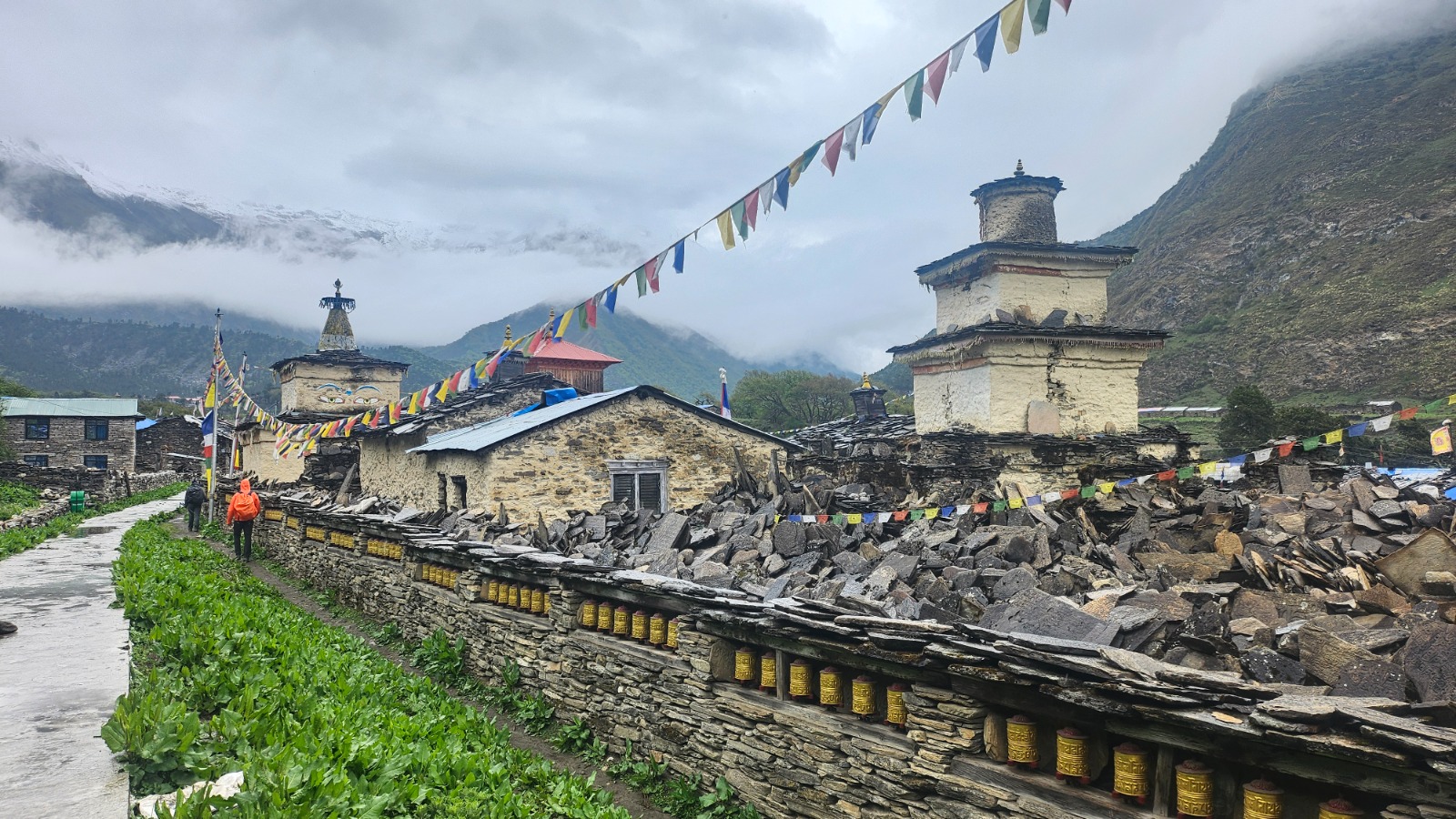
The villages become more spread out, the landscape opens up, and the trek starts to feel less connected to the lower valley. You are no longer thinking only about reaching the next village. You begin to think more carefully about the day’s walking time, where you will stay, how your body is adjusting to the altitude, and whether the weather will hold.
This is also where the cultural atmosphere changes. The villages feel more influenced by Tibetan Buddhist culture, and the mountains become a much bigger part of everyday life around you. The route feels quieter and more self-contained than it did lower down.
Upper Trail (Samdo, Dharamsala, and Larkya La Pass)
From Samagaun onward, Manaslu begins to feel properly high and remote.
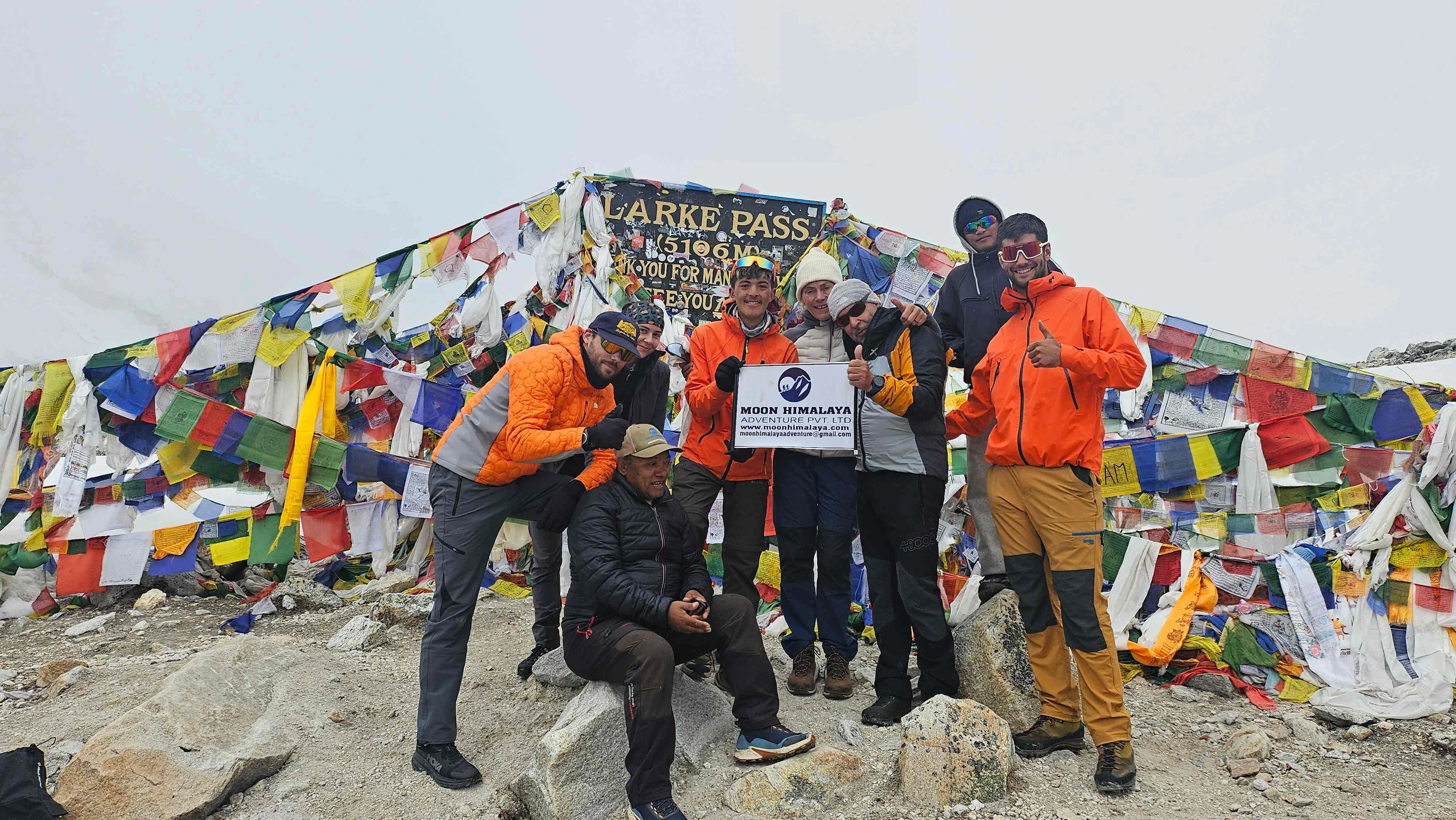
Samdo is one of the last major settlements before the pass. Beyond it, the landscape becomes wider, colder, and far less settled. Dharamsala, often used as the final overnight stop before crossing Larkya La Pass, is usually the most basic part of the standard trek. Accommodation is limited, facilities are basic, and conditions are noticeably harsher than anything lower on the route.
The Larkya La crossing is not just another trekking day. It usually means an early start, a long day on high ground, and conditions that can change quickly with the weather. By this stage, you are not completely on your own, but you are far from the flexibility you may be used to on easier trekking routes.
Teahouses & Food: What Remote Actually Looks Like at the End of the Day
For most trekkers, the biggest surprise comes at the end of the walking day. Manaslu may be remote, but you are not camping every night or carrying all your food with you. Most nights are spent in family-run teahouses, where you can rest, eat a hot meal, and share the evening with other trekkers, guides, and local hosts.
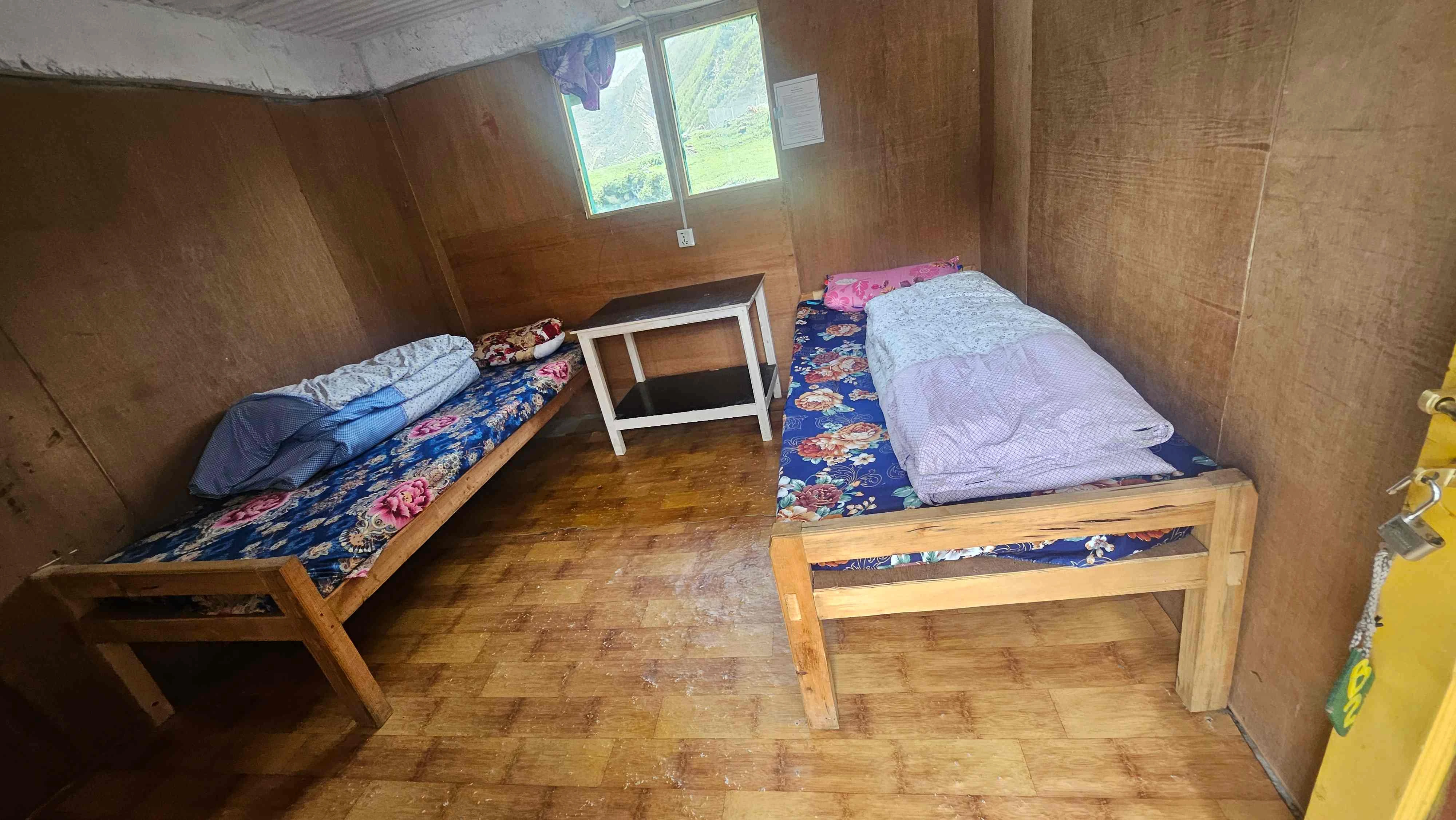
The rooms are usually simple, with twin beds, basic bedding, and shared toilets in many places. Lower down, there may be more lodge choices and slightly better facilities. As you move higher, rooms become more basic, hot showers may be limited or cost extra, and you may have less choice over where you stay, especially during busy trekking periods.
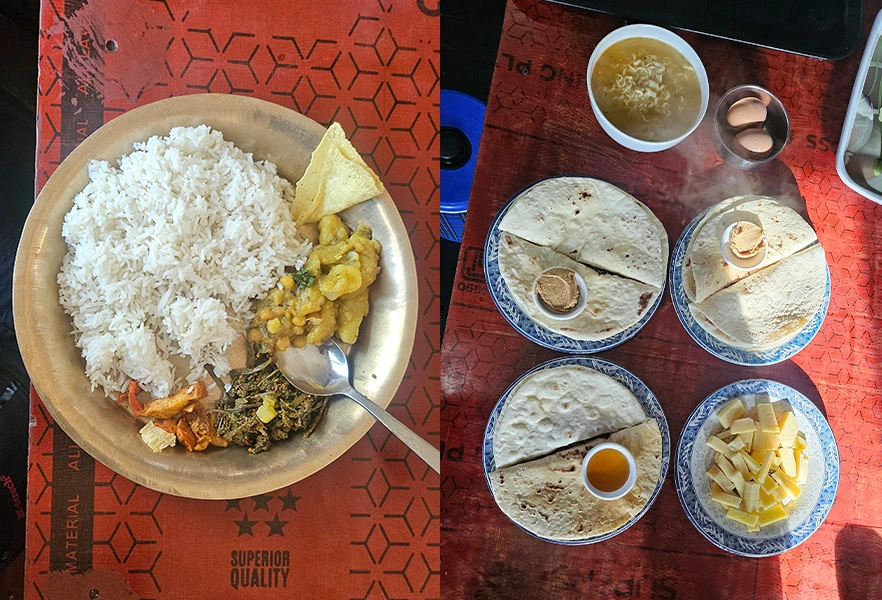
Food is practical rather than fancy, but it is usually filling and well suited to a trekking day. Dal bhat, noodle soup, fried rice, potatoes, eggs, pasta, and Tibetan-style bread are common choices along the route. The menu becomes smaller as you climb, and prices rise because supplies have to be brought further into the valley.
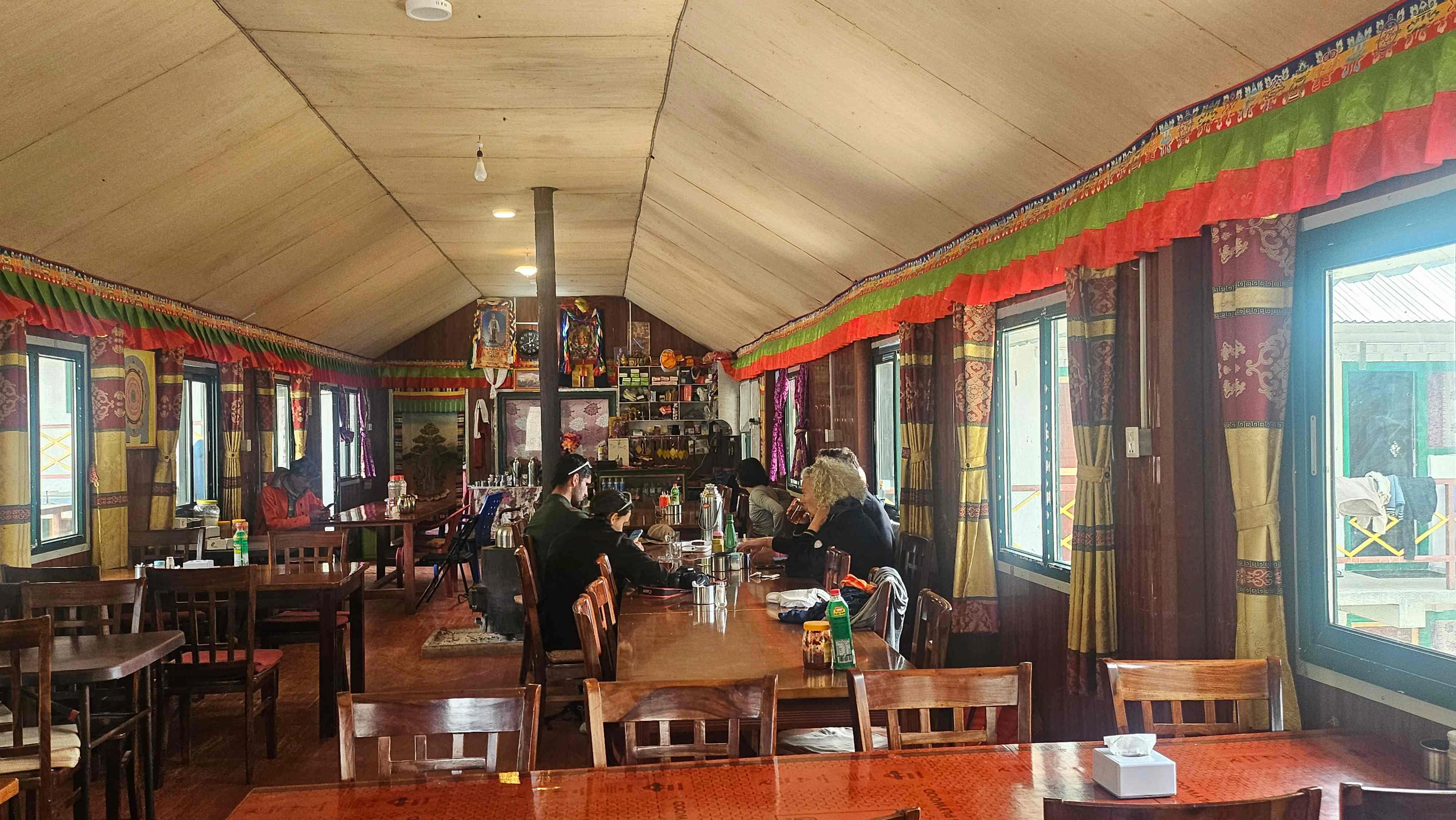
The dining room is often where the real atmosphere of Manaslu comes through. After a long day of walking, people gather around the stove, drink tea, compare trail conditions, and prepare for the next day. It is simple, but it is one of the parts of the trek that many people remember most.
As the trail climbs higher, the menu becomes shorter and comfort becomes simpler. But after a long day of walking, a warm dining room, a hot plate of food, and a place to rest can feel like more than enough.
The Honest Truth About Wi-Fi, Signal & Charging
Manaslu is not completely offline, but you should not expect to stay reliably connected every day.
In the lower villages, mobile signal or lodge Wi-Fi may be enough to send messages, check the weather, or let family know you are safe. But coverage can change from one village to the next, and even when Wi-Fi is available, it may be slow, paid, or unreliable.
As you move higher, it becomes harder to depend on your phone. Video calls, work calls, uploading photos, or replying quickly to messages are not realistic expectations on much of the upper trail. Around Samdo, Dharamsala, and Larkya La, be prepared for long periods without usable signal or internet.
Charging is available in many teahouses, usually for an extra cost, but power can be limited when lodges rely on solar energy or demand is high. Do not assume you will be able to charge every device whenever you want.
The best approach is to treat signal, Wi-Fi, and charging as a bonus rather than a guarantee. Carry a reliable power bank, download offline maps before leaving Kathmandu, save important contacts and insurance details on your phone, and let family know you may not be reachable every day.
It is also worth bringing essential charging cables and adapters from Kathmandu rather than expecting to replace them on the trail.
What Happens If Something Goes Wrong? (medical & evacuation reality)
In the lower villages, there may be basic local support and easier access to transport. Higher up the trail, especially around Samagaun, Samdo, Dharamsala, and Larkya La, options become much more limited. If someone feels unwell, gets injured, or needs to leave the trek early, the first step may simply be adjusting the plan, resting, or heading back down with the support of the guide and local team.
This is where altitude becomes especially important. The route reaches high elevations, and it is not a trek where you should ignore how your body is feeling just to stay on schedule. Let your guide know early if something feels wrong. A sensible decision made early is often much easier than trying to deal with a bigger problem higher on the route.
Helicopter evacuation can sometimes be arranged, but it should never be treated as an instant backup plan. Weather, visibility, location, communication, aircraft availability, and insurance approval can all affect how quickly help can arrive. In some situations, getting to a lower or safer point first may still be necessary.
Before starting the trek, make sure your travel insurance covers high-altitude trekking in Nepal, mountain rescue, and helicopter evacuation. Keep your insurer’s emergency contact details saved on your phone and shared with your guide or trekking company.
The reality is not that Manaslu is unsafe. It is that help may take longer to reach you when you are deep in the valley. That is why a realistic itinerary, proper acclimatization, and early communication matter so much on this route.
Manaslu vs EBC vs Annapurna: Remoteness at a Glance (comparison table)
Here is how Manaslu compares with Everest Base Camp and the Annapurna Circuit in practical terms.
What matters on the trail | Manaslu Circuit | Everest Base Camp | Annapurna Circuit |
Getting to the trail | Long overland drive with road conditions that can affect the schedule | Usually begins with a flight to Lukla, which can also be delayed by weather | More road access points and transport options before, during, and after the trek |
Lodges and food choices | Good basic teahouses, but fewer choices as you go higher | Wide range of lodges, cafés, and food options on the main route | Generally the widest range of lodges, restaurants, and services |
Phone signal and Wi-Fi | Unreliable and increasingly limited higher up | More widely available in major villages, though still not guaranteed | Usually more available, especially in larger settlements |
Changing your plan | Fewer alternative routes, road exits, and quick solutions | Better-established trekking support, but still no easy road exit from much of the main trail | More flexibility because roads and transport reach several parts of the circuit |
Emergency logistics | Can take longer to arrange when you are deep in the valley | More established rescue and trekking support network | More road access and alternative exit points in many sections |
Overall feeling | Quiet, self-contained, and far from everyday convenience | Busy, well-known, and more developed for trekkers | More connected, varied, and easier to adapt along the way |
In simple terms, Annapurna gives you the most flexibility, Everest has the strongest trekking infrastructure, and Manaslu asks for the most patience when plans change.
Is the Remoteness Worth It?
For many trekkers, this is exactly why Manaslu stands out.
The route feels quieter, less commercial, and more connected to the mountains than Nepal’s busier trekking regions. You spend more time walking through small villages, valleys, forests, and high mountain landscapes without constantly feeling surrounded by crowds, cafés, or busy trekking traffic.
That does not mean Manaslu is better for everyone. Trekkers who need reliable internet, prefer lots of accommodation choices, or want an easy way to change plans may feel more comfortable on Everest Base Camp or the Annapurna Circuit.
But for those who are happy to trade a little convenience for a more peaceful and less developed trekking experience, Manaslu can feel deeply rewarding. The remoteness is not something you simply have to put up with, it is a big part of what makes the journey memorable.
With enough time, realistic expectations, and a properly planned itinerary, the Manaslu Circuit is not too remote to enjoy. It is remote enough to feel like a real journey.
Mr. Dorje Tamang | Trek Leader with 30+ Years of Himalayan Experience
Call us on WhatsApp+977 9860455963OrChat with us