Foreign guides still climb Everest with clients, but Nepal’s proposed Tourism Bill could change the roles they are allowed to hold. Here’s what climbers planning Everest in 2027 need to know.
Can a Foreign Guide Still Lead You on Everest in 2027?
Table of Contents
If you normally climb with an international mountain guide, Nepal’s proposed tourism rules may raise an obvious question: can that same foreign guide still lead you on Everest in 2027?
Under the current system, foreign guides and expedition leaders still climb Everest with clients. However, Nepal’s existing law already requires certain official mountaineering roles, including the Sirdar and Mountain Guide, to be held by Nepali citizens.
International expeditions work within these rules by combining foreign leadership with licensed Nepali operators and Nepali mountain staff.
What may change in 2027 is still being decided. The Tourism Bill has passed the National Assembly but has not yet been authenticated, and House committee discussions were still taking place in September 2026.
So it is not as simple as saying foreign guides are being “banned.”
Can a Foreign Guide Still Guide You on Everest in 2027?
For now, a foreign guide can still be part of an Everest expedition and climb with clients.
This model is still being advertised for 2027. Adventure Consultants, for example, currently lists international guides alongside its Sherpa team for its 2027 Everest expeditions. Its Fast Track program advertises a 1:4 ratio of qualified international guides and a 1:1 Sherpa-to-climber ratio on summit day.
The key is that someone acting as your international expedition guide is not necessarily holding the official Mountain Guide position defined under Nepal’s law.
Those are not always the same role.
Understanding that difference makes the proposed changes for 2027 much easier to follow.
Why Does Nepal’s Law Already Require Mountain Guides to Be Nepali?
Nepal’s existing Tourism Act states that the Sirdar, Mountain Guide, high-altitude workers, base camp workers and local workers accompanying a mountaineering expedition must be Nepali citizens.
At first, this may seem confusing because international guides regularly climb Everest with clients.
The reason is that the word “guide” is used more broadly in the climbing industry than it is in Nepal’s legislation.
An international company may describe someone as an expedition leader, international mountain guide or personal guide. That person may climb with clients and act as their expedition guide. The team can still have the Nepali Sirdar and other mountain staff required by law.
Adventure Consultants provides a useful example. Its current Everest programs include international guides working alongside a large Sherpa team.
So requiring certain official mountaineering roles to be held by Nepali citizens does not automatically prevent a foreign professional from climbing with or guiding clients.
How Can Foreign Guides Currently Lead Clients on Everest?
Foreign Everest expeditions do not simply arrive in Nepal and operate on their own.
Under the Tourism Act, foreign and joint mountaineering teams must appoint a licensed trekking agency or authorised mountaineering organisation as their representative in Nepal. The regulations allow that licensed agency to help operate the expedition, arrange workers, handle documents and payments, assist with briefings and support emergency rescue.
This allows an expedition to combine an international operator and foreign expedition leadership with a Nepali partner, Sirdar, climbing guides and high-altitude staff.
Your international guide may travel with you, help manage the expedition and climb alongside you, while the Nepali side handles the roles and responsibilities required under local law.
What Could Nepal’s Proposed Tourism Bill Change?
The main uncertainty comes from proposed amendments to the Tourism Bill.
In July 2026, 58 lawmakers registered 263 amendments covering different parts of Nepal’s tourism industry. Among them were proposals requiring personnel involved in mountaineering operations, including Sirdars, mountain guides and climbing support staff, to be Nepali citizens.
Other proposed amendments would require commercial mountaineering operations, expedition marketing and expedition package sales to be handled through trekking agencies registered and licensed in Nepal. Foreign companies would not be allowed to directly sell or operate those expeditions under that proposal.
Some of this is already close to how international Everest expeditions operate today, with foreign companies working through licensed Nepali partners.
The bigger question is how broadly the final law will define “personnel involved in mountaineering operations.”
Could an international guide still climb with a private client if the expedition also has the required Nepali guides and staff? Could that person continue acting as the client’s personal guide or expedition leader without holding the official Mountain Guide role?
That may still be possible, but much will depend on the final wording and how the rules are applied.
As of October 2026, these proposals are still not settled enough to be treated as confirmed rules for the 2027 Everest season. Parliament’s official record does not yet show the bill as passed by the House of Representatives or authenticated, while House committee discussions continued into September.
What Would This Mean If You Want to Climb With Your Own Foreign Guide?
If you already climb with a particular international guide and want that person beside you on Everest, the main thing to check is what role they will have on the expedition.
If the rules become stricter, that role may need to change. Your guide might still be able to join and climb with you, while the positions officially recognised under Nepal’s law remain with Nepali personnel.
This is especially important if continuing with a guide you already know and trust is one of the main reasons you are choosing a particular expedition.
What Should You Ask Before Booking Everest for 2027?
If climbing with a particular foreign guide matters to you, ask the operator directly:
- Will my named foreign guide actually climb with me?
- What role will that person have on the expedition?
- Which licensed Nepali company will operate the expedition locally?
- Who will serve as the Nepali Mountain Guide, Sirdar and other required expedition staff?
- Could my guide’s role change if Nepal updates the regulations before the 2027 season?
- What happens to my booking if that guide can no longer accompany me as originally promised?
Getting clear answers before paying a large expedition deposit is more useful than relying on broad claims that foreign guides either are or are not allowed.
The Bottom Line
For now, foreign guides can still climb Everest with clients, while the official Nepali mountaineering roles required by law remain in place.
The uncertainty for 2027 is whether Nepal’s Tourism Bill will place further limits on what foreign guides and international expedition companies can do.
The bill is still going through the legislative process, so claims that foreign guides have already been completely banned from Everest would be premature.
If climbing with a particular foreign guide is important to you, confirm their exact role with the operator before booking and ask what would happen if Nepal’s rules change before your expedition.
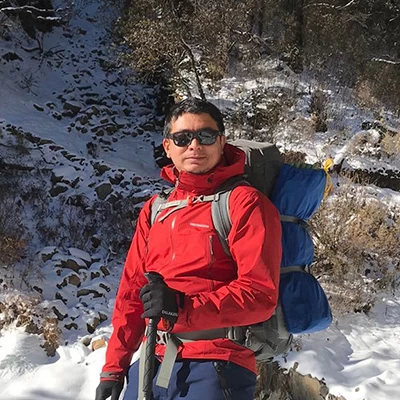
Mr. Lachhuman Tamang – A Pioneer in Trekking and Mountaineering
Call us on WhatsApp+977 9860455963OrChat with us