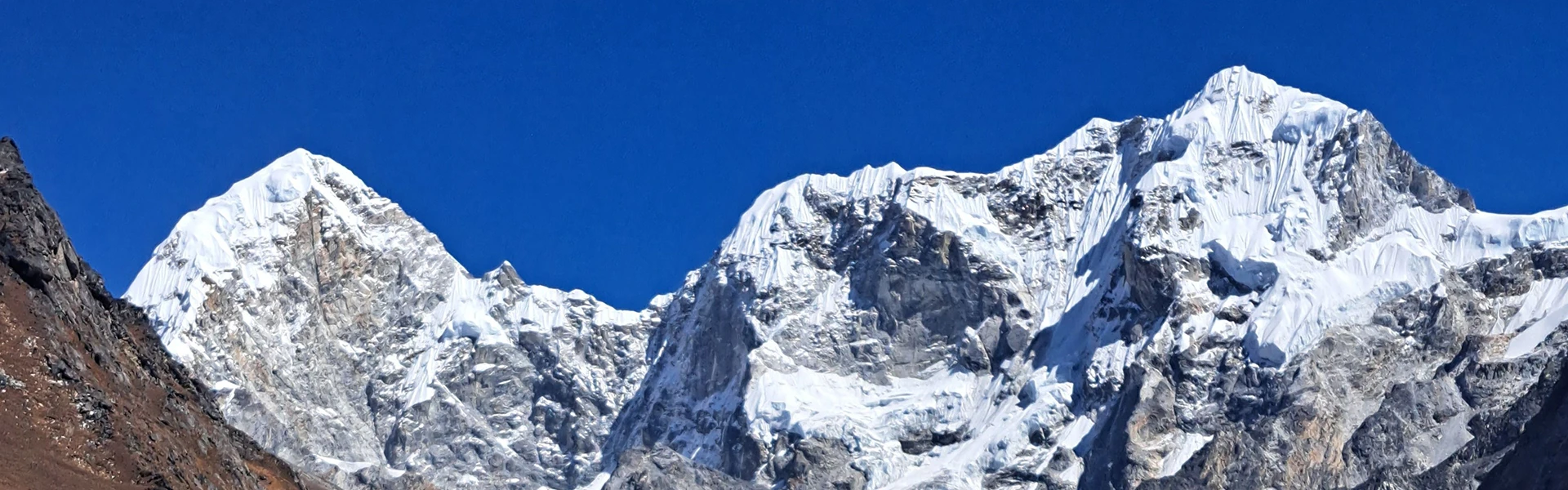
Why does the Tashi Lapcha Pass Trek cost more than a normal Nepal trek? This guide explains the main cost drivers, why prices vary, and what to compare before choosing a trek quote.
Tashi Lapcha Pass Trek Cost: Why It Costs More Than a Normal Nepal Trek
Table of Contents
The Tashi Lapcha Pass Trek costs more than a normal Nepal trek mainly because it is more complicated to operate.
On a typical teahouse trek in Nepal, much of the infrastructure is already available along the trail. Trekkers can stay in lodges, eat meals prepared there and move between established settlements with a relatively simple support setup.
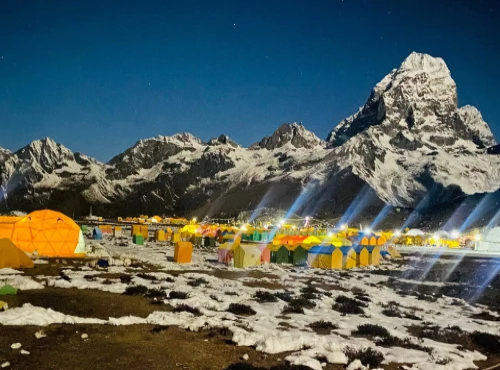
Tashi Lapcha is different. The route crosses the remote Rolwaling Valley and reaches 5,755 meters before entering the Khumbu region. Higher on the route, accommodation becomes limited, camping is required and more supplies need to travel with the group. The crossing also involves glacier and technical terrain.
On Moon Himalaya Adventure's current 16-day itinerary, the upper section includes tented nights around Tsho Rolpa, Jaboo Glacier and immediately after crossing Tashi Lapcha.
All of this adds to the logistics behind the trek and, as a result, the cost.
For this article, when we say a “normal Nepal trek,” we mean a standard lodge-based trek where accommodation and meals are available in teahouses for most or all of the route, without the same need for remote camping and technical pass support.
How Much Does the Tashi Lapcha Pass Trek Cost?
There is no single standard price for the Tashi Lapcha Pass Trek.
As of September 2026, publicly advertised Tashi Lapcha packages from Nepal trekking companies are roughly in the US$2,050 to US$3,500 per person range. Very small private groups and solo journeys can cost more.
But those prices do not necessarily represent the same itinerary or level of support.
One quotation may include more camping support, additional staff, a longer itinerary, Kathmandu hotels, private transport or technical equipment. Another may leave some of these services out.
Group size can also affect the price per person because some operating costs are shared among the group.
So the advertised price is only the starting point. Before comparing two prices, first make sure you are actually comparing the same kind of journey.
Why Does Tashi Lapcha Cost More Than a Normal Nepal Trek?
The main reason is not simply the altitude. Many treks in Nepal reach high elevations.
The difference comes from the combination of remoteness, camping logistics, technical terrain and the additional support needed to manage the upper section of the route.
Remote sections require more logistical support
A well-developed teahouse trail already provides much of what a trekking group needs.
The lodge provides a room. The kitchen prepares meals. Supplies are already moving between settlements. The trekking company still has plenty to organize, but it does not need to carry everything required for each night's stay.
As you move higher through Rolwaling toward Tashi Lapcha, that is no longer possible everywhere.
There are sections where the group cannot simply reach the next village and stay in a lodge. Food, equipment and other supplies needed for the remote section have to be planned in advance and carried with the team.
That extra logistical work is one of the main reasons Tashi Lapcha cannot be priced like an ordinary teahouse trek.
Camping requires more equipment, supplies and support staff
Camping involves much more than carrying a sleeping tent.
The group may need sleeping tents, cooking and dining equipment, fuel and food for the camping section. All of this also has to be transported and managed.
That can mean a larger support team. Porters may be needed to move equipment and supplies, while a cook or other staff may be responsible for preparing meals and managing the camp.
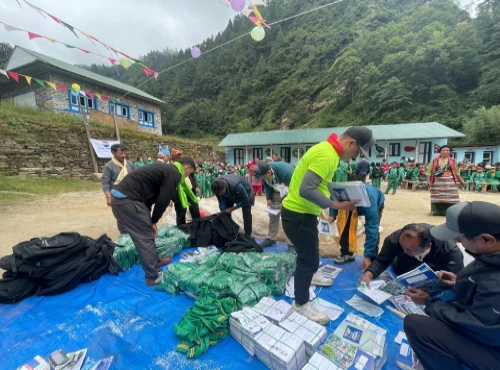
For example, MHA's current Tashi Lapcha package includes sleeping, kitchen and dining tents, along with a cook during the camping section. It also covers the food, accommodation, salary and insurance of the guide, porters, cook and other support staff involved in the trek.
This is very different from arriving at a teahouse and ordering dinner from its kitchen.
There may only be a few camping nights on the itinerary, but preparing for those nights starts long before the group reaches the first campsite.
Crossing Tashi Lapcha requires technical equipment and appropriate support
Tashi Lapcha is not simply a high walking pass.
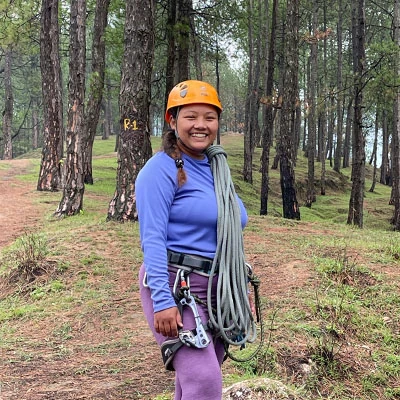
The upper route involves glacier terrain, and conditions around the crossing can require equipment such as crampons, a harness, an ice axe and ropes.
MHA's current itinerary describes a fixed-rope-assisted descent after reaching the 5,755-meter pass, while its equipment information lists crampons as essential for the crossing.
There are two practical reasons this can increase the cost.
First, the necessary technical equipment needs to be available, whether it is provided by the operator, rented separately or brought by the traveler.
Second, the person leading the crossing needs relevant experience and good judgment.
When comparing quotations, do not only check whether a package says “guide included.” Ask who will actually be responsible for the group during the upper section of the trek.
A higher price does not automatically guarantee better leadership. Likewise, a cheaper price does not necessarily mean the support is unsuitable.
What matters is knowing who will lead the crossing and whether that person has the right experience for the route.
You are paying for the whole approach, not only the day you cross the pass
It can be easy to think of Tashi Lapcha as one expensive “technical day.”
But the crossing is only one part of the journey.
Before reaching the pass, the group has to travel through Rolwaling, gain altitude gradually, reach the upper valley and move supplies toward the high camps.
MHA's current itinerary, for example, includes an acclimatization day at Na Gaon before continuing toward Tsho Rolpa and the higher camps.
Those days are part of what makes the crossing possible.
A shorter itinerary may reduce the advertised price, but itinerary length should not be judged on cost alone.
A better question is: why is each day there, and does the overall plan make sense for the group?
Why Do Tashi Lapcha Trek Prices Vary So Much Between Operators?
Even after accounting for the extra logistics, two Tashi Lapcha quotations can still differ by hundreds or even more than a thousand dollars.
Often, this is because the companies are not quoting exactly the same trip.
Before comparing two prices, first look at what each package actually includes.
| What to compare | Why it can change the price |
|---|---|
| Itinerary length | More trekking, acclimatization or contingency days increase accommodation, food and staff costs. |
| Group size | Some transport, camping and staffing costs can be shared among a larger group, reducing the cost per person. |
| Camping setup | The amount of equipment and level of camp support can vary considerably. |
| Support team | The number and experience of guides, porters, cooks and other staff affect the operating cost. |
| Technical equipment | Ropes, crampons, harnesses, ice axes and other equipment may be included, rented separately or expected from the traveler. |
| Meals and accommodation | Some packages include more meals and accommodation than others, especially before and after the trek. |
| Transportation | Private road transport, the Lukla flight and airport transfers may or may not be included. |
| Kathmandu services | Hotel nights and other city arrangements can affect the overall package price. |
| Permits and local fees | Check which permits and entry fees are included rather than assuming every package covers the same things. |
| Contingency arrangements | Ask what happens financially and operationally if weather or trail conditions change the original plan. |
This is why two Tashi Lapcha packages can look similar at first but still be priced very differently.
A shorter itinerary with fewer inclusions should normally cost less than a longer, more inclusive one. That does not automatically make either option better or worse.
It simply means the two prices should not be compared as though the packages are identical.
Tashi Lapcha Pass only and Tashi Lapcha with Pachermo Peak are not the same trip
This is another reason online prices can be confusing.
Some itineraries cross Tashi Lapcha and continue into Khumbu. Others combine the crossing with an ascent of Pachermo Peak.
These are not the same trip.
A journey that also includes Pachermo Peak can involve additional permit, equipment and support requirements.
Before comparing two prices, make sure the itineraries actually cover the same journey.
What Costs Might Not Be Included in the Tashi Lapcha Trek Price?
Even an “all-inclusive” trekking package rarely covers every expense from the moment you leave home until you return.
International flights and a Nepal visa are commonly excluded. Travel insurance is another important separate cost, especially because the policy needs to cover the altitude and activities involved in the trek.
Personal equipment can also affect your final budget. If certain technical or cold-weather equipment is not included, you may need to bring it, buy it or rent it.
There are also personal expenses such as extra drinks and snacks, charging, internet where available, hot showers, shopping and tips.
For a remote trek like Tashi Lapcha, there is another question worth asking: what happens if the itinerary changes?
Weather, trail conditions, flight disruption, illness or other unexpected situations can lead to extra accommodation, transport or evacuation costs.
MHA's current package, for example, excludes additional expenses caused by unforeseen circumstances and requires travelers to have travel insurance.
This does not mean you should expect those extra costs. It simply means you should know who would be responsible for them before you book.
A US$2,500 package may not represent your complete trip budget if several important expenses are still outside the price.
How Should You Compare Tashi Lapcha Trek Quotes?
Once you understand why prices differ, comparing quotations becomes much easier.
Before choosing based on the final number, ask five questions.
1. Are the itineraries actually the same?
Check the total number of days, acclimatization time, camping locations and whether Pachermo Peak is included.
2. What camping and technical support is included?
Find out what equipment the company provides and what you need to bring or rent yourself.
3. Who will lead the Tashi Lapcha crossing?
Ask about the experience of the person responsible for the group in the upper section and how the wider support team will be structured.
4. What expenses remain outside the quoted price?
Check permits, hotels, transport, the Lukla flight, personal equipment and other exclusions.
5. What happens if the itinerary changes?
Ask who arranges an alternative and which additional expenses would remain your responsibility.
Once you know these things, comparing two prices becomes much more meaningful.
A lower quotation may be perfectly reasonable. A higher one may also be justified.
But neither cheap nor expensive tells you enough on its own.
For Tashi Lapcha, the more useful question is: What exactly am I getting for this price, and is the trek being planned and supported in a way that is appropriate for me?
That is where the real comparison should begin.
Manisha Tamang
Call us on WhatsApp+977 9860455963OrChat with us