Climbing Ama Dablam can cost thousands of dollars more with one company than another. Learn why prices differ between Nepal-based and international operators, what each package includes, and what to compare before booking.
Why Do Ama Dablam Expedition Prices Vary So Much? Nepal vs International Operator Costs Explained
Table of Contents
When you compare Ama Dablam expeditions, the price difference can be confusing. One company may charge around US$ 7,000 another US$12,000, while some ask US$20,000 or more.
They are climbing the same mountain, often using the same Southwest Ridge. So why is there such a big difference?
A lot depends on who guides you, how the expedition is staffed, what is included above Base Camp, and how transport or unexpected changes are handled. Booking with a Nepal-based or international operator can affect the price, but that alone does not explain everything.
Why Can Ama Dablam Cost $6,000, $12,000 or $20,000?
You are paying for a particular level of guiding, logistics and service, alongside access to the mountain.
Published prices show just how wide the range can be:
| Operator | Published price | What the package illustrates |
|---|---|---|
| SummitClimb | US$6,850 for full service | International leadership can also be available in a lower-priced expedition |
| Moon Himalaya Adventure | From US$11,999 for 29 days | Includes 1:1 guiding, porter support and expedition logistics |
| Adventure Consultants | US$19,500 for its listed 2026 and 2027 departures | Includes one professional guide per three climbers, one Sherpa per climber and helicopter transfers |
| Alpenglow Expeditions | US$24,950 for Rapid Ascent | A shorter expedition using pre-acclimatisation and helicopter logistics is a different type of package |
Published prices checked in October 2026. These packages differ in staffing, itinerary and inclusions and are not directly equivalent. Confirm current prices and services with each operator.
The more useful question is: what are you getting for the price?
A larger group sharing climbing staff can cost much less per person than a small team with dedicated guides, even when both follow the same route.
What Costs Every Ama Dablam Operator Has to Cover
Every Ama Dablam expedition has basic operating costs. These include permits, transport, food, equipment and staff.
For foreign climbers, Nepal’s Department of Tourism currently lists the Ama Dablam climbing royalty at US$1,000 per person in spring and autumn,and US$500 in winter and summer. This is only one part of the total cost, separate from other permits and administrative arrangements.
Operators also need to transport staff and supplies into the Khumbu, set up Base Camp and higher camps, arrange climbing equipment, and pay and insure their workers. Food, fuel, communications and equipment transport all cost money before the summit attempt begins.
Some of these expenses can be shared across a group, while others increase with every climber or extra staff member. This is why a small private expedition can sometimes cost more per person than a scheduled group departure.
These costs explain why Ama Dablam is expensive to operate in general. The larger differences between packages usually come from the way the expedition itself is run.
What Usually Makes International Operators More Expensive
Some international operators bring an overseas expedition leader or professional mountain guide to work alongside the Nepali climbing team. This adds guide wages, flights, accommodation and insurance to the cost.
Adventure Consultants, for example, lists one professional guide per three climbers and one Sherpa per climber. Its package also includes helicopter flights between Kathmandu and Lukla, an acclimatisation climb of Lobuche East and support from its New Zealand office.
That is quite different from a package using shared climbing staff and regular domestic flights.
Some international operators also offer a shorter expedition with more specialised logistics. Alpenglow’s Rapid Ascent program combines pre-acclimatisation, helicopter transport, professional guides and higher-end Base Camp facilities to reduce the amount of time clients spend in Nepal. Part of the premium pays for spending less time away from home.
International offices and pre-trip preparation can add to the cost as well. However, a public package page usually cannot tell you exactly how much of the final price goes towards overhead or profit.
For someone who already knows the guide, wants extensive preparation before the expedition or has limited time away from work, these extras may be worthwhile. Another climber may not need them.
Why Nepal-Based Operators Also Vary So Much in Price
Nepal-based companies can work directly with local staff and suppliers without bringing an overseas leadership team into Nepal. But prices between local operators can still vary considerably.
One company may include a dedicated climbing guide, while another charges extra for one. One may have more staff carrying equipment and setting up higher camps, while another expects climbers to carry more of their own gear.
Group size, guide ratios, camp equipment, transport and high-altitude staffing can all change the final price.
Accommodation matters too, but it is useful to separate comfort from what happens on the mountain. A better Kathmandu hotel improves the city part of your trip. An additional climbing guide changes the help available during the climb.
Our 29-day Ama Dablam expedition starts from US$11,999. The published package includes one government-licensed mountain guide per climber, 1:1 porter support, a cook during the climbing period, group climbing equipment and camping tents. It also covers return Lukla flights, three Kathmandu hotel nights, expedition accommodation and meals, the climbing permit and national park entry, and the listed staff wages and insurance.
These details give you a clearer basis for comparison than the price alone. In particular, check whether another quote includes the same guiding ratio and porter support. For our departure, confirm when your guide accompanies you and which loads the porter arrangement covers. International flights, client insurance, tips and additional costs caused by unforeseen circumstances remain outside the published package.
SummitClimb provides another useful example. Its US$6,850 full-service package includes international leadership, while the page lists climbing Sherpas for the group and personal Sherpas as a separate option. This is a different staffing arrangement from a package advertising one guide per climber.
Why “1:1 Sherpa” and “Full Service” Can Be Misleading
These terms only help if the company clearly explains what they mean.
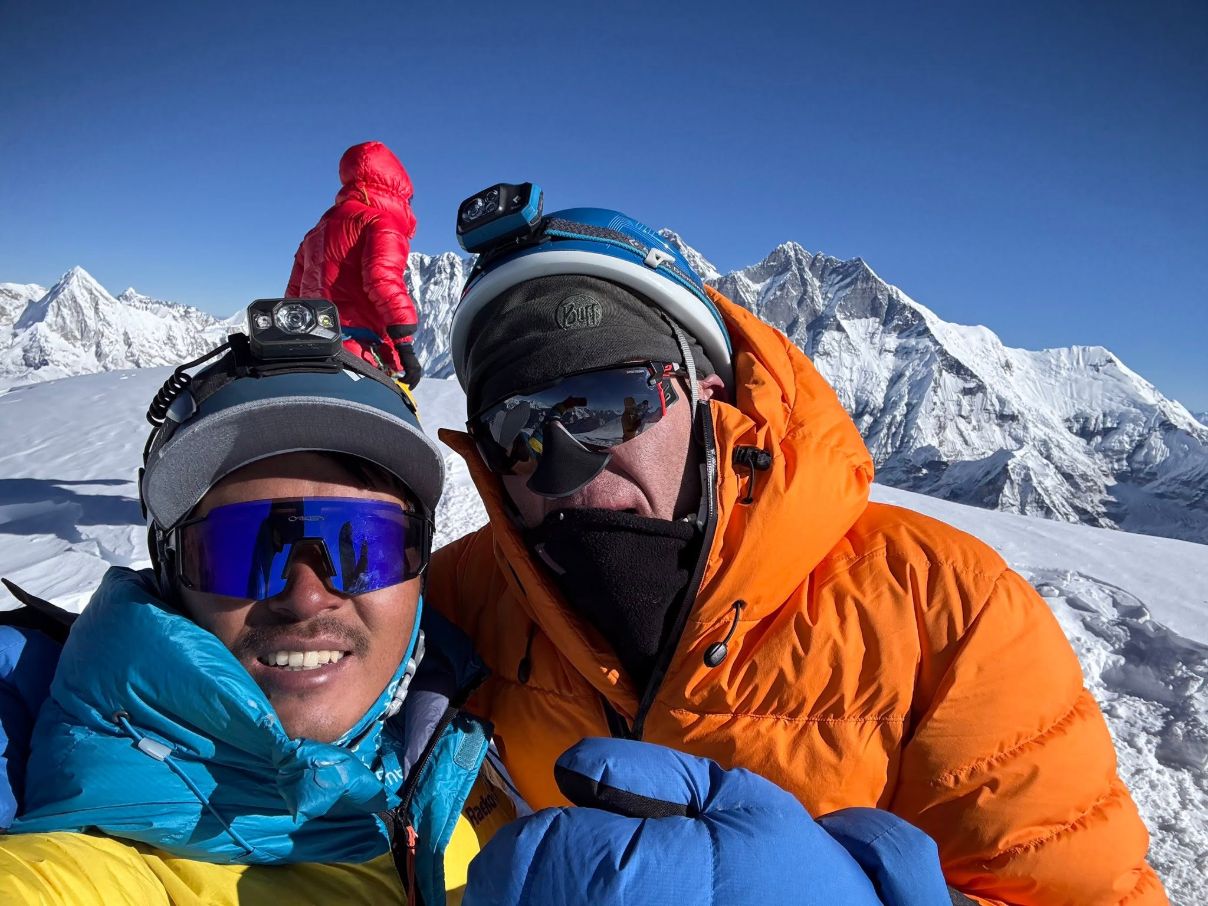
“1:1 Sherpa” may mean one climbing staff member is assigned to each client. But it does not tell you when that person will climb with you, what they will carry or what responsibilities they have.
Ask whether the arrangement covers acclimatisation rotations as well as the summit push. You should also know:
- Who carries your personal climbing equipment?
- Who sets up the higher camps?
- Who leads you during the climb?
- What happens if your assigned guide becomes unavailable?
It is also important to distinguish between the expedition leader and the person climbing beside you. Someone may lead the overall expedition without providing continuous one-to-one guidance on the mountain.
Guide experience and qualifications should be checked directly. Nationality itself is not a qualification.
“Full service” can be just as vague. Check whether the package includes high-camp food and fuel, personal climbing assistance, domestic transport, Kathmandu accommodation and emergency equipment. Summit bonuses, staff tips and personal climbing gear may still be extra.
A Base Camp-only package covers a different level of service. It may cover permits and Base Camp services while leaving much of the climbing setup for you to arrange.
Compare what the company is actually responsible for, not just the package name.
Does a Higher Price Actually Mean Better Support or Safety?
A higher price can pay for more experienced leadership, closer supervision, additional equipment and stronger communications. These can be meaningful advantages when they are included.
But price alone is not a reliable measure of how well an expedition is run.
Look closely at the people assigned to your departure. Ask about their Ama Dablam experience, their responsibilities and who makes decisions on the mountain. You should also know what happens if one climber needs to descend while the rest of the group continues.
Emergency planning deserves the same attention. If a company says it provides “rescue support,” find out what that involves. Who coordinates the rescue? What communication equipment does the team carry? What happens if evacuation is delayed?
More staff and better equipment can help a team deal with problems, but they cannot remove the risks of climbing Ama Dablam. No package can guarantee good weather, successful acclimatisation or a summit.
How Weather and Contingency Costs Change the Real Price
The advertised price usually covers a fixed itinerary. What happens when that itinerary changes can have a big effect on your final cost.
For example, a weather day already included in the schedule is different from adding an extra day after the expedition was supposed to finish. Extra days can mean additional costs for staff, food, accommodation, camps and transport.
Lukla transport is another area worth checking. If a scheduled domestic flight is included, that does not necessarily mean the company will pay for a helicopter when flights are disrupted.
Before booking, ask:
- What remains covered during delays within the planned itinerary?
- How much does an extra day cost, and is an extension possible?
- Who pays for replacement transport or additional accommodation?
- What happens financially if you descend early?
- What happens if the expedition ends without a summit?
Evacuation costs and insurance should also be checked separately from the company’s role in coordinating a rescue.
Some packages cover specified delay costs, while others charge them separately. The booking terms should make this clear.
How to Compare Ama Dablam Expedition Prices Properly
The easiest way to compare prices is to ask each company for a written quote based on the same type of trip, group setup and level of climbing assistance.
Then compare three things:
- The climbing operation: Who leads the expedition? What is the guide ratio? Who carries equipment? What is provided at higher camps?
- Included logistics: What transport, accommodation, meals, climbing equipment and acclimatisation trips are included?
- Potential extra costs: What about summit bonuses, tips, personal expenses, extensions and transport disruptions?
This makes it easier to see what the extra money is paying for.
A dedicated guide may matter greatly to you, while a higher-end Kathmandu hotel may not. One climber may be happy to pay more to climb with an international guide they already know. Another may prefer working directly with an experienced Nepali team.
Choose the level of service you need, then compare the total cost of getting it. Good value means getting suitable climbing support from a capable team, with clear inclusions and a clear understanding of any extra costs.
If you are considering our Ama Dablam expedition, reach out to us about the exact climbing arrangements and inclusions for your departure before comparing the quote with other operators.
Mr. Lachhuman Tamang – A Pioneer in Trekking and Mountaineering
Call us on WhatsApp+977 9860455963OrChat with us