Nepal is considering a rule that could require Everest climbers to have previously summited a 7,000m+ peak in Nepal. Here is what is confirmed so far, what could still change before Everest 2027, and whether you should add another expedition to your preparation.
Do You Need to Climb a 7,000m Peak Before Everest in 2027?
Table of Contents
If you are planning to climb Everest in 2027, you may have heard that Nepal will require climbers to summit a 7,000m peak first.
As of September 2026, this is not yet a final rule for Everest permits. Nepal's Tourism Bill includes a previous-summit requirement, but the bill is still being discussed in Parliament and the wording could change.
Within Nepal’s mountaineering community, however, the possibility of a previous high-altitude summit requirement is being taken seriously. For anyone targeting Everest in spring 2027, that matters because the final rule could determine whether your previous climbs are enough for a permit or whether you need another expedition first.
So the useful question is not simply whether Nepal has proposed a new rule. It is whether you need to change your Everest 2027 plans because of it.
Is a 7,000m Summit Actually Required for Everest in 2027?
At the moment, no.
The proposal has gone further than an initial government announcement, but it has not yet become law.
Nepal's National Assembly passed the Tourism Bill in February 2026. It then moved to the House of Representatives, where lawmakers submitted a large number of amendments. As recently as August, the House's International Relations and Tourism Committee was still consulting mountaineering and tourism organizations about the bill.
So under the rules currently in force, a previous 7,000m summit is not compulsory. But for climbers planning Everest in 2027, the proposal is serious enough that it should be considered in their preparation.
What Has Actually Been Proposed?
The version passed by the National Assembly introduced a clear previous-climb condition for Everest.
Under that wording, anyone applying for a permit would need to show that they had previously summited at least one mountain higher than 7,000m in Nepal.
Two details matter.
First, it must be a successful summit. Joining an expedition or making an attempt would not be enough. Second, the mountain must be in Nepal.
If that wording remains unchanged, the rule would be much more specific than simply asking climbers to show general high-altitude experience.
What Could Still Change Before Spring 2027?
The previous-summit condition is still being debated.
After the bill reached the House, 58 lawmakers submitted 263 amendments covering different parts of the legislation. Some supported the Nepal 7,000m threshold, while others suggested considerably stricter standards.
One amendment would require both a previous 7,000m summit and an 8,000m summit in Nepal. Another would require one 7,000m summit and two Nepal 8,000m summits. Other proposals would extend experience conditions beyond Everest to climbers seeking permits for other 8,000m mountains.
None of these are final rules.
The amendments also show that lawmakers are debating how much previous high-altitude experience Everest climbers should be required to have, with some proposals going further than the original 7,000m condition.
For someone planning Everest in 2027, two questions remain open: whether a new prerequisite will be in force by then and what climbers will actually have to prove.
If the Rule Is Introduced, Would Your Previous Climbs Count?
That will depend on the version that is eventually approved.
For now, the clearest reference point is the National Assembly wording: a successful ascent of a mountain higher than 7,000m in Nepal.
Comparing your existing summit record with that wording can at least show whether you may already meet the requirement being discussed.
Does the Qualifying Summit Have to Be in Nepal?
Under the National Assembly version, yes.
The bill does not simply refer to any previous summit above 7,000m. It specifically says the mountain must be in Nepal.
That could matter for experienced climbers who already have high-altitude summits elsewhere in the Himalayas, the Karakoram or another mountain range.
Under the current wording, those ascents would not automatically count for an Everest permit. They can still be important when an expedition operator looks at your experience and when you consider whether you are ready for Everest.
If your strongest high-altitude climbs are outside Nepal, it makes sense to wait until the rules are clear before booking another expedition purely to qualify.
Would Ama Dablam Count?
Not under the altitude threshold currently being discussed.
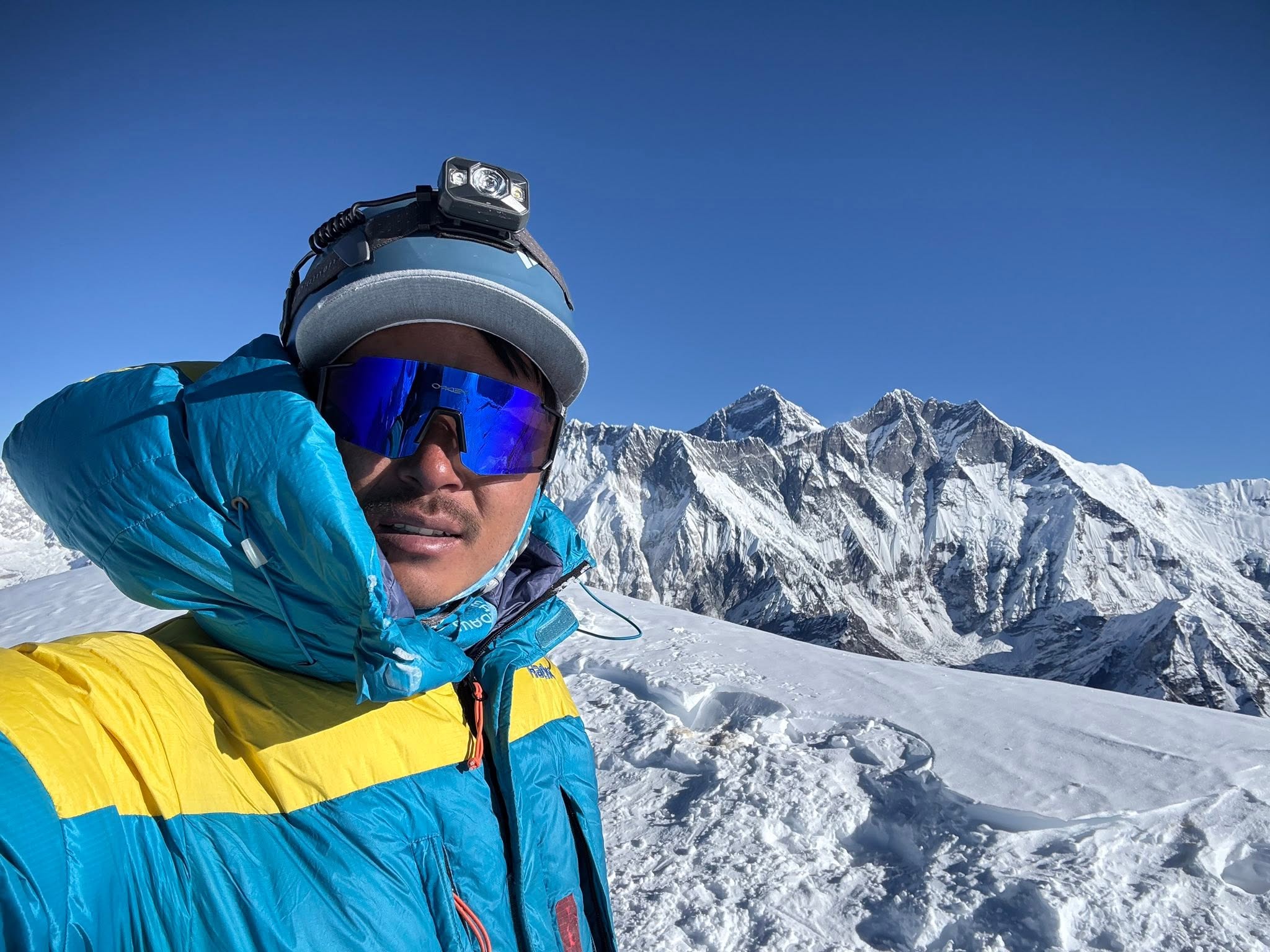
Ama Dablam is 6,812m high.
A successful Ama Dablam expedition can still be highly relevant to your mountaineering background, but the mountain falls below a rule based specifically on summiting above 7,000m.
You could have completed a technically demanding Himalayan expedition and still not meet a rule written around a specific altitude.
What If You Have Already Summited a Nepal 8,000m Peak?
On a straightforward reading of the National Assembly version, a successful Nepal 8,000m summit would appear to meet a condition requiring a mountain higher than 7,000m in Nepal.
However, it is better not to rely on that interpretation until the final rules are published.
Some later amendments treat 7,000m and 8,000m experience separately and suggest different combinations of the two.
So if you have already summited Manaslu or another Nepal 8,000er, your existing summit may already count. Do not assume you need a separate 7,000m climb until the final rules are published.
Once the rules are clear, you will need to check what proof the authorities ask for and whether your previous summit counts.
If You Do Not Have a Qualifying Summit, Should You Climb a 7,000m Peak Before Everest?
If a 7,000m expedition already makes sense for your climbing progression, there is a stronger case for doing one before Everest 2027 rather than waiting for the legislation to be finalized.
It would give you valuable experience above 7,000m and could also place you in a better position if a previous-summit requirement takes effect.
The situation is different if you would be rushing onto a mountain mainly to obtain the necessary summit record.
A new rule may set a minimum requirement, but that does not mean you should rush your climbing progression to meet it.
Is Autumn 2026 a Realistic Window?
For some climbers, yes.
For others, it may already be too tight.
An expedition at this level involves much more than arriving in Nepal and making a summit attempt. You need time for the approach, acclimatization, rotations through higher camps, weather delays and the summit period itself.
Commercial Himlung Himal itineraries, for example, commonly run for around four weeks, with a large part of that time used for acclimatisation and climbing above base camp. Published Baruntse itineraries can take a similar amount of time or longer.
If you already have suitable high-altitude experience, technical skills, fitness and a solid training base, autumn 2026 may realistically fit into your preparation for Everest.
If you still need to learn basic mountaineering skills or build experience on 6,000m peaks, your situation is very different.
Are You Actually Ready for an Expedition at This Level?
Before choosing a mountain because it may satisfy a future permit rule, ask whether you would be considering that climb anyway.
Someone ready for a serious high-altitude expedition should normally already be comfortable with the skills required for the route. Depending on the mountain, that can include using crampons and an ice axe, travelling on fixed ropes, using an ascender and descender, crossing glaciers and managing long days at altitude.
Your previous time at altitude matters too.
A 6,000m summit does not guarantee that you will perform well a thousand meters higher. But earlier Himalayan expeditions give you and your guides a much better idea of how you acclimatize, recover and function over several days or weeks.
If you are still building that foundation, the question should not be: “Which 7,000m peak can I get onto before Everest?”
It should be whether Everest 2027 is the right timeline for you at all.
If You Decide to Add One, What Kind of Peak Makes Sense?
The best option is not necessarily the mountain described online as the easiest way to satisfy the rule.
Your choice should match your current ability and what you still need to learn before Everest.
Himlung Himal, at 7,126m, is often used as a first expedition above 7,000m or as preparation for higher mountains. Its standard route involves glacier travel, fixed ropes, several high camps and extended time at very high altitude. It is generally considered less technically demanding than mountains such as Baruntse.
Baruntse, at 7,129m, offers a different kind of progression. Its standard route is more committing and involves steeper and more exposed climbing, making it better suited to mountaineers with the technical background for those demands.
Both are serious expeditions.
If your main consideration is which peak can give you a qualifying summit fastest, the decision is being driven more by the possible rule than by the preparation you actually need for Everest.
What If You Attempt It but Do Not Summit?
This is one of the main risks of planning an expedition around a possible permit condition.
The National Assembly version refers to climbers who have successfully summited a mountain above the stated altitude in Nepal.
An attempt would therefore not appear to be enough.
You could spend several weeks on the mountain, acclimatize well, and reach a high camp, but still turn around because of weather, avalanche danger, illness or another safety concern.
From a mountaineering point of view, turning around may be exactly the right decision.
From a permit point of view, however, you could still come home without the summit record the rule requires.
That is why it is risky to assume that one autumn expedition will automatically solve the eligibility question for Everest 2027.
When Might Delaying Everest Make More Sense?
Delaying Everest may make more sense if meeting the possible prerequisite would mean rushing your development. That could be the case if you still need significant technical training, have limited experience above 6,000m, have never spent several weeks on a high-altitude expedition, or would have very little recovery time between your preparation climb and Everest.
Going later with a stronger background is generally better than arriving in 2027 with a qualifying summit that you had to rush to obtain.
Would a Qualifying 7,000m Summit Automatically Mean You Are Ready for Everest?
No.
The proposed rule may decide whether you qualify for a permit. It does not tell you whether you are actually ready for Everest.
A qualifying ascent may meet one government requirement, but that does not mean every climber who has one will arrive with the same level of preparation.
One person may reach that point after years of technical climbing and several Himalayan expeditions. Another may have a much narrower background.
Your Everest operator may therefore expect more than whatever minimum the government eventually sets.
Your own preparation should also go beyond altitude alone. Consider how you perform over several weeks, how you recover between rotations, how you move when tired, how confidently you manage your equipment and how you make decisions when conditions change.
A summit above 7,000m can be an important step toward Everest. It is not proof that there is nothing left to learn before going higher.
What Should You Do If Everest 2027 Is Already Your Goal?
You do not need to put your plans on hold simply because the Tourism Bill has not been finalized.
What you do next should depend mainly on the climbing background you already have.
If You Already Have Relevant High-Altitude Experience
Review your summit record before assuming you need another mountain.
If you already have a qualifying climb in Nepal, keep clear documentation of the ascent. If your strongest experience is outside Nepal or includes a Nepal 8,000m summit, wait until the final rules are published before assuming another expedition is necessary.
If You Are Ready for a 7,000m Expedition
If this type of climb already fits naturally into your development, completing a suitable 7,000m expedition in autumn 2026 may be a sensible step before Everest 2027.
Choose the mountain for what it adds to your skills and high-altitude experience. If the final rule also recognizes the summit for permit purposes, that is an added benefit rather than the only reason for doing it.
If You Are Not Yet Ready for One
Do not rush onto a 7,000m mountain because you are worried about missing Everest 2027.
If you still need more time on lower peaks, technical training or greater experience at altitude, use that time.
The Everest rules may still change. Your climbing background cannot be built nearly as quickly.
As of September 2026, the simplest answer to the title of this article is:
No, you do not currently need a previous 7,000m summit to obtain an Everest permit under the rules now in force. But a Nepal 7,000m+ summit remains part of the Tourism Bill being considered by Parliament, and the possibility of a stricter experience requirement is being taken seriously within Nepal’s mountaineering community. If Everest 2027 is your goal, it is sensible to plan with that possibility in mind while waiting for the final law.
If you already have the background needed for a suitable qualifying climb, adding one can make sense as part of your preparation. If you do not, the possible rule change is not a good reason to rush.
Mr. Lachhuman Tamang – A Pioneer in Trekking and Mountaineering
Call us on WhatsApp+977 9860455963OrChat with us