Is summiting Island Peak enough preparation for Ama Dablam? This guide explains what Island Peak prepares you for, where Ama Dablam demands more, and how your performance can help you judge whether you need more experience.
Ama Dablam After Island Peak: Is Island Peak Enough Preparation?
Table of Contents
You have summited Island Peak. You have used crampons, climbed on fixed ropes, gone above 6,000 meters, and experienced a long Himalayan summit day.
So, are you ready for Ama Dablam?
Possibly. But summiting Island Peak alone does not answer that question.
Island Peak can be useful preparation for Ama Dablam, especially because it shows how you move and perform at altitude. But Ama Dablam involves more sustained technical climbing, greater exposure and a much higher level of confidence with climbing systems.
What matters is not simply whether you reached the summit of Island Peak. It is what experience you had before the climb and how confidently and independently you performed during it.
What Island Peak Actually Prepares You for on Ama Dablam
Island Peak gives you something that lower-altitude training cannot: the chance to use mountaineering skills while your body is also dealing with Himalayan altitude.
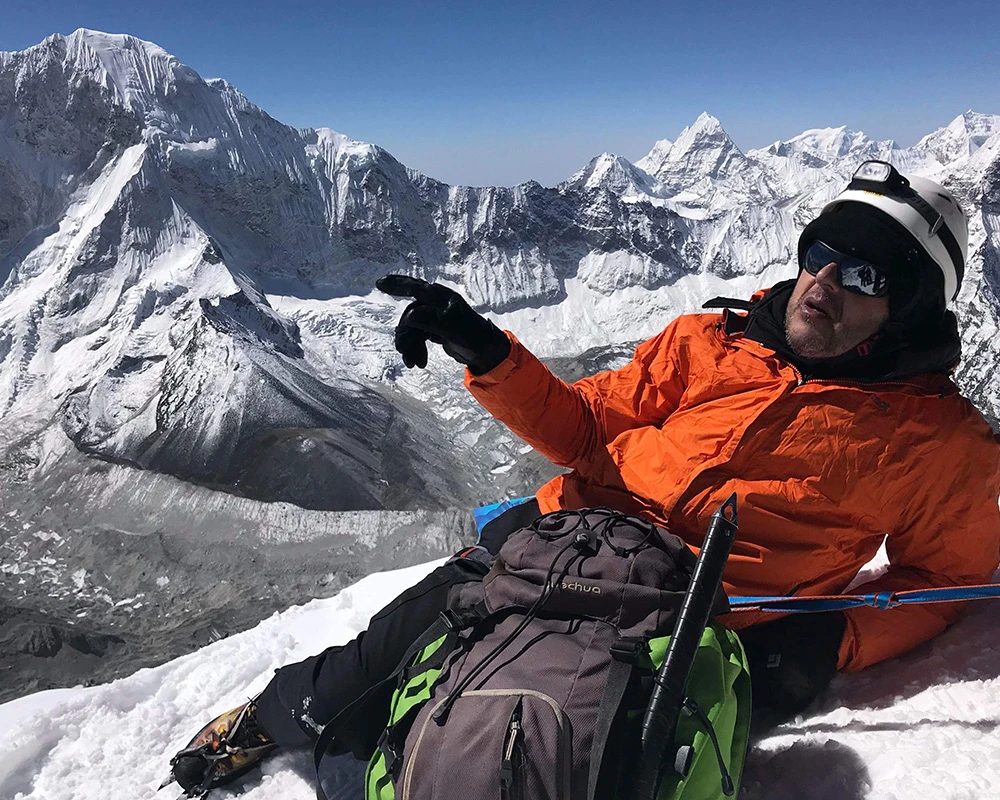
You gain experience walking in crampons, using fixed ropes and an ascender, handling equipment while wearing gloves and descending technical terrain after a long summit push.
Adventure Consultants, for example, describes Island Peak as a progression peak for climbers who already have basic rope-handling and mountaineering skills and want to apply them at altitude.
The climb also shows you how well those skills hold up when you are cold, tired and operating around 6,000 meters. It gives you a much clearer idea of how your body handles a long summit day at altitude.
These are difficult things to judge during training closer to home.
But altitude experience is only one part of the preparation.
Where the Jump From Island Peak to Ama Dablam Becomes Much Bigger
Because both mountains involve crampons, fixed ropes and high altitude, it can be easy to assume that the progression from Island Peak to Ama Dablam is relatively small.
In reality, the technical demands are quite different.
On Island Peak, technical climbing is concentrated around certain parts of the summit route. On Ama Dablam, steep and exposed technical climbing makes up a much larger part of the climb.
You spend considerably more time moving through exposed terrain. Depending on the route and conditions, this may involve rock, snow, ice and mixed terrain, along with repeated use of fixed ropes.
Adventure Consultants currently expects Ama Dablam climbers to be comfortable ascending and descending steep terrain on fixed ropes and recommends previous experience on exposed technical ground. Its preparation guidance also calls for strong rope, crampon, ice axe and jumar skills, together with experience on steep rock and ice.
Some operators expect even more. Alpenglow, for example, asks for previous multi-pitch rock or ice climbing experience as well as high-altitude experience.
This is where the gap between the two mountains becomes clearer.
It is possible to learn how to use a jumar fairly quickly. Using it smoothly while tired, exposed and moving through sustained technical terrain takes more experience.
The same applies to rappelling, crampon technique and changing between rope systems. By the time you attempt Ama Dablam, these skills need to feel familiar enough that you can focus on the terrain rather than constantly thinking about how to use your equipment.
How Did You Actually Perform on Island Peak?
How you climbed Island Peak tells you more than the summit itself.
One useful sign is whether clipping and unclipping from fixed ropes had started to feel familiar by the later stages of the climb. The same applies to using your jumar, moving in crampons and managing your harness and carabiners.
The descent is particularly worth thinking about. Fatigue often makes simple tasks harder, so how well you managed your equipment and movement on the way down can tell you a lot.
Your performance at altitude matters too. Were you still able to move steadily, stay organized and make good decisions when you were tired around 6,000 meters? Were you able to keep eating and drinking during the summit day?
There is also one important point to consider: How much help did you need from your guide?
Getting help is completely normal on a guided climb. But when judging whether you are ready for Ama Dablam, it helps to separate what you could manage yourself from what your guide managed for you.
From our experience guiding climbers in Nepal, this is one of the things we pay close attention to. A summit tells us that someone completed the mountain, but how they moved, handled equipment, responded to exposure and performed when tired tells us much more about what they may be ready for next.
Two people can summit Island Peak on the same day and finish the climb with very different levels of technical confidence.
If Island Peak Was Your First Technical Climb
If Island Peak was your first technical climbing experience with crampons, an ascender, fixed ropes or rappelling systems, reaching the summit is a valuable achievement.
It also gives you a good foundation to build on.
But skills that you have just learned are not necessarily ready for a more technical mountain.
There is a big difference between using a climbing system successfully after being shown what to do and being familiar enough with it to move efficiently when the terrain becomes steeper, more exposed and more tiring.
In this situation, Island Peak is useful partly because it shows you what still needs work. You may come back realizing that your crampon technique needs improvement, that rope transitions still take too much time, or that exposed terrain makes you uncomfortable.
Those are useful things to know before committing to Ama Dablam.
If You Already Had Technical Climbing Experience
Island Peak means something different if you already had a strong background in rock, ice or alpine climbing.
You may have arrived already comfortable with rope systems, crampon technique, rappelling and exposure. In that case, Island Peak is less about learning those skills and more about seeing how well you can still use them at Himalayan altitude.
A technically experienced climber who moves confidently on Island Peak and handles 6,000 meters well has learned something quite valuable about their preparation for Ama Dablam.
Someone who first learned those same systems during the Island Peak expedition has gained useful experience too, but is at a different stage.
The summit may be the same. The experience behind it is not.
Do You Need More Experience Before Ama Dablam?
There is no single progression that every climber needs to follow after Island Peak. What you should do next depends on what Island Peak exposed as your weak point.
If technical movement still felt unfamiliar, another high-altitude summit is not automatically the best answer. More time rock climbing, ice climbing or practising mountaineering systems may help more.
If you were comfortable with the equipment but uneasy on steep and exposed terrain, another suitable climb could give you more experience in that environment.
Altitude and endurance may be the bigger issue for someone else. If your technical skills were solid but you struggled badly above 5,500 meters or faded during the long summit day, then improving endurance and gaining more high-altitude experience may be more important.
And if you already had a strong technical background, moved confidently on Island Peak and handled the altitude well, you do not necessarily need to climb another peak just to follow a standard progression.
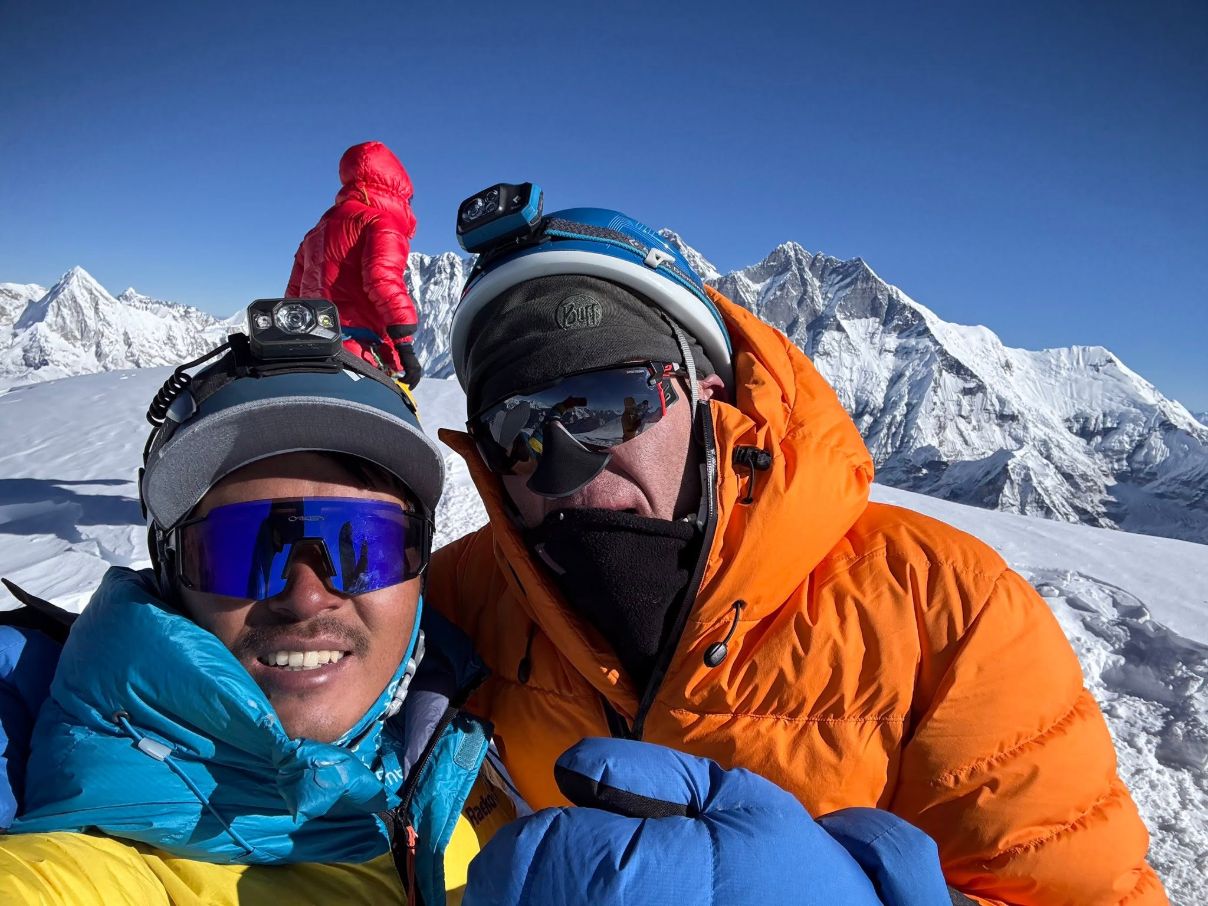
Some Ama Dablam expeditions use Lobuche East beforehand for acclimatization and to refresh climbing skills. Adventure Consultants, for example, currently includes Lobuche East before Ama Dablam for those reasons.
That can be useful for someone who already has the required skills and wants to use them again before moving onto Ama Dablam.
It is less useful as a substitute for technical experience that has not yet been built.
If fixed ropes, rappelling and other basic systems are still new to you, spending a few more days using them on another Himalayan peak does not automatically make you an experienced technical climber.
Your next climb or training period should address whatever Island Peak showed you still needs work.
So, Is Island Peak Enough Preparation for Ama Dablam?
Island Peak can be enough as part of your preparation if you already had a solid technical foundation and were able to use those skills confidently at altitude.
If Island Peak was where you first learned fixed ropes, jumaring, rappelling and other basic climbing systems, it is better viewed as a foundation rather than proof that you are ready for Ama Dablam.
Before committing, discuss your full climbing background with an experienced guide. At Moon Himalaya Adventure, we would not assess someone’s readiness for Ama Dablam from an Island Peak summit alone. We would want to know how the climb went, what you managed independently, where you needed help and what technical climbing experience you had beforehand.
Island Peak can be an important step toward Ama Dablam. Whether it is enough depends on what you were capable of doing on the mountain, not simply whether you stood on the summit.
Mr. Lachhuman Tamang – A Pioneer in Trekking and Mountaineering
Call us on WhatsApp+977 9860455963OrChat with us